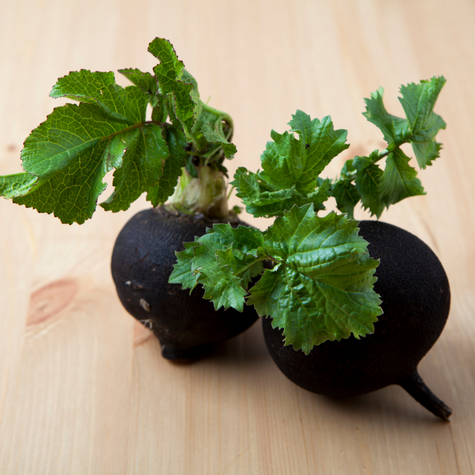
We all know traditional radishes, but black radishes are making their way onto the gardening and culinary scenes quickly.
The Rise black radish variety is Nero Tondo. With long, leafy stems emerging from its head, both the radish and its top are consumable. It has a slightly bitter but crisp flavor that makes it the perfect topping for salads.
If you aren't already on board for trying out black radishes, here are 5 interesting facts about black radishes that'll convince you:
- Black radishes, also known as Spanish radishes or Noir Gros de Paris, are an heirloom variety that originated in the Mediterranean region.
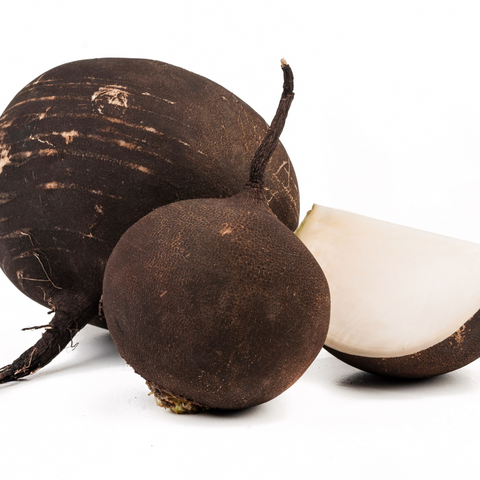
- Unlike traditional red or white radishes, black radishes have a black or dark brown skin that is rough and thick. The flesh inside is white and has a slightly bitter and spicy flavor.
- Black radishes are packed with nutrients and are an excellent source of vitamin C, fiber and antioxidants. They also contain compounds that have anti-inflammatory properties.
- In traditional Chinese medicine, black radishes are used to treat digestive problems, including indigestion and constipation. They are also believed to help detoxify the liver and improve skin health.
- Black radishes can be used in a variety of culinary applications, including roasting, pickling, and grating into salads. They are often used as a garnish or added to sandwiches and tacos for an extra kick of flavor.
Frequently Asked Questions
What are black radishes and what do they taste like?
Black radishes are a striking, large-rooted radish variety with a rough, dark exterior and crisp, pungent white flesh that has a significantly more intense, peppery flavor than common red radishes. They have been cultivated in Europe for centuries and are prized in Eastern European cuisine for their digestive benefits. Their bold flavor mellows when cooked or fermented.
What are some surprising facts about black radishes?
Black radishes have been used as a natural remedy for liver and gallbladder support for hundreds of years, as they stimulate bile production and aid digestion. They contain glucosinolates — the same compounds found in kale and broccoli — that have antioxidant and anti-inflammatory properties. Despite their dramatic appearance, they grow quickly and are surprisingly easy to cultivate hydroponically.
Can black radishes be grown in a hydroponic system?
Yes — black radishes can be grown hydroponically, though they require a deeper growing medium than most hydroponic crops to accommodate their large taproot. They mature in 50–70 days and prefer cooler temperatures, making them a great cool-season crop for indoor growing. Rise Gardens growers exploring root vegetables can experiment with black radishes in larger pod configurations.
How do you use black radishes in cooking?
Black radishes can be eaten raw (thinly sliced or grated into salads), pickled, roasted, or added to soups and stews where their pungency softens into a savory depth of flavor. Raw, they are often served with butter and salt in Eastern European tradition. Their bold flavor pairs well with apples, beets, and strong cheeses.