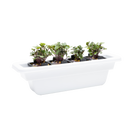
Vicenza Blue Apex Lavender
Flower
This herb grows tall and vibrant lavender. The flowers are a soft purple and form small gatherings at the top of their stems. The leaves are blue-green and contain strong oil good for relaxation.
- Match with all gardens
- Shelf stable for 1 yr . Thoroughly tested
- Rise Reserve
Plant library
Growing Vicenza Blue Apex Lavender
Everything you need to know to successfully grow this plant in your Rise Garden hydroponic system.
Nutritional benefits
Homegrown produce is more nutritious than store-bought because it's harvested at peak ripeness and eaten fresh.
Vitamin A
Vision & Immunity
Vitamin C
Immunity & Skin
Calcium
Strong Bones
Iron
Energy & Focus
Potassium
Heart & Muscles
Growing tips
-
1
Be Patient with Germination
Flowers often take longer to germinate than vegetables. Keep the dome on and maintain humidity - they're worth the wait!
-
2
Deadhead Spent Blooms
Remove faded flowers regularly to encourage more blooms. This redirects energy from seed production to new flower growth.
-
3
Use Blossom Nutrients
Switch to Blossom nutrients when buds form. The extra phosphorus helps produce larger, more vibrant flowers.
-
4
Cut Flowers in Morning
Harvest flowers early in the day when they're most hydrated. Place stems in water immediately for longest vase life.
Growth timeline
Follow these stages for successful growing in your Rise Garden
1
Days 0-12
Germination
Slim seed leaves rise from the pod to begin your lavender journey. Lavender is a slow starter, so give it around twelve days to sprout. Keep the dome on for steady humidity and stay patient, because good things take time here.
2
Days 12-19

Move to Garden
Move your seedling to the garden once it shows two or three true leaves and stands steady on its own. Young lavender stems are delicate, so support the base as you transplant. Set it in an open spot where it can reach the light and feed.
3
Days 19-70

Active Growth
Your lavender builds a bushy mound of narrow, silvery-green leaves with that unmistakable scent. Brush the foliage and you'll catch the fragrance on your fingers. Pinch out yellowing lower leaves and give it bright light so the plant stays compact and full.
4
Days -

Flowering
Slender flower spikes rise above the foliage, studded with buds that blush purple-blue. Switch to Blossom nutrients to support the blooms. The first hint of color on the spikes is your cue that flowering has begun.

How to Harvest
Cut flower spikes at an angle, taking a few inches of stem along with the buds. Harvest in the morning when the plant is most hydrated, and pop the stems in water right away. Keep cutting spikes as they color up, since regular harvesting encourages more to form.
You may also like
Growing FAQs
-
Place your seed pod in the Rise Gardens nursery tray with the label facing up. Add water until the pods are saturated, then place the grow dome on top to maintain humidity. Keep the dome on until you see sprouts emerging (usually 3-10 days depending on the plant). Once sprouted, remove the dome so leaves can develop properly.
-
Look for 2 sets of true leaves - these are the leaves that appear after the initial round seed leaves (cotyledons). At this stage, the roots are developed enough to absorb nutrients from your garden. For most plants, this happens 7-14 days after germination. Gently lift the pod from the nursery and place it in an empty spot in your Rise Garden.
-
Add nutrients once per week. Use Sprout nutrients for leafy plants and during the vegetative growth stage of all plants. Switch to Blossom nutrients when you see flowers forming on fruiting plants (tomatoes, peppers, etc.). The Rise Gardens app tracks your plants and sends reminders when it's time to add nutrients.
-
Yellow leaves usually indicate one of these issues: 1) Low nutrients - add nutrients if it's been more than a week. 2) Low water - check that water levels are above minimum. 3) Natural aging - bottom leaves naturally yellow as the plant grows; just remove them. 4) Too much light - ensure your plant is in the correct shade group position.
-
Yes, for most plants! Herbs and leafy greens are "cut-and-come-again" - harvest outer leaves or up to 1/3 of the plant, and it will regrow for multiple harvests. Fruiting plants (tomatoes, peppers) continuously produce fruit for months. Microgreens are the exception - they're harvested all at once and won't regrow.
-
Since there are no bees indoors, you'll need to hand pollinate tomatoes, peppers, and other fruiting plants. When flowers are fully open, use a small paintbrush or cotton swab to gently brush the center of each flower. Transfer pollen between flowers by touching multiple blooms. Do this every few days while plants are flowering.
-
Germination time is how long until you see the first sprout emerge from the pod - typically 3-10 days. Harvest time is when you can start picking from your plant - this ranges from 7 days for microgreens to 12+ weeks for fruiting plants.
-
Causes: Nutrient deficiency, overwatering, natural aging of lower leaves, or too much/little light.
Solutions: Add nutrients if it's been over a week. Check water levels aren't too high. Remove naturally yellowing bottom leaves. Verify plant is in correct shade group position.
-
Causes: Low water levels, root problems, temperature stress, or transplant shock.
Solutions: Check and refill water immediately. Inspect roots for brown/slimy appearance. Keep garden away from heat sources and cold drafts.
-
Causes: Insufficient light, low nutrients, overcrowding, cold temperatures, or pH imbalance.
Solutions: Ensure lights are on 14-16 hours daily. Add nutrients weekly. Thin overcrowded plants. Keep garden in warm area (65-75°F).
-
Causes: Fungus gnats from damp conditions; aphids hitchhike on other plants or through windows.
Solutions: For gnats: let pod surfaces dry, use yellow sticky traps. For aphids: spray leaves with water, wipe off pests, or use diluted dish soap spray.
-
Causes: Algae from light exposure to water, root rot from stagnant water, or bacterial growth.
Solutions: Keep tank covered to block light. Ensure water is circulating properly. Clean tank between plantings. Trim brown, mushy roots.
-
Cause: Not enough maturity, wrong nutrients, or insufficient light.
Solution: Be patient. Switch to Blossom nutrients when buds appear. Ensure adequate light.
-
Cause: Stress from temperature changes, moving plant, or water inconsistency.
Solution: Keep garden in stable location. Maintain consistent water and nutrients.