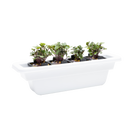
In the world of home gardening, Rise Gardens offers a delightful variety of herbs and greens, but today, we're putting the spotlight on the unassuming yet versatile arugula. Much like Rise Garden's commitment to making home gardening effortless, arugula is a leafy green that demands little but delivers a whole lot. Join us as we explore the history, growth process, and culinary possibilities of Rise Garden arugula.

-
Uncovering Arugula's Roots:
Arugula may not have the showy blossoms of sunflowers, but its history is equally fascinating. This leafy green has ancient origins, dating back to Roman times when it was believed to be an aphrodisiac. Today, it's cherished not only for its rich, peppery flavor but also for its versatility in a wide range of dishes, from salads to pasta.
-
How Do You Grow Arugula at Home?
Growing arugula in your Rise Garden is a straightforward process. Begin by placing the pre-seeded arugula seed pods into your garden system, configure the water and light preferences, and await the emergence of vibrant green leaves. According to the Cornell Controlled Environment Agriculture program, hydroponic greens like arugula can reach harvest maturity up to 30% faster than their soil-grown counterparts — and with minimal effort, you'll have a steady supply of fresh arugula at your fingertips in as little as 21 days.
-
Exploring Arugula's Culinary Versatility:
Beyond its ease of cultivation, arugula offers a world of culinary possibilities. The USDA notes that arugula is a rich source of vitamins K, A, and C, making every harvest a nutritious boost to your meals — and because hydroponic systems use up to 95% less water than traditional soil gardening, you can feel great about growing it sustainably at home. Here are a couple of ideas to infuse your dishes with the delightful peppery kick of arugula:
Arugula and Goat Cheese Salad:
Create a refreshing salad by combining arugula with creamy goat cheese, toasted pine nuts, and a drizzle of balsamic vinaigrette. The peppery bite of arugula perfectly balances the richness of the cheese.
Arugula Pesto:
Transform arugula into a zesty pesto by blending it with garlic, pine nuts, Parmesan cheese, and olive oil. Use this vibrant green sauce to dress up pasta, sandwiches, or roasted vegetables.
-
Elevating Your Culinary Creations:
Arugula & Herb Pizza:
Add a handful of fresh arugula on top of your homemade pizza just before serving. The heat of the pizza will slightly wilt the arugula, enhancing its flavor and freshness. Because hydroponically grown produce can contain up to 50% more vitamins than store-bought equivalents, that simple handful of homegrown arugula is doing a lot more for your plate than it might seem.
Arugula and Prosciutto Sandwich:
Layer arugula with thinly sliced prosciutto, fresh mozzarella, and a drizzle of olive oil on your favorite crusty bread for a gourmet sandwich experience.
Rise Garden arugula epitomizes the ease and joy of home gardening. Its rich history and culinary adaptability make it a must-have green for any gardening enthusiast and food lover. With Rise Gardens' commitment to simplicity and innovation, cultivating and enjoying arugula has never been easier. So, embark on a journey filled with culinary enchantment, from garden to plate, and savor the rewards of your very own homegrown arugula harvest.


Frequently Asked Questions
Can you grow arugula in a Rise Garden?
Yes — arugula is one of the most rewarding crops to grow in a Rise Garden because it germinates quickly within 5-7 days, grows rapidly, and can be harvested as a cut-and-come-again green within 2-3 weeks. Hydroponically grown arugula tends to be more tender and less bitter than store-bought, with a distinctive peppery rocket flavor that is more nuanced when freshly harvested. It is an excellent starter crop for new Rise Gardens growers because it provides immediate results and culinary satisfaction.
What does arugula taste like and what is it best used for?
Arugula has a distinctive peppery, slightly bitter, and nutty flavor that makes it one of the most characterful salad greens. Baby arugula is milder and works beautifully in salads, while more mature leaves carry a bolder bite perfect for wilting into pasta, spreading onto pizza as a fresh topping, or blending into a peppery arugula sauce. In Italian cuisine, arugula is celebrated in dishes like cacio e pepe and as a topping for prosciutto pizza, a combination that perfectly balances the rocket's bitterness with salty, fatty elements.
Is arugula nutritious?
Arugula is a nutritional powerhouse, rich in vitamins K, A, and C, folate, calcium, potassium, and an array of antioxidant phytonutrients including glucosinolates that give it its peppery bite and have been studied for cancer-preventive properties. Like most leafy greens, it is very low in calories while being nutrient-dense, making it one of the best foods for everyday healthy eating. Freshly harvested Rise Garden arugula retains the maximum concentration of these nutrients since there is no time lag between harvest and consumption.
How does arugula grow differently in hydroponics versus soil?
In hydroponics, arugula grows significantly faster than in soil because roots have direct, unimpeded access to optimally balanced nutrients and water. Hydroponic arugula also tends to be cleaner with no soil splash on leaves, more uniform in size, and slightly less bitter because the stress factors that intensify bitterness in outdoor-grown arugula are eliminated in the controlled Rise Gardens environment. For a grower used to store-bought or garden-grown arugula, hydroponic arugula often comes as a pleasant revelation in tenderness and flavor.