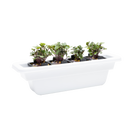
If you want to grow tomatoes hydroponically, understanding the best hydroponic nutrients for tomatoes is the single most important skill you can develop. Unlike soil gardening, where the ground supplies a complex buffet of minerals, hydroponic systems rely entirely on you to deliver every element a tomato plant needs to thrive. Get the nutrient formula right, and you'll be harvesting plump, flavorful tomatoes from your living room. Get it wrong, and you'll be troubleshooting yellowing leaves and stunted growth. This guide breaks down exactly what tomatoes need, when they need it, and how to keep your plants fed correctly from seedling to harvest.
Why Tomatoes Are Nutrient-Hungry Plants
Tomatoes are among the most demanding crops you can grow, indoors or out. They produce heavy fruit loads relative to their size, which requires a constant, well-balanced supply of both macronutrients and micronutrients throughout their lifecycle. According to research from the University of Florida's Institute of Food and Agricultural Sciences, tomatoes have one of the highest nutrient uptake rates of any vegetable crop, absorbing significant quantities of nitrogen, phosphorus, potassium, calcium, and magnesium throughout their growing season.
In a hydroponic system, this demand is met through a nutrient solution — water mixed with dissolved mineral salts in precise concentrations. Because there is no soil buffer to correct mistakes, the quality and balance of your nutrient solution directly determines the quality of your harvest. A well-maintained solution supports rapid growth, strong root systems, and fruit development that simply isn't possible in depleted soil. This is one of the core reasons why hydroponic tomatoes can yield up to 10 times more fruit per square foot than conventionally grown plants, according to data compiled from controlled environment agriculture studies.
When you set up your Rise Garden indoor garden system, you're already working within an optimized framework designed to support this kind of productivity. Pairing it with the right nutrients takes your results to the next level.
Understanding the NPK Ratio for Hydroponic Tomatoes
The NPK ratio for hydroponic tomatoes refers to the proportion of nitrogen (N), phosphorus (P), and potassium (K) in your nutrient solution. These three macronutrients form the foundation of any feeding program, and getting their balance right means understanding how a tomato plant's priorities shift across its growth stages.
During the vegetative stage — when your plant is building stems, leaves, and root mass — nitrogen should be the dominant nutrient. A higher N ratio supports the rapid green growth you see in young plants. A starting NPK ratio of roughly 7-3-6 works well during this phase. Once your plant transitions into flowering and fruit set, the balance shifts dramatically. Potassium becomes critical for flower development, fruit sizing, and sugar production. At this stage, many experienced hydroponic growers move to a ratio closer to 5-5-8 or even 4-6-10.
Phosphorus plays a supporting role throughout the lifecycle, promoting strong root development and efficient energy transfer within the plant. It becomes especially important during early transplanting and flowering. Some growers add a phosphorus-heavy supplement during the bloom phase to maximize fruit set.
Electrical conductivity, or EC, is the measurement used to gauge the overall strength of your nutrient solution. For tomatoes, a target EC of 2.0 to 4.0 mS/cm is typical, with seedlings and young plants kept at the lower end of that range. Pushing EC too high too fast causes nutrient burn; too low and plants become underfed and growth stalls. A reliable EC meter is an essential piece of your toolkit. Explore the full range of nutrients available from Rise Gardens to find formulas calibrated for exactly these requirements.
The Role of Calcium and Magnesium in Hydroponic Tomatoes
If there's one nutrient pairing that trips up hydroponic tomato growers more than any other, it's calcium and magnesium for hydroponic tomatoes. These two secondary macronutrients are responsible for a surprising number of visible plant problems, and deficiencies are extremely common — even when a base nutrient solution is being used correctly.
Calcium is the structural element in plant cell walls and is directly tied to fruit quality. Without adequate calcium, tomatoes develop blossom end rot — the dark, sunken lesion at the bottom of the fruit that renders it inedible. Calcium is also needed for healthy root tip development and overall cellular integrity. The tricky part is that calcium deficiency in hydroponics is often not about how much calcium is in the solution, but about how well the plant can absorb it. Calcium moves through plants primarily with water via transpiration, so adequate airflow and consistent watering cycles are as important as the concentration in your reservoir.
Magnesium is the central atom in chlorophyll molecules, which makes it essential for photosynthesis. A magnesium deficiency shows up as interveinal chlorosis — the tissue between leaf veins turns yellow while the veins themselves remain green. In tomatoes, this typically appears first on older, lower leaves before spreading upward. Research published through the USDA's National Institute of Food and Agriculture has highlighted that magnesium is among the most commonly deficient micronutrients in recirculating hydroponic systems, largely because it can be displaced by competing ions like calcium and potassium when solution balance is off.
A Cal-Mag supplement added to your base nutrient program addresses both of these concerns simultaneously. Most hydroponic tomato growers add Cal-Mag at a rate of 2 to 5 mL per gallon as a standard part of their nutrient mixing routine, not just as a corrective measure. Think of it as insurance for your harvest.
What Are the Signs of Tomato Nutrient Deficiency in Hydroponics?
Catching tomato nutrient deficiency in hydroponics early is the difference between a minor correction and a significant setback. Because hydroponic plants grow faster than soil-grown plants, deficiencies also progress faster — what looks like mild yellowing on a Monday can become widespread chlorosis by Wednesday if left unaddressed.
Here's a quick-reference breakdown of the most common deficiencies and their visual signatures:
- Nitrogen deficiency: Uniform yellowing starting on older, lower leaves, progressing upward. Plants look pale overall and growth slows noticeably.
- Calcium deficiency: Blossom end rot on fruit; distorted, curled new growth; brown, dead leaf margins on young leaves near the top of the plant.
- Magnesium deficiency: Interveinal chlorosis on older leaves — the spaces between veins turn yellow while veins stay green.
- Potassium deficiency: Brown, scorched-looking leaf edges (tip burn) and poor fruit development. Fruit may be small, soft, or uneven in color.
- Iron deficiency: Interveinal chlorosis on young, new leaves — the opposite location from magnesium deficiency, which helps distinguish the two.
- Phosphorus deficiency: Purple or reddish coloring on the undersides of leaves, particularly in younger plants. Stunted root growth.
When you spot a deficiency, the first steps are to check your pH and EC readings before adjusting your nutrient formula. Many deficiencies in hydroponics are actually lockout issues — nutrients are present in the solution, but a pH that's drifted out of the optimal range of 5.5 to 6.5 prevents plants from absorbing them. Correct pH first, then reassess whether additional supplementation is needed.
How Do You Mix and Maintain a Nutrient Solution for Hydroponic Tomatoes?
Mixing a nutrient solution sounds technical, but it follows a straightforward process once you understand the basics. Start with clean, room-temperature water. If your tap water is high in chlorine, let it sit uncovered for 24 hours or use filtered water. Hard tap water with high baseline mineral content can create imbalances, so knowing your water's starting EC and mineral profile is genuinely helpful.
Follow this general mixing sequence for a typical tomato nutrient solution:
- Fill your reservoir with the appropriate volume of water.
- Add Cal-Mag first, at the recommended rate, and mix thoroughly.
- Add your base nutrient Part A (typically the nitrogen and calcium component) and stir.
- Add your base nutrient Part B (typically the phosphorus, potassium, and micronutrient component) and stir again. Never mix Parts A and B together directly in concentrated form — they can react and precipitate out.
- Add any bloom boosters or additional supplements appropriate to your plant's current growth stage.
- Check and adjust pH to between 5.8 and 6.3 for tomatoes. This is the sweet spot where the broadest range of nutrients remains available.
- Check EC and compare to target range for the growth stage.
Plan to top off your reservoir with plain, pH-adjusted water between full nutrient changes to compensate for evaporation and plant uptake. Completely replace your nutrient solution every 7 to 14 days to prevent salt buildup and microbial growth. Keeping a simple log of your pH and EC readings over time will reveal patterns and help you anticipate adjustments rather than react to problems.
Starting your plants off strong is just as important as maintaining them. Using quality seed pods ensures your tomatoes begin in a clean, disease-free medium that won't interfere with your nutrient solution chemistry.
Choosing the Right Nutrients for Your Indoor Tomato Garden
Not all hydroponic nutrient formulas are created equal, and the sheer number of products available can feel overwhelming. For indoor tomato growers, the most effective approach is to use a two- or three-part base nutrient system designed specifically for fruiting crops, supplemented with Cal-Mag and optionally a bloom booster during the fruiting phase.
Look for nutrients that list their sources transparently and include a full complement of micronutrients: iron, manganese, zinc, copper, boron, and molybdenum. These trace elements are required in tiny amounts, but their absence causes visible, crop-damaging deficiencies. A study by researchers at Cornell University's Controlled Environment Agriculture program found that micronutrient formulation consistency is one of the most significant differentiating factors between commercial-grade hydroponic nutrients and lower-quality alternatives.
For home growers using systems like the Rise Garden, purpose-formulated nutrients take the guesswork out of the equation. Rise Gardens nutrients are calibrated for the reservoir volumes and plant types common in home hydroponic setups, which means you're not scaling down a formula designed for a 500-gallon commercial reservoir. This matters more than it might seem — concentration errors are a leading cause of nutrient imbalance in home systems.
If you're just getting started with tomatoes indoors, browsing the full seed pod collection is a great way to find tomato varieties suited to container growing and shorter days. Compact varieties like cherry tomatoes or small-fruited determinate types are particularly well-matched to the light levels and reservoir sizes of home hydroponic systems, and they respond especially well to consistent, well-balanced feeding.
Frequently Asked Questions
What is the ideal pH for growing tomatoes hydroponically?
Tomatoes perform best at a hydroponic solution pH between 5.8 and 6.3. Within this range, the full spectrum of essential nutrients remains soluble and available for root uptake. If pH drifts above 6.5, calcium and magnesium become less available; below 5.5, micronutrients like iron and manganese can reach toxic levels.
How often should I change the nutrient solution for hydroponic tomatoes?
A full reservoir change every 7 to 14 days is standard practice for hydroponic tomatoes. Between changes, top off with plain pH-adjusted water to replace what plants consume and what evaporates. Waiting longer than two weeks allows salt accumulation and potential microbial growth, both of which stress plant roots.
Can I use the same nutrients for tomatoes at every growth stage?
You can use the same base nutrient formula throughout, but adjusting the NPK emphasis at different stages significantly improves results. During vegetative growth, lean toward higher nitrogen. During flowering and fruiting, increase potassium and reduce nitrogen. Many growers add a dedicated bloom supplement once flower buds appear to support fruit set and development.
Why are my hydroponic tomato leaves turning yellow?
Yellowing leaves are one of the most common signs of a tomato nutrient deficiency in hydroponics, but the pattern matters for diagnosis. Uniform yellowing starting on older leaves typically points to nitrogen deficiency. Yellowing between the veins on older leaves suggests magnesium deficiency. Yellowing between the veins on new growth indicates iron deficiency or high pH lockout. Always check pH first before adding supplements, since most deficiency symptoms in hydroponics are caused by absorption problems rather than true nutrient absence in the solution.