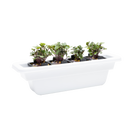
If your hydroponic strawberry plant is not fruiting, the most common culprits are missed hand-pollination, insufficient light (strawberries need at least 12–16 hours of light per day), a nutrient solution pH outside the 5.5–6.5 range, or temperatures above 85°F that abort developing flowers. Fix at least one of these and most plants respond within 2–3 weeks.
Growing strawberries hydroponically puts you in full control of their environment — which is exactly why small imbalances that go unnoticed outdoors become bigger problems indoors. This guide walks through the four most common reasons your strawberry plant shows flowers but no berries, with specific numbers and actionable fixes for each.
Why Are My Strawberry Plants Flowering But Producing No Berries?
Flowers are a good sign — it means the plant is mature enough to reproduce. When those flowers drop or shrivel without setting fruit, pollination is almost always the first place to look.
Outdoors, bees and wind transfer pollen between the male and female parts of a strawberry flower. Indoors, that transfer doesn't happen automatically. Strawberry pollination indoors requires your help. Once per day during peak flowering, use a soft artist's brush or a battery-powered toothbrush and gently vibrate or swirl the center of each open flower for 5–10 seconds. This mimics the vibration frequency bees use — a technique sometimes called buzz pollination — and dramatically improves fruit set.
Research from North Carolina State University found that hand-pollinated strawberry plants in controlled environments produced fruit in 96% of flowers visited, compared to roughly 60% in unassisted greenhouse trials. That gap is even wider in a sealed indoor grow room with zero air movement.
If you're growing on a system like The Rise Garden 3, consider running a small USB fan near your strawberry pods for a few hours a day. Light air movement helps pollen disperse and strengthens stems at the same time.
Does Light or Nutrient Balance Affect Fruiting?
Yes — and this is where everbearing strawberries with no fruit often get stuck. Everbearing varieties like Albion or Seascape are bred to produce multiple flushes per season regardless of day length, but they still require adequate intensity, not just duration.
Strawberries need a minimum of 400 µmol/m²/s of PAR (photosynthetically active radiation) at canopy level to support fruiting. Most standard grow lights marketed for leafy greens fall short of this for fruiting crops. If your light source can't hit that threshold, supplement with an additional LED panel or move plants closer to the existing fixture — while keeping leaves at least 4–6 inches away to avoid heat stress.
On the nutrient side, a phosphorus-heavy formula encourages flowering and fruit development, while too much nitrogen pushes the plant toward leafy vegetative growth instead. During the fruiting phase, look for a nutrient blend with an N-P-K ratio that tilts toward phosphorus and potassium — the nutrients you use matter as much as any hardware decision. Keep your solution's electrical conductivity (EC) between 1.4 and 2.0 mS/cm for strawberries; too low and the plant is starved, too high and nutrient burn stalls fruiting entirely.
According to a 2019 study published in Scientia Horticulturae, strawberry plants grown hydroponically with optimized EC levels produced 23% more fruit per plant compared to soil-grown controls over a 90-day trial.
Temperature and pH: The Silent Fruiting Killers
Strawberries are cool-season fruits at heart. Their ideal fruiting temperature range is 60–80°F. Once root zone or ambient temperatures consistently exceed 85°F, the plant redirects energy away from fruit development and into heat-stress survival responses. If you're growing in a warm room or near a south-facing window, a nutrient reservoir temperature above 72°F can also encourage root rot — another reason fruiting stalls.
pH is equally unforgiving. The target range for hydroponic strawberries is 5.5–6.5. Outside that window, key nutrients like calcium, magnesium, and phosphorus become chemically unavailable to the plant even if they're present in your solution — a phenomenon called nutrient lockout. Test your reservoir pH every 48 hours with a calibrated digital meter, not paper test strips, which lack the precision needed for hydroponics.
The USDA Agricultural Research Service notes that calcium deficiency — often a result of pH drift above 6.5 — is one of the leading causes of tip burn and poor fruit development in controlled-environment strawberry production.
Which Strawberry Variety Works Best for Indoor Hydroponic Growing?
Day-neutral and everbearing varieties outperform June-bearing types indoors by a wide margin. June-bearing strawberries require a specific photoperiod and cold dormancy period to trigger fruiting — conditions that are difficult to replicate in a home garden setup. If you're dealing with everbearing strawberries no fruit issues, first confirm you're actually growing an everbearing or day-neutral variety. Common indoor-friendly picks include:
- Albion — high yield, disease resistant, firm fruit
- Seascape — consistent producer across temperature ranges
- Tristar — compact plant size, good for countertop systems
Compact everbearing varieties like Tristar are a natural fit for a Personal Rise Garden, while larger plants with multiple runners do better with the tray spacing available on The Rise Loft. Start with purpose-selected seed pods designed for hydroponic performance — variety selection at the start saves weeks of troubleshooting later.
Frequently Asked Questions
How long does it take for hydroponic strawberries to produce fruit?
From transplant, expect your first fruit in 60–90 days depending on variety and growing conditions. Day-neutral varieties like Albion tend to hit the lower end of that range when light, temperature, and nutrients are dialed in. Plants grown from seed take considerably longer — 4–6 months is common.
Do I need to hand-pollinate hydroponic strawberries every day?
During active flowering, daily pollination gives the best results. Each strawberry flower stays receptive for roughly 3–4 days, so consistent daily visits with a brush or electric toothbrush ensures you don't miss the peak window. Once fruit has visibly set and is swelling, you can reduce pollination effort until the next flush of flowers appears.
Why do my strawberry flowers drop off before forming fruit?
Flower drop before fruit set is usually caused by failed pollination, temperatures above 85°F, or low humidity below 50%. In hydroponics, a sudden pH or EC swing in the nutrient reservoir can also stress the plant enough to abort developing fruit. Check all four variables — pollination, temperature, humidity, and reservoir chemistry — before assuming the variety is at fault.