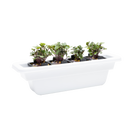
To grow hydroponic strawberries indoors, keep your nutrient solution at a pH of 5.5–6.0, maintain water temperature between 65–72°F, and provide 14–16 hours of light daily. Under these conditions, most varieties begin producing fruit within 60–90 days. Compact, everbearing varieties like Albion or Seascape adapt especially well to indoor hydroponic systems.
Hydroponic strawberry growing means cultivating strawberry plants in a water-based nutrient solution rather than soil. Instead of mining the ground for minerals, your plants get everything they need delivered directly to their roots. That efficiency translates to faster growth, higher yields per square foot, and the ability to harvest fresh strawberries year-round — no matter the season outside your window.
How to Set Up Your Hydroponic Strawberry System Indoors
Start by choosing a system that holds water, circulates nutrients, and supports the root zone. Nutrient Film Technique (NFT) and Deep Water Culture (DWC) are the two most popular methods for strawberries. Both work well at home. If you want a ready-to-run solution, The Rise Garden 3 offers a full-size, multi-level hydroponic setup that handles the circulation and reservoir management for you.
Fill your reservoir with a balanced hydroponic nutrient solution mixed to an electrical conductivity (EC) of 1.2–1.8 mS/cm for strawberries. EC measures the concentration of dissolved minerals in your water — think of it as the "strength" of the nutrient mix. Too low and plants starve; too high and roots burn. Check pH and EC every two to three days and top off with fresh solution as water levels drop.
Lighting is non-negotiable. Strawberries need 14–16 hours of full-spectrum light per day to flower and fruit. LED grow lights in the 3,000–5,000K color temperature range replicate the broad-spectrum light strawberries receive outdoors. Position lights 12–18 inches above the canopy and use a timer to keep the schedule consistent.
What Are the Best Strawberry Varieties for Indoor Hydroponic Growing?
Variety selection matters more than most beginners expect. Day-neutral and everbearing varieties outperform June-bearing types indoors because they fruit based on temperature and day length — not a specific seasonal light trigger that your grow lights can't easily replicate.
Top choices for indoor hydroponic growing include:
- Albion – Large fruit, disease-resistant, consistent producer
- Seascape – High yields, firm berries, tolerates variable temps
- Tristar – Compact plant size, excellent flavor, true day-neutral
- Elan – Bred specifically for controlled-environment agriculture
Research from the University of Florida IFAS Extension confirms that day-neutral varieties maintain consistent fruiting across seasons, making them the preferred choice for year-round indoor production.
Growing Strawberries Hydroponically from Runners — Does It Work?
Yes, and it's one of the most cost-effective ways to expand your harvest. Growing strawberries hydroponically from runners means propagating new plants from the horizontal stems (called stolons or runners) that a mature strawberry plant naturally sends out. Each runner tip develops tiny roots and can be snipped free once those roots are 1–2 inches long.
To root a runner hydroponically, place the tip into a small net pot filled with a clean medium like hydroton (expanded clay pebbles) and suspend it so the roots dangle into a shallow nutrient solution. Roots establish within 10–14 days. Once the new plant has 3–4 true leaves, move it into your main system.
A single healthy strawberry plant can produce 3–5 runners per season, meaning a starter set of four plants can become 12–20 plants within one growing cycle. This is a practical way to fill out larger systems like The Rise Loft, which provides multiple growing levels and enough canopy space to run a continuous strawberry production rotation.
Hydroponic Strawberry Care Tips: What to Watch Every Week
Consistent monitoring separates a good harvest from a disappointing one. Here's what to check regularly:
pH drift is the most common cause of nutrient lockout in hydroponic systems. Strawberry roots absorb different minerals at different rates, which causes the pH of your reservoir to shift over time. Test every 2–3 days and adjust back to the 5.5–6.0 range using a pH-up or pH-down solution.
Pollination is something you have to handle indoors. Outdoors, bees do this work. Inside, lightly shake each open flower or use a small paintbrush to transfer pollen between blooms. Do this daily when flowers are open. Skipping pollination is the single most common reason indoor strawberry plants flower but never fruit.
Root health should be checked weekly. Healthy hydroponic roots are white or light tan. Brown, slimy roots signal root rot, typically caused by warm reservoir temperatures (above 72°F) or inadequate aeration. Keep a small air stone running in your reservoir and maintain water temps in the 65–72°F range.
According to a study published by the USDA Agricultural Research Service, strawberry plants grown in optimized hydroponic systems can yield up to 2–3 times more fruit per plant than field-grown counterparts under the same growing period. That's the real payoff for managing the details.
If you're just getting started and want a manageable entry point, the Personal Rise Garden is a compact countertop system that lets you run a small strawberry crop — two to four plants — while you learn the rhythms of pH management, lighting cycles, and nutrient dosing before scaling up.
Frequently Asked Questions
How long does it take to grow hydroponic strawberries indoors?
Most everbearing varieties begin producing ripe fruit 60–90 days after transplant when conditions are dialed in — 14–16 hours of light, pH 5.5–6.0, and water temps between 65–72°F. Starting from runners rather than seed cuts a few weeks off that timeline since the plant is already established.
Do hydroponic strawberries taste as good as soil-grown ones?
Yes — and in many cases better. Flavor in strawberries is primarily driven by sugar-to-acid ratio and ripeness at harvest. Because you control the nutrient formula and pick berries at peak ripeness, hydroponic strawberries often outperform supermarket varieties that are picked early for shipping. Reducing nitrogen in the final weeks before harvest boosts sweetness noticeably.
Can I use regular fertilizer for hydroponic strawberries?
No. Standard soil fertilizers are not water-soluble enough and often contain compounds that can clog hydroponic systems or create toxic salt buildup. Use a two- or three-part hydroponic nutrient formula designed for fruiting crops. Look for formulas with slightly elevated phosphorus and potassium during the flowering and fruiting stage, as these macronutrients directly support bloom and fruit development.