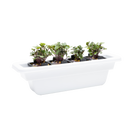
A truly great fresh mint lemonade recipe starts with homegrown mint — the kind you snip right before squeezing your lemons, still fragrant and packed with essential oils that store-bought bunches simply can't match. This article walks you through growing your own mint indoors with a hydroponic garden, making a foolproof mint simple syrup, building a refreshing mint lemonade pitcher perfect for summer gatherings, and even mixing up a sparkling mint lemonade variation that will become your signature warm-weather drink. From seed pod to glass, here's everything you need to know.
Why Homegrown Mint Elevates Your Fresh Mint Lemonade Recipe
Mint contains a group of aromatic compounds — primarily menthol and menthone — that begin to volatilize and degrade as soon as the herb is harvested. A study published by the University of California Cooperative Extension found that fresh-cut herbs can lose up to 40% of their volatile aromatic compounds within 24 hours of harvest when stored at room temperature. That means the mint sitting in the produce section of your grocery store may already be a shadow of its former self by the time it reaches your glass.
When you grow mint hydroponically at home, you harvest on demand. Snipping a sprig 10 minutes before you start juicing lemons is a genuinely different culinary experience. Hydroponic mint also tends to grow faster than soil-grown plants — research from controlled indoor agriculture studies consistently shows that hydroponic herbs can reach harvest size 30–50% faster than their soil-grown counterparts because nutrients are delivered directly to the root zone rather than requiring the plant to seek them out through soil.
The The Rise Garden 3 is a full-size indoor hydroponic system designed to grow multiple herb varieties simultaneously, so you can have mint, lemon balm, and basil thriving side by side — all of which happen to shine in summer beverages. If counter space is the priority, the compact Personal Garden fits neatly on a kitchen countertop and still produces more than enough mint for weekly lemonade batches.
How to Grow Mint Indoors with a Hydroponic Garden
Mint (Mentha spp.) is one of the most forgiving herbs you can grow hydroponically. It thrives in a slightly acidic pH range of 5.5 to 6.5 — pH refers to the measure of acidity or alkalinity in your nutrient solution, and keeping it in this range ensures your mint can absorb the minerals it needs efficiently. Electrical conductivity (EC), which measures the concentration of dissolved nutrients in the water, should sit between 1.6 and 2.2 mS/cm for healthy mint growth.
Here's a quick-start guide for hydroponic mint:
- Start with quality seed pods: Rise Gardens seed pods are pre-seeded and designed to drop directly into any Rise garden system, eliminating the guesswork of germination.
- Light cycle: Mint performs best with 14–16 hours of light per day. The integrated LED lights in Rise garden systems are calibrated for leafy herb production, so you don't need to adjust anything manually.
- Nutrients: Use a balanced hydroponic nutrients formula formulated for leafy greens and herbs. Mint is a moderate feeder — avoid over-fertilizing, which can cause the leaves to taste bitter.
- Harvesting: Begin harvesting once your plant has at least 4–6 true leaves. Always cut just above a leaf node to encourage bushy, productive regrowth. Consistent harvesting actually stimulates more growth.
- Water temperature: Keep your reservoir water between 65°F and 72°F. Water that is too warm depletes oxygen levels, which can stress roots.
NASA's Veggie project, which researches plant growth in microgravity aboard the International Space Station, has consistently highlighted herbs like mint as ideal candidates for controlled-environment agriculture because of their rapid growth cycle, compact size, and high sensory value — qualities that translate perfectly to home hydroponic gardens here on Earth.
Mint Simple Syrup Recipe: The Secret Foundation
Every great mint lemonade pitcher for summer is built on a well-made mint simple syrup. Simple syrup is a 1:1 ratio of granulated sugar dissolved in water, infused with fresh mint to extract its aromatic oils. Making your own takes about 10 minutes and keeps in the refrigerator for up to 3 to 4 weeks in a sealed glass jar — far longer than fresh mint will stay vibrant on the counter.
Mint Simple Syrup Recipe
- 1 cup granulated white sugar
- 1 cup filtered water
- 1 cup loosely packed fresh mint leaves (about 20–25 large leaves from your hydroponic garden)
Instructions:
- Combine sugar and water in a small saucepan over medium heat.
- Stir until the sugar is fully dissolved — this takes about 3–4 minutes. Do not boil vigorously.
- Remove from heat and immediately add your fresh mint leaves.
- Let the mint steep in the hot syrup for 20–30 minutes. A longer steep produces a more intense mint flavor.
- Strain through a fine mesh sieve, pressing the mint gently to release any remaining liquid.
- Cool completely before storing in a glass jar in the refrigerator.
Pro tip: For a more complex flavor, add a 2-inch strip of lemon zest to the syrup while steeping. The citrus oils marry beautifully with the menthol compounds in the mint.
Fresh Mint Lemonade Recipe: Step-by-Step for a Full Pitcher
This fresh mint lemonade recipe is scaled for a standard 2-quart pitcher — ideal for four to six servings. Use your homemade mint simple syrup and freshly squeezed lemons for best results. According to the USDA, one medium lemon yields approximately 2 to 3 tablespoons (30–45 ml) of juice, so plan on 8–10 lemons for this recipe.
Ingredients (makes 2 quarts / 8 cups):
- 1 cup freshly squeezed lemon juice (about 8–10 medium lemons)
- ¾ cup mint simple syrup (adjust to taste)
- 6 cups cold filtered water
- Fresh mint sprigs for garnish
- Lemon slices for garnish
- Ice
Instructions:
- Juice your lemons and strain out any seeds.
- In your pitcher, combine lemon juice and mint simple syrup. Stir to combine.
- Add cold water and stir again. Taste and adjust — add more syrup for sweetness or more lemon juice for tartness.
- Add a generous handful of ice directly to the pitcher.
- Garnish with fresh mint sprigs and thin lemon slices floating on top.
- Serve immediately or refrigerate for up to 24 hours. Stir before serving as the syrup can settle.
For a mint lemonade pitcher built for a summer party, you can double this recipe and prepare the syrup a day ahead. The lemonade base (without ice) stores well in the refrigerator for up to 48 hours without losing significant flavor.
Can You Make a Sparkling Mint Lemonade Version?
Absolutely — and sparkling mint lemonade is arguably the most crowd-pleasing summer drink variation you can make. The effervescence amplifies the minty aromatics and creates a lighter, more refreshing mouthfeel that pairs well with warm weather.
To convert any batch to sparkling mint lemonade:
- Replace the 6 cups of still water with 4 cups of still water + 2 cups of chilled sparkling water or club soda.
- Add the sparkling water last, pouring gently down the side of the pitcher to preserve as much carbonation as possible.
- Do not stir vigorously after adding sparkling water — a gentle single pass with a long spoon is enough.
- Serve immediately; sparkling lemonade loses its fizz quickly once poured.
For individual sparkling servings, build each glass separately: add 2–3 tablespoons of mint syrup, 2 tablespoons of lemon juice, ice, and top with sparkling water. This method preserves carbonation far better than batch-making the sparkling version in a pitcher.
If you want a more elevated presentation, use a 1:1 mix of sparkling water and coconut water in place of plain sparkling water. The subtle sweetness of coconut water rounds out the tartness beautifully without adding refined sugar.
What Indoor Garden System Works Best for Growing Mint Year-Round?
The best indoor garden for growing mint depends on how much you plan to use it and how much space you have available. Mint is a vigorous grower — it spreads aggressively in outdoor soil gardens, but in a hydroponic system, each plant stays contained in its pod while still producing generously.
For households that use mint heavily — multiple recipes per week, plus garnishes and cocktails — The Rise Loft is a premium option that combines furniture-grade design with serious growing capacity. It's built to blend into living spaces like a piece of furniture, making it a practical and aesthetic choice for open-plan kitchens and dining areas where you'll actually want it on display.
If your goal is simply keeping a steady supply of fresh mint for lemonade and cooking, the Personal Garden is a compact countertop system that delivers reliable herb production without requiring significant counter real estate. It's a practical starting point that scales easily once you catch the growing habit.
Regardless of which system you use, mint is one of the most rewarding herbs to grow hydroponically because it regenerates quickly after each harvest. A well-maintained mint plant in a Rise garden system can supply fresh leaves every 7–10 days during active growth periods, meaning you'll rarely find yourself waiting for enough mint to make a pitcher of lemonade.
Frequently Asked Questions
How much fresh mint should I use in a mint lemonade recipe?
For a 2-quart pitcher using mint simple syrup as the base, you'll need approximately 20–25 large fresh mint leaves to make the syrup. If you prefer to muddle fresh mint directly into the lemonade instead, start with 8–10 leaves per serving and adjust to taste. Homegrown hydroponic mint tends to have a more concentrated flavor than store-bought, so you may find you need slightly less.
Can I use spearmint instead of peppermint for lemonade?
Yes — spearmint (Mentha spicata) is actually the more traditional choice for culinary uses like lemonade and cocktails. It has a sweeter, milder flavor profile compared to peppermint, which contains higher levels of menthol and can taste almost medicinal in large quantities. Both varieties grow equally well in hydroponic systems, so the choice comes down to personal preference.
How long does homemade mint simple syrup last in the refrigerator?
A properly made mint simple syrup stored in a clean, sealed glass jar will stay fresh in the refrigerator for 3 to 4 weeks. You can extend its shelf life slightly by making a rich simple syrup using a 2:1 sugar-to-water ratio, which has a higher sugar concentration that inhibits microbial growth. Discard the syrup if you notice any cloudiness, off smell, or visible mold.
Is it difficult to grow mint hydroponically for the first time?
Mint is one of the easiest herbs to grow hydroponically, making it an excellent first plant for new indoor gardeners. It germinates reliably, tolerates minor fluctuations in pH and nutrient levels better than more finicky herbs, and bounces back quickly after harvesting. Using pre-seeded seed pods and a purpose-built system like a Rise garden removes most of the technical variables and lets you focus on enjoying the harvest.