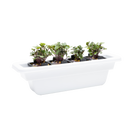
Growing cherry tomatoes indoors under lights is one of the most rewarding projects a home gardener can take on — and one of the most achievable, even without a single window. Indoor grow lights now make it possible to produce a continuous harvest of sweet, vine-ripened cherry tomatoes no matter the season, zip code, or apartment size. This guide covers everything you need to know: choosing the right variety, dialing in your light schedule, building a support system, and managing nutrients so your plants thrive from seedling to harvest.
What Makes Cherry Tomatoes a Great Choice for Indoor Growing?
Cherry tomatoes are among the most forgiving fruiting crops you can grow indoors. Their compact growth habit, shorter time to harvest, and adaptability to container and hydroponic environments make them a natural fit for grow-light setups. Compared to beefsteak or heirloom slicers, cherry tomatoes reach maturity faster — typically 55 to 70 days from transplant — and produce fruit in clusters that ripen in succession, giving you ongoing harvests rather than one big flush.
Hydroponics, the method of growing plants in a nutrient-rich water solution without soil, accelerates this process even further. Research from the University of Arizona's Controlled Environment Agriculture Center has shown that hydroponic tomatoes can produce yields up to 11 times higher per square foot than field-grown plants when light, temperature, and nutrient conditions are optimized. That kind of efficiency is exactly why indoor hydroponic gardens are built around systems like fruiting crops.
Cherry tomatoes also respond well to the stable, controlled environments that indoor gardens provide. No unexpected frost, no fungal pressure from outdoor humidity swings, no soil-borne pests. You set the conditions; the plants deliver.
Choosing the Best Cherry Tomato Variety for Indoors
Not every cherry tomato is suited for life under grow lights. When you're selecting the best cherry tomato variety indoors, you want cultivars that stay compact, set fruit reliably without strong wind pollination cues, and perform well in the controlled temperature range (65–80°F / 18–27°C) typical of most homes.
Here are varieties worth growing indoors:
- Tumbling Tom Red: A trailing, determinate variety with a naturally compact habit. Excellent for smaller setups and produces clusters of 1-inch fruits.
- Sweet Million: An indeterminate variety that needs vertical support but rewards you with enormous clusters of exceptionally sweet, crack-resistant fruits.
- Juliet: A plum-style cherry tomato with excellent disease resistance and thick skin that resists splitting — ideal for the stable humidity indoors.
- Sun Gold: Arguably the most popular cherry tomato among indoor growers for its tropical, intensely sweet flavor. Indeterminate and vigorous — plan for pruning.
- Tiny Tim: One of the most compact determinate varieties available, maxing out around 18 inches tall. A strong choice if you're growing in a smaller unit.
Rise Gardens offers cherry tomato seed pods pre-loaded and ready to drop directly into your garden — no seed starting trays, no messy soil, and no guesswork on germination depth. Each pod is pH-balanced and contains a growing medium designed specifically for hydroponic environments.
How Many Light Hours Do Cherry Tomatoes Need Indoors?
The cherry tomato light hours requirement is one of the most critical variables you'll manage. Cherry tomatoes are day-neutral plants, meaning they don't require a specific day-length to flower, but they are high-light crops that need substantial intensity and duration to set and ripen fruit reliably.
The general guideline for growing cherry tomatoes under lights is 14 to 18 hours of light per day, with a mandatory dark period of at least 6 hours. That dark period isn't just filler — it's when plants complete critical metabolic processes, including carbohydrate transport from leaves to developing fruit. Running your lights 24/7 will actually reduce fruit set and stress the plant over time.
Light intensity matters just as much as duration. Cherry tomatoes need a minimum of 400 µmol/m²/s of PPFD (photosynthetic photon flux density — the measure of light usable by plants) at the canopy level to produce fruit. For optimal yields, target 600–800 µmol/m²/s. Full-spectrum LED grow lights, like those built into Rise Gardens systems, are designed to deliver this spectrum and intensity at the canopy without the heat output of older HID or fluorescent technology.
NASA's Veggie Project, which has studied plant growth under LED lighting aboard the International Space Station since 2014, confirmed that full-spectrum LEDs delivering consistent light intensity produce healthy, harvestable crops in fully controlled environments — validating the approach home growers use every day in hydroponic systems.
A programmable timer is non-negotiable. Set your lights to run on a consistent 16-hours-on, 8-hours-off schedule and don't vary it. Cherry tomatoes are sensitive to photoperiod disruption during flowering and fruiting stages.
Building an Indoor Cherry Tomato Support Trellis
Any indeterminate cherry tomato variety — Sun Gold, Sweet Million, Juliet — will grow aggressively once it hits its stride under good lighting. Without an indoor cherry tomato support trellis system, the vines will collapse under the weight of their own fruit clusters, limiting airflow and making pruning nearly impossible.
Here are the most practical support approaches for indoor growers:
- Vertical string trellis: Anchor a length of soft twine or tomato clips to an overhead rod or the top frame of your garden system. Wind the growing stem around the string as it climbs. This is the standard method in commercial greenhouse tomato production and works just as well at home scale.
- Bamboo stake with spiral clips: For more compact varieties in smaller gardens, a single 24–36 inch bamboo stake with reusable plastic tomato clips holds the main stem upright without taking up much space.
- DIY wire cage: A cylinder of concrete reinforcement wire (6-inch grid) about 18 inches in diameter can be tucked around your plant and provides 360-degree support for sprawling growth. Works best for determinate varieties like Tiny Tim or Tumbling Tom.
For growers using The Rise Garden 3, the multi-tier design gives your tomato plants the vertical room they need while keeping the growing environment organized. The structured rows make it easy to run string supports vertically from the light bar frame down to the growing pods below.
Regardless of which method you choose, start training your plants early — once the main stem reaches 8–10 inches tall. Waiting until the plant is heavily loaded with fruit makes training difficult and risks snapping brittle stems.
Nutrients, pH, and EC: Dialing In Your Hydroponic System
Cherry tomatoes are heavy feeders, especially once they start setting fruit. In a hydroponic system, all nutrition comes from your nutrient solution — a precisely mixed blend of macro and micronutrients dissolved in water. Unlike soil, there's no buffer zone; the plant only gets what you put in the reservoir.
Key parameters to monitor:
- pH: The measure of acidity or alkalinity on a 0–14 scale. For hydroponic tomatoes, maintain a pH between 5.8 and 6.3. Outside this range, nutrient lockout occurs — the plant can't absorb minerals even when they're present in the water.
- EC (Electrical Conductivity): A measure of how many dissolved nutrients are in your solution, expressed in millisiemens per centimeter (mS/cm). Cherry tomatoes during the vegetative stage thrive at an EC of 2.0–2.5 mS/cm. Bump this to 2.5–3.5 mS/cm during flowering and fruiting to support the increased energy demand.
- Calcium and Magnesium: Two nutrients that tomatoes consume in large quantities. Deficiency shows up as blossom end rot (calcium) or interveinal chlorosis on new leaves (magnesium). A quality Cal-Mag supplement added to your reservoir weekly prevents both.
Rise Gardens' nutrients are formulated specifically for hydroponic fruiting crops, with the right nitrogen-to-phosphorus-to-potassium ratios for each growth stage. The two-part liquid formula makes it simple to adjust your solution as your plants move from seedling to full production.
Check your reservoir every 2–3 days. Top off with pH-adjusted water to maintain levels, and do a full reservoir change every 10–14 days to prevent nutrient salt buildup and microbial growth.
Pollination, Pruning, and Getting to Harvest
Outdoors, wind and bees handle tomato pollination. Indoors, that job falls to you. Cherry tomatoes are self-pollinating — each flower contains both male and female parts — but they need mechanical agitation to release pollen. Without it, your plants will flower abundantly and fruit sparingly.
The easiest technique: once or twice daily when flowers are open, gently shake each flowering truss or use an electric toothbrush held against the back of the flower cluster for 2–3 seconds. The vibration mimics the buzz of a bee's wings, releasing a cloud of pollen. Do this during your light-on period when the plant is metabolically active.
Pruning is equally essential for indeterminate varieties. Remove all suckers — the small shoots that emerge in the V-shaped junction between the main stem and a branch — until your plant is 12–18 inches tall. After that, you can allow one or two suckers to develop as secondary fruiting stems, but keep the total stem count to 2–3 to maintain airflow and direct energy into fruit production rather than vegetative growth.
If you want a garden system that gives you the space and light output to grow tomatoes alongside herbs and greens simultaneously, The Rise Loft is a premium indoor garden with furniture-grade design and a powerful full-spectrum lighting system that supports fruiting crops across multiple tiers.
Expect your first ripe cherry tomatoes approximately 55–70 days after transplanting seedlings into your hydroponic system. Harvest when fruits reach full color and have a slight give when gently squeezed. Leaving overripe fruit on the vine signals the plant to slow production — pick consistently to keep the harvest coming.
FAQ: Growing Cherry Tomatoes Indoors Under Lights
How many hours of light do cherry tomatoes need indoors?
Cherry tomatoes need 14 to 18 hours of light per day under grow lights to flower and fruit reliably. Pair this with a minimum 6-hour dark period — this rest cycle is essential for fruit development and overall plant health. A programmable outlet timer takes all the guesswork out of managing this schedule.
Can I grow cherry tomatoes in a small indoor hydroponic garden?
Yes, if you choose a compact or determinate variety. Tiny Tim and Tumbling Tom Red stay under 18–24 inches and are well-suited to a compact countertop system like the Personal Garden. Indeterminate varieties like Sun Gold need more vertical space and are better suited to a full-size system with adequate overhead clearance.
Why are my indoor cherry tomato plants flowering but not setting fruit?
The most common cause is inadequate pollination — indoors, there's no wind or insects to transfer pollen. Shake your flowering trusses gently once or twice a day, or use an electric toothbrush held against the back of each flower cluster during peak bloom hours. Low light intensity (below 400 µmol/m²/s PPFD) and temperature extremes above 85°F or below 55°F can also prevent fruit set.
What is the best nutrient solution pH for hydroponic cherry tomatoes?
Maintain your nutrient solution at a pH between 5.8 and 6.3 for hydroponic cherry tomatoes. Below 5.8, manganese and iron can reach toxic levels; above 6.3, calcium and phosphorus become less available to roots. Test pH every 2–3 days with a digital pH meter and adjust using food-grade pH Up or pH Down solutions.