A homegrown herb compound butter recipe is one of the simplest, most rewarding things you can make when you have fresh herbs growing right in your kitchen. Compound butter — softened butter blended with fresh herbs, aromatics, and seasoning — transforms an ordinary meal into something memorable. When those herbs come straight from your own indoor garden, the flavor difference is remarkable. This guide walks you through everything: which herbs to grow, how to make the butter, and all the ways you can use it once it's in your fridge.
Why Homegrown Herbs Make a Better Compound Butter
The gap between store-bought herbs and freshly harvested ones is not subtle. Once an herb is cut and packaged, it begins losing its volatile aromatic compounds — the molecules responsible for that bright, punchy flavor you're after in a compound butter. A 2020 study published by the University of California Cooperative Extension found that fresh-cut herbs can lose up to 40% of their essential oil content within 24 hours of harvest when stored at room temperature.
When you grow herbs hydroponically indoors, you harvest them minutes before use. Hydroponics — a method of growing plants in a nutrient-rich water solution rather than soil — gives you precise control over what your plants receive, meaning healthier, more flavorful growth year-round. According to research supported by the USDA's Agricultural Research Service, hydroponically grown basil contains measurably higher concentrations of key flavor compounds compared to field-grown counterparts under certain controlled conditions.
For compound butter specifically, this intensity matters. You're using a relatively small amount of herb material to flavor a large amount of butter, so the potency of each leaf and stem makes a real difference in the finished product.
The Best Herbs to Grow for Herb Butter With Chives and Parsley
The classic foundation for a compound butter is herb butter with chives and parsley — and for good reason. Chives bring a mild, onion-forward brightness, while flat-leaf parsley contributes a clean, grassy depth that rounds everything out. Together, they create a balanced flavor profile that works with almost any dish.
Here are the top herbs to keep growing for compound butter use:
- Chives — fast-growing, prolific, and ready to snip in as little as 3–4 weeks from germination
- Flat-leaf parsley — slightly slower to establish but rewarding; richer flavor than curly varieties
- Thyme — woody and savory, pairs especially well with garlic butter applications
- Rosemary — resinous and aromatic; use sparingly so it doesn't overpower
- Tarragon — an underrated compound butter herb with an anise-like finish, excellent with chicken and fish
- Basil — works beautifully in a summer-style compound butter with lemon zest
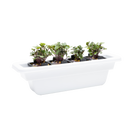
With a Personal Garden on your kitchen counter, you can keep four to six herb varieties growing simultaneously, giving you a constant rotation to work with. At just over a square foot of footprint, it fits on most countertops and plugs into a standard outlet — no outdoor space or grow tent required.
Homegrown Herb Compound Butter Recipe: Step-by-Step
This recipe makes one log of compound butter, roughly 8 tablespoons. It keeps in the refrigerator for up to two weeks and in the freezer for up to three months.
Ingredients
- 8 tablespoons (1 stick) unsalted butter, softened to room temperature
- 2 tablespoons fresh chives, finely minced
- 2 tablespoons fresh flat-leaf parsley, finely chopped
- 1 tablespoon fresh thyme leaves
- 1 clove garlic, minced or pressed (optional but recommended)
- 1 teaspoon lemon zest
- ½ teaspoon flaky sea salt
- ¼ teaspoon freshly cracked black pepper
Instructions
- Harvest your herbs. Snip chives, parsley, and thyme directly from your indoor garden about 15–30 minutes before you plan to use them. Rinse briefly under cold water and pat completely dry — any excess moisture will make the butter watery.
- Soften your butter. Leave the butter out at room temperature for 45–60 minutes until it's genuinely soft. You should be able to press a finger into it easily. Don't microwave it — you want soft, not melted.
- Combine. In a medium bowl, use a fork or rubber spatula to work the herbs, garlic, lemon zest, salt, and pepper into the softened butter. Mix until fully incorporated and the herbs are evenly distributed throughout.
- Taste and adjust. Give it a taste on a small piece of bread or cracker. Adjust salt or herb ratios to your preference.
- Roll and chill. Scoop the butter onto a sheet of plastic wrap or parchment paper. Shape it into a log roughly 1.5 inches in diameter. Roll the paper tightly, twist the ends, and refrigerate for at least one hour before using. This firms it up so you can slice clean rounds.
- Label and store. Write the date on the wrapper. Refrigerate for up to two weeks or freeze for up to three months.
Pro tip: If you're freezing it, cut the log into ½-inch rounds before freezing so you can grab individual portions without thawing the whole thing.
What Are the Best Garden Herb Butter Uses?
One of the best things about compound butter is its versatility. Once you have a log in your fridge, you'll find yourself reaching for it constantly. Here are the most impactful garden herb butter uses to put your batch to work:
Fresh Herb Butter for Steak
This is the most iconic application. Fresh herb butter for steak is a restaurant technique you can replicate at home with ease. After you pull a steak off the grill or cast iron and let it rest for 5 minutes, place a ½-inch round of compound butter directly on top. The residual heat melts it slowly, creating a glossy, herb-laced pan sauce effect right on the plate. The fat in the butter carries the herb aromatics directly into every bite.
Finishing Roasted Vegetables
Toss freshly roasted carrots, asparagus, or potatoes with a tablespoon of herb butter straight out of the oven. The heat melts the butter instantly, coating every surface with herbed flavor far more effectively than olive oil drizzled on after the fact.
Melted Over Grilled Fish or Chicken
A pat of the chive-parsley butter over a grilled salmon fillet or chicken breast adds richness and complexity without masking the protein's natural flavor. Tarragon-forward versions are especially good with fish.
Stirred Into Pasta or Risotto
Swirl a tablespoon into a finished pasta dish or risotto right before serving. This is a classic French technique called monter au beurre — mounting with butter — that adds body and a silky finish.
Spread on Bread or Biscuits
Simply spreading it on warm crusty bread or homemade biscuits is reason enough to keep a log in your fridge at all times. It elevates even the simplest bread basket into something guests will ask about.
Under the Skin of Roasted Poultry
Before roasting a whole chicken or turkey breast, work softened herb butter under the skin directly against the meat. As the bird roasts, the butter bastes the meat from the inside, keeping it moist and infusing every bite with herbed flavor.
How Do You Grow Enough Herbs Indoors to Cook With Regularly?
This is the practical question most home cooks run into: you try growing herbs on a windowsill, use them once, and the plant looks stripped for weeks. The key is growing with a system designed for continuous harvesting — and understanding the "cut and come again" principle.
Most culinary herbs — chives, parsley, basil, thyme — respond to harvesting by producing more growth. The more you trim, the more they branch. The mistake most people make is harvesting too much at once, or cutting below the active growth nodes. With proper technique and a well-lit growing environment, a single chive plant can yield several tablespoons of fresh chives every week.
Natural light from a window rarely provides enough consistent intensity for productive herb growth, especially in fall and winter. North-facing windows may deliver as little as 200–400 lux of light — well below the 2,000–5,000 lux most culinary herbs need for vigorous growth. An indoor hydroponic garden with integrated full-spectrum LED lighting solves this completely.
The The Rise Garden 3 is a full-size system with three growing levels, supporting up to 36 plant pods simultaneously — more than enough to keep a robust selection of cooking herbs in constant production alongside lettuces and other greens. Each level has its own adjustable LED light panel, and the automated pump system handles water circulation on a timer so you're not managing it daily.
For households serious about cooking with fresh ingredients year-round, the The Rise Loft brings that same growing capacity in a furniture-grade cabinet design that fits seamlessly into a dining room or kitchen without looking like a grow operation. It's designed to be a statement piece as much as a growing system.
Whichever system fits your space, starting with high-quality seed pods pre-loaded with organic seeds means you're set up for success from day one — no transplanting, no soil mess, and no guessing about germination depth.
Tips for Getting the Most Flavor From Your Hydroponic Herbs
Growing herbs hydroponically gives you a head start, but a few practices will take your flavor from good to exceptional.
Harvest in the Morning
Essential oil concentrations in herbs are highest in the morning, before the heat of the day causes any volatilization. Even indoors, where temperature swings are minimal, this holds true — plant metabolic rhythms follow light cycles, not just temperature.
Don't Over-Water or Under-Nutrient
In a hydroponic system, your plants are growing in water — but nutrient concentration matters enormously. Electrical conductivity (EC), a measure of dissolved nutrient concentration in your water, directly affects flavor intensity. Herbs grown at slightly higher EC levels tend to produce more concentrated essential oils. Use quality nutrients formulated for leafy herbs and follow the recommended dilution rates for the most flavorful results.
Let Some Herbs Mature Before Heavy Harvesting
Parsley, in particular, benefits from being allowed to establish for 4–6 weeks before you begin heavy harvesting. Chives can be trimmed earlier — starting around 3–4 weeks — because they regrow from the base rather than from branching nodes.
Keep the Root Zone Oxygenated
Dissolved oxygen in the nutrient solution is critical for root health and nutrient uptake. Most hydroponic garden systems handle this automatically, but if you ever notice roots looking brown or slimy, it's usually a sign of low oxygen or pH imbalance. Target a pH between 5.5 and 6.5 for most culinary herbs — this is the range where nutrient availability is optimal.
Frequently Asked Questions
How long does homemade herb compound butter last?
Refrigerated and tightly wrapped, herb compound butter keeps for up to two weeks. Frozen, it holds quality for up to three months. Always label your butter log with the date so you can track freshness without guessing.
Can I use dried herbs instead of fresh for compound butter?
You can, but the flavor profile changes significantly. Dried herbs are more concentrated in some compounds but lose the bright, volatile aromatics that make fresh herb butter so lively. If using dried herbs, use roughly one-third the amount called for in a fresh herb recipe, and consider adding a squeeze of fresh lemon juice to compensate for the brightness you lose.
What butter works best for compound butter?
European-style unsalted butter with a higher fat content — typically 82–84% butterfat versus the standard American 80% — produces a creamier, more luxurious compound butter. The higher fat content carries herb flavors more effectively and gives you a richer mouthfeel, especially noticeable when using it as a finishing butter for steak or fish.
Which herbs should I avoid in compound butter?
Very assertive herbs like lavender and lemon balm can easily dominate the flavor of a compound butter if used in the same proportions as milder herbs. Cilantro also divides opinion strongly and tends to taste soapy to a portion of the population due to a genetic variation in smell receptors. Mint works well in sweet compound butters — paired with honey for cornbread or waffles — but tends to clash with savory applications like steak or roasted vegetables.