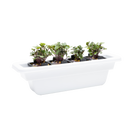
Succession planting in a hydroponic garden is the practice of staggering your seed starts at regular intervals — typically every one to three weeks — so that as one plant reaches harvest, another is already well on its way. Instead of a single feast followed by an empty tray, you create a continuous harvest hydroponic system that keeps fresh greens, herbs, and vegetables on your kitchen counter week after week. If you've ever watched an entire crop of lettuce bolt at once or found yourself with a month-long gap between harvests, succession planting is the strategy that fixes that cycle for good.
Why Succession Planting Works So Well in Hydroponics
Soil gardeners have used succession planting for centuries, but the technique reaches a new level of efficiency indoors with hydroponics. Because you control the environment — light cycles, water temperature, nutrient concentration, and pH — you can predict growth timelines with remarkable accuracy. There's no waiting on weather windows or soil conditions to warm up. That predictability is exactly what makes a staggered planting hydroponics schedule so reliable.
In a hydroponic system, most leafy greens like butterhead lettuce, spinach, and arugula reach harvest size in 30 to 45 days from transplant. Herbs like basil take roughly 3 to 4 weeks once established. Because these timelines are consistent, you can work backward from your desired harvest frequency and build a replanting schedule for your hydroponic garden that fits your household's appetite.
According to research from the University of Arizona's Controlled Environment Agriculture Center, hydroponic lettuce production can yield up to 11 times more output per square foot annually compared to field-grown lettuce, largely because of year-round growing cycles and tight spacing. Succession planting multiplies that advantage by ensuring no grow slot sits idle.
How to Build a Replanting Schedule for Your Hydroponic Garden
Building a replanting schedule for your hydroponic garden doesn't require complex spreadsheets. Start with three simple questions: How many people are you feeding? How often do you want to harvest? Which plants are you growing?
Here's a practical framework:
- Step 1 — Count your grow sites. A system like The Rise Garden 3 offers 108 grow sites across three tiers, giving you significant flexibility to stagger crops. A Personal Garden has 12 grow sites, which works beautifully for a household of one to two people using a tight two-week rotation.
- Step 2 — Divide your sites into planting groups. If you have 12 sites and want to harvest every two weeks, start 6 pods now and 6 pods in two weeks. When the first group is harvested around week four, the second group is two weeks in and the first slots are ready to replant again.
- Step 3 — Track your start dates. Use a simple wall calendar, a notes app, or a whiteboard. Write the variety and start date on a piece of tape stuck to the tray. Low-tech works perfectly here.
- Step 4 — Adjust based on consumption. If you're always running out before the next harvest, tighten your interval from three weeks to two. If you're wasting greens, spread the groups out or reduce the number of sites per group.
A two-week staggered planting hydroponics cycle is the most popular starting point for families. It's frequent enough to maintain freshness but spacious enough that you're not replanting every few days.
What Are the Best Plants for Succession Planting in Hydroponics?
Not every plant is an ideal candidate for succession planting. The best choices share two traits: relatively short days-to-harvest and a cut-and-come-again or full-harvest growth habit. Here's a quick breakdown by category:
Top Picks for Continuous Harvest
- Loose-leaf lettuce varieties — Harvest the outer leaves as they mature and the plant keeps producing. Days to first harvest: 28–35 days.
- Spinach — Fast-growing, highly productive, and heat-sensitive, which means succession planting also helps you avoid bolting the whole crop at once. Days to harvest: 30–40 days.
- Arugula — Peppery flavor, quick turnaround at 25–35 days, and ideal for cut-and-come-again harvesting.
- Basil — Pinch the top sets of leaves regularly to encourage bushing. Start a fresh pod every 3 weeks so you always have young, productive plants.
- Kale and Swiss chard — Slower growers at 50–60 days, but once established they produce for months. Stagger just two or three start dates and you'll have overlapping harvests.
- Cilantro and dill — These bolt quickly once mature, so succession planting every 10–14 days is almost essential to maintain a steady supply.
Plants that are not ideal for tight succession schedules include large fruiting crops like tomatoes and peppers. They require more space and longer production cycles — better suited to a dedicated long-term growing slot rather than rapid rotation.
Rise Gardens' seed pods come pre-seeded and ready to drop into your system, which makes starting a new succession group as easy as opening a package. No measuring, no mess, and consistent germination rates mean your schedule stays on track.
How Does pH and Nutrient Management Affect Your Succession Schedule?
A continuous harvest hydroponic system is only as consistent as the environment you maintain. Two variables matter most: pH and electrical conductivity (EC), which measures the concentration of dissolved nutrients in your water.
pH is the measure of acidity or alkalinity on a scale of 0–14. Most hydroponic crops thrive between pH 5.5 and 6.5. When pH drifts outside that range, plants can't absorb nutrients efficiently — a problem called nutrient lockout — even if your reservoir is fully stocked. Check and adjust pH every two to three days, especially when you add fresh water.
EC (Electrical Conductivity) tells you how nutrient-dense your water is. Seedlings and young transplants prefer lower EC levels (around 0.8–1.2 mS/cm), while mature plants can handle higher concentrations (1.6–2.4 mS/cm depending on crop). When you introduce a new succession group of young seedlings alongside mature plants, keep that difference in mind. In multi-tier systems, this is a natural advantage — you can fine-tune nutrient delivery per tray.
NASA's Veggie project, which has been growing crops aboard the International Space Station since 2014, has documented that consistent nutrient delivery and lighting schedules are the two most critical factors in achieving repeatable, predictable growth cycles — the exact foundation that makes succession planting reliable.
Use quality nutrients formulated specifically for hydroponic systems. General-purpose fertilizers often lack the full micronutrient profile that soil provides naturally, leading to slow growth and off-schedule harvests that disrupt your staggered planting hydroponics plan.
Setting Up Your System for Long-Term Succession Success
The physical setup of your garden plays a big role in how easily you can maintain a replanting schedule for your hydroponic garden over months and years. Here are the key setup principles:
Choose a System With Enough Grow Sites to Stagger
If you only have four grow sites, you can still succession plant — but your groups will be small. More sites mean more flexibility. The The Rise Loft is a furniture-grade indoor garden designed to integrate into your living space while offering a generous number of grow sites across multiple tiers. Its vertical layout is particularly well-suited to succession planting because each tier can house a different age group of plants simultaneously.
Label Everything
When you're running two or three overlapping planting groups at once, it's easy to lose track of which tray was started when. A simple labeling system — variety name, start date, and expected harvest date written on a piece of waterproof tape — takes thirty seconds per pod and saves a lot of guesswork.
Clean Between Successions
Each time you harvest a group and replant, take five minutes to clean the net cups and tray section with a diluted hydrogen peroxide solution (3% concentration, diluted 1:1 with water). This prevents the buildup of algae and pathogens that can slow germination in your fresh pod group. A clean system is a fast system.
Keep a Simple Harvest Log
Note what you harvested, how much, and whether you ran out before the next group was ready. Over two to three months, patterns become clear and you can fine-tune your interval timing. Studies from Cornell University's Controlled Environment Agriculture program show that indoor growers who track environmental and yield data consistently improve their output by 15–25% within a single growing season.
Common Mistakes to Avoid With Staggered Planting in Hydroponics
Even experienced growers run into these pitfalls when starting a succession system. Here's what to watch for:
- Starting too many groups at once. Enthusiasm is great, but launching four planting groups in the first week defeats the purpose. Start with two groups, two weeks apart, and add complexity once the rhythm feels natural.
- Ignoring light distribution. In vertical systems, taller mature plants can shade younger plants on lower tiers. Arrange your succession groups so the smallest, youngest plants receive adequate light — or use adjustable light rails if your system supports them.
- Skipping the seedling stage. Pre-seeded pods need a germination period of 5–10 days before they're moved to the main reservoir. Factor this into your timeline. Your harvest date starts from transplant, not from when you dropped the pod in water.
- Letting a grow site sit empty. Every idle site is a missed harvest. The moment you pull a mature plant, have the next pod ready to go in. Even if it's not perfectly timed, filling the site keeps your continuous harvest hydroponic system running efficiently.
- Using the same variety exclusively. Rotating between two or three varieties of lettuce, for example, not only adds flavor variety to your meals but also reduces the risk of a single pest or disease wiping out your entire harvest pipeline.
Frequently Asked Questions About Succession Planting in Hydroponic Gardens
How often should I start new plants in a hydroponic succession system?
Most home growers find a two-week interval works well for leafy greens and herbs. This means every 14 days you're starting a new group of pods, and harvests arrive on a rolling basis rather than all at once. If you're growing faster-cycling crops like arugula or cilantro, you might tighten that to every 10 days.
Can I mix different plant varieties in the same succession group?
Yes, and it's actually encouraged. Mixing a fast-growing lettuce variety with a slightly slower herb in the same group is fine as long as their nutrient and pH requirements are similar. Avoid combining plants with very different EC needs — like heavy-feeding tomatoes with light-feeding herbs — in the same reservoir.
Does succession planting affect how much nutrient solution I need?
It does, but in a manageable way. When you're running young seedlings alongside mature plants, the overall nutrient draw from the reservoir will fluctuate. Check your EC more frequently — every two days rather than every three — when introducing a new succession group, and top off with fresh nutrient solution as needed to keep levels stable.
How long can I keep a continuous harvest hydroponic system running before I need to do a full reset?
Most growers do a full system flush and deep clean every three to four months. This involves draining the reservoir completely, cleaning all components, and starting fresh with new nutrient solution. Running a succession system doesn't change this timeline significantly, but it does mean you'll want to plan your clean-out during a natural gap between succession groups to minimize disruption to your harvest schedule.