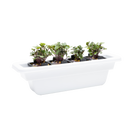
Growing microgreens hydroponically at home is one of the fastest, most rewarding ways to add fresh, nutrient-dense greens to your diet year-round. Microgreens are the seedling stage of vegetables, herbs, and flowers — harvested just 7 to 21 days after germination, right after the first true leaves appear. When you grow them using hydroponics (a soil-free method that delivers water and dissolved nutrients directly to plant roots), you get cleaner harvests, faster growth, and a tightly controlled environment that consistently produces results. Whether you have a dedicated grow room or just a few square feet of countertop space, hydroponic microgreens are a practical, beginner-friendly starting point.
Why Grow Microgreens Hydroponically Instead of in Soil?
The debate around hydroponic microgreens vs soil microgreens comes down to a few key factors: cleanliness, speed, consistency, and nutrient control. Soil growing is traditional and has its merits, but it introduces variability — inconsistent moisture retention, potential mold issues, fungus gnats, and the simple inconvenience of managing dirt indoors. Hydroponics removes most of those variables.
In a hydroponic system, roots sit on or hang over a growing medium (like a reusable grow mat, coco coir pad, or burlap mat) that stays moist but not waterlogged. Water circulates or is applied manually, carrying dissolved nutrients directly to the roots. This direct access means plants don't have to expend energy searching for food through soil — they can redirect that energy into above-ground growth.
Research published by the USDA has shown that microgreens can contain up to 40 times more nutrients by weight than their mature counterparts, including concentrated levels of vitamins C, E, and K, as well as beta-carotene and lutein. That nutrient density is why getting the growing method right matters — a well-managed hydroponic setup helps you protect and maximize every bit of that nutritional value.
Here's a quick comparison:
- Hydroponic microgreens: Faster germination, cleaner harvests, easier moisture control, reusable trays, lower risk of mold and pests
- Soil microgreens: Lower upfront cost, more forgiving for absolute beginners, but messier and harder to scale indoors
For indoor home growers, hydroponics wins on practicality almost every time.
Setting Up Your Microgreens Hydroponic Tray at Home
A proper microgreens hydroponic tray setup doesn't require expensive equipment, but the right components make a measurable difference in your results. Here's what you'll need:
Equipment Checklist
- Shallow trays (10x20 inches): Standard nursery trays work well. Use one solid tray beneath a perforated or solid growing tray on top.
- Growing medium: Hemp mats, jute mats, coco coir pads, or hydroponic grow pads all work. Avoid anything too dense that could restrict airflow to roots.
- Seeds: Use untreated, non-coated seeds. High germination rate matters more than variety at this stage.
- Water and nutrients: Start with pH-balanced water (target 5.5–6.5 for most microgreens) and a diluted hydroponic nutrient solution once seedlings have established.
- Humidity dome or cover: Used during the germination phase (first 2–4 days) to retain moisture.
- Grow light: 12–16 hours of full-spectrum light per day is ideal once seeds have sprouted.
Step-by-Step Setup
- Pre-soak your growing mat thoroughly, then squeeze out excess water until it's damp but not dripping.
- Place the mat in your tray and spread seeds evenly across the surface — aim for a single dense layer without too much stacking.
- Mist the seeds lightly and cover with your humidity dome or a second tray placed on top (this is called the "blackout phase").
- After 2–4 days (once seeds have sprouted 1–2 inches), remove the cover and place under your grow light.
- Bottom-water once daily by pouring a small amount of diluted nutrient solution into the bottom tray and allowing the mat to wick it upward. This keeps the canopy dry and dramatically reduces mold risk.
- Harvest with clean scissors at soil level when the first true leaves emerge — typically between day 7 and day 14 depending on the variety.
If you already use a hydroponic garden system like the Personal Garden for herbs or leafy greens, you'll find the principles almost identical — pH management, nutrient delivery, and light duration are the same fundamentals that apply across hydroponic growing at every scale.
How to Grow Sunflower Microgreens Hydroponically
Sunflower microgreens hydroponics is one of the most popular searches in the microgreens space — and for good reason. Sunflower microgreens are thick, crunchy, mildly nutty, and pack a serious nutritional punch. They're also one of the more forgiving varieties to grow hydroponically, making them a great starting point if you're new to the method.
What Makes Sunflower Microgreens Special
Sunflower microgreens are high in zinc, folate, and vitamin E. They're often used in sandwiches, salads, and smoothies as a protein-rich addition. A single 100g serving of sunflower microgreens provides approximately 6–8 grams of protein, making them one of the more protein-dense microgreen varieties available.
Hydroponic Sunflower Microgreens: Step-by-Step
- Pre-soak seeds: Sunflower seeds have a harder shell than most microgreen seeds. Soak them in clean water for 8–12 hours before planting to improve germination rates significantly.
- Plant densely: Sunflowers need a dense plant population to support each other as they grow upright. Aim for approximately 2 oz of seeds per 10x20 tray.
- Extend the blackout phase: Sunflowers benefit from 4–5 days under a weighted cover during germination. The weight helps the seedlings shed their hulls naturally as they push upward.
- Watch for mold: Because of their high seed density and larger seed size, sunflowers can be mold-prone. Bottom-watering (not top-misting) is especially critical here.
- Harvest between days 8–12: Harvest when the seed leaves (cotyledons) are fully open and bright yellow-green. Don't wait for true leaves — the flavor and texture are best at this stage.
Sunflower microgreens are one variety that genuinely benefits from a consistent, controllable environment. A system like The Rise Garden 3 gives you that kind of climate consistency for your broader indoor growing setup, even if you're running microgreens in separate trays alongside it.
What Nutrients Do Hydroponic Microgreens Actually Need?
Here's where a lot of beginners get confused: microgreens grown hydroponically don't need heavy feeding. In the first few days, seeds are drawing on their own stored energy (cotyledon nutrients) to germinate. Once the first true leaves emerge, that's when a light nutrient solution becomes beneficial.
For microgreens, keep your electrical conductivity (EC) — the measure of dissolved mineral concentration in your water — low. A target EC of 0.8–1.2 mS/cm is appropriate for most microgreen varieties. Compare that to mature leafy greens, which often thrive at EC levels of 1.6–2.4 mS/cm. Too much nutrient concentration at the microgreen stage can cause tip burn and stunted growth.
pH is equally important. Most microgreens prefer a pH range of 5.5–6.5. Outside that range, nutrient uptake becomes inefficient regardless of how much you add to the water — a phenomenon called nutrient lockout. A simple digital pH pen (under $20 at most garden centers) is one of the most useful tools you can add to your setup.
Rise Gardens' nutrients are formulated for hydroponic growing and can be diluted to appropriate levels for microgreens — use roughly 25–30% of the standard recommended dose for young seedlings.
Can You Grow Microgreens in a Rise Gardens System?
Rise Gardens systems are designed primarily for herbs, leafy greens, and vegetables grown in seed pods, but the hydroponic principles that power those systems translate directly to microgreen growing. You don't grow microgreens inside the pod slots — instead, you run shallow trays separately, using the same water quality standards and lighting knowledge you build through your Rise Gardens experience.
That said, growing microgreens alongside a full indoor hydroponic system is a natural progression for home growers. Many Rise Gardens users keep dedicated microgreen trays on a nearby shelf or countertop, using the same pH-balanced water and diluted nutrient solutions they already have on hand.
If you're looking for a premium indoor growing setup to complement your microgreens operation, The Rise Loft is a furniture-grade hydroponic garden that integrates seamlessly into living spaces — no utility-room aesthetic required. Its built-in full-spectrum LED lighting system creates the same consistent light conditions that microgreens thrive under.
According to NASA's Veggie project — the space agency's ongoing research into growing food in confined, controlled environments — consistent lighting cycles and controlled nutrient delivery are the two most impactful variables in hydroponic crop production. That research, while focused on long-duration space missions, maps directly onto what home hydroponic growers experience: consistency is everything.
Common Mistakes When Growing Microgreens Hydroponically (And How to Avoid Them)
Even with a simple setup, a few consistent mistakes trip up new microgreen growers. Here's what to watch for:
1. Overwatering
The most common problem. Microgreens don't need constant moisture — they need consistent moisture. Bottom-watering once daily is usually sufficient. If your tray still has standing water in the bottom at the next watering, skip it. Soggy mats are the primary cause of mold.
2. Skipping the Blackout Phase
The darkness and weight during germination aren't optional steps — they drive root development and help seeds shed their hulls. Skipping this phase leads to uneven germination, leggy seedlings, and seeds that never fully open.
3. Harvesting Too Late
Microgreens have a short harvest window. Once the first true leaves appear (the second set, after the seed leaves), flavor and tenderness begin to decline in many varieties. Check your trays daily starting around day 7.
4. Using the Wrong Seeds
Always use seeds labeled for sprouting or microgreen use. Seeds treated with fungicides for field planting are not safe to eat as microgreens and can introduce chemical residues into your food.
5. Ignoring pH
Tap water pH varies widely by region — some areas have tap water above pH 7.5, which is too alkaline for efficient nutrient uptake. Test your water before you start and adjust with a pH-down solution as needed. This single habit resolves a surprising number of germination and growth issues.
Frequently Asked Questions
How long does it take to grow microgreens hydroponically?
Most hydroponic microgreens are ready to harvest between 7 and 14 days after planting, depending on the variety. Fast varieties like radish and mustard can be ready in as few as 6–7 days, while slower varieties like sunflower and peas typically take 10–14 days. Hydroponic growing often shaves 2–3 days off the timeline compared to soil growing due to more direct nutrient availability.
Do hydroponic microgreens need added nutrients?
For the first 5–7 days, seeds rely on their own stored energy and generally don't need added nutrients. After that, a very light nutrient solution (EC 0.8–1.2 mS/cm) can support continued growth and improve yields. Many growers skip nutrients entirely for short-cycle varieties like radish and still get excellent results — the seed itself contains enough stored energy to reach harvest.
What is the best growing medium for hydroponic microgreens?
Hemp fiber mats and jute mats are among the most popular choices for hydroponic microgreens because they hold moisture well, allow airflow to roots, and are biodegradable. Coco coir pads are another excellent option, particularly for dense seeding varieties like sunflowers. Avoid using loose media like perlite or clay pebbles for microgreens — they don't provide the flat, even surface that microgreen seeds need for consistent germination.
Can I regrow microgreens after harvesting?
Most microgreens are a single-harvest crop. Once you cut them at the stem, the plant doesn't regrow from the same seedling the way a cut-and-come-again herb like basil does. A small number of varieties — like peas — may produce a second flush, but the yield is typically much lower than the first harvest. The most efficient approach is to compost used mats and seed a fresh tray immediately after each harvest.