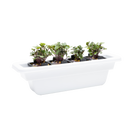
Knowing how often to change hydroponic reservoir water is one of the most important skills you can develop as an indoor gardener. Your reservoir — the container that holds your nutrient solution — is essentially the lifeblood of your hydroponic system. It delivers water, oxygen, and essential minerals directly to your plant roots. When that solution becomes depleted, imbalanced, or contaminated, your plants feel it fast. This guide breaks down exactly how to manage your reservoir water, build a reliable hydroponic reservoir change schedule, and understand the difference between topping off and doing a full replacement.
Why Your Hydroponic Reservoir Water Needs Regular Attention
In soil gardening, the ground acts as a natural buffer — it holds nutrients, filters pathogens, and moderates pH over time. In a hydroponic system, your nutrient solution does all of that work, and it has a much shorter window before it starts working against you instead of for you.
As plants drink from the reservoir, they absorb water and nutrients at different rates. Some nutrients get depleted faster than others. The remaining solution becomes increasingly concentrated or skewed in its mineral ratios. At the same time, plant roots release metabolic byproducts into the water, and microbial activity can build up over time. The result? A solution that no longer matches what your plants actually need.
Electrical conductivity (EC) is a measure of the total dissolved solids in your water — essentially, how nutrient-dense the solution is. pH measures acidity or alkalinity on a scale of 0–14, with most hydroponic crops thriving between 5.5 and 6.5. Both values shift as your reservoir ages, and without regular maintenance, they can drift outside the optimal range without any visible warning signs until your plants start to struggle.
According to research from the University of Arizona's Controlled Environment Agriculture Center, maintaining stable pH and EC levels in hydroponic systems is directly correlated with higher crop yields and fewer nutrient deficiency symptoms. Consistent reservoir management is not optional — it's foundational.
How Often Should You Change Your Hydroponic Reservoir Water?
The general rule of thumb for most home hydroponic systems is to do a full reservoir change every 7 to 14 days. However, this range shifts depending on several factors specific to your setup.
Plant size and growth stage: Larger, faster-growing plants consume nutrients more quickly. Seedlings and young plants in early vegetative growth use much less than mature plants approaching harvest. A tray of leafy greens will deplete your reservoir slower than a mature tomato plant at peak fruiting.
Reservoir volume relative to plant count: Smaller reservoirs with more plants need more frequent changes. If your system holds only a gallon or two of nutrient solution for multiple plants, you may need to change it every 5 to 7 days.
Temperature: Warmer water holds less dissolved oxygen and accelerates microbial growth. The ideal reservoir temperature is between 65°F and 72°F (18°C–22°C). If your water runs warmer than 75°F, plan to change it more frequently.
System type: Nutrient Film Technique (NFT) and Deep Water Culture (DWC) systems may need different schedules than wick-based or passive systems like those used in the Personal Garden, Rise Gardens' compact countertop hydroponic garden designed for everyday home use.
A practical starting point: check your reservoir every 2 to 3 days, top off with pH-adjusted water as needed, and plan a full change every 7 days during active growth phases. Extend to every 14 days during slower growth or if your EC and pH readings stay stable.
Topping Off vs. Full Reservoir Change: What's the Difference?
Understanding when to top off vs. replace nutrient solution is one of the most useful skills in reservoir maintenance for hydroponics — and the two tasks serve very different purposes.
Topping off means adding fresh, pH-adjusted water (and sometimes a small dose of nutrients) to bring your reservoir back up to the correct water level. Plants transpire constantly, pulling water up through their roots and releasing it through their leaves. On warm days or during rapid growth, your water level can drop noticeably within 24 to 48 hours. Topping off replaces that lost volume without discarding the existing solution.
When you top off, use plain, pH-balanced water unless your EC reading has dropped significantly below your target range. Adding plain water to a reservoir where plants have consumed more water than nutrients helps rebalance the concentration. If your EC is low, add a diluted nutrient solution instead.
A full reservoir change means draining the system completely, rinsing the reservoir, and refilling with a fresh nutrient solution from scratch. This resets your baseline, removes any accumulated salts or metabolic waste, and gives you a clean starting point for pH and EC management.
A simple way to decide: if your pH and EC are within range and the water looks and smells clean, top off. If you're correcting pH more than twice in a single week, if your water has an odor, if you see algae, or if more than 10 to 14 days have passed since your last change — it's time for a full flush and refill.
Building a Consistent Hydroponic Reservoir Change Schedule
Consistency matters more than perfection. A hydroponic reservoir change schedule that you actually follow will outperform an ideal schedule that gets skipped. Here's a framework that works well for most home growers:
Every 1–2 days: Check water level and top off with pH-adjusted water if needed.
Every 3–4 days: Test pH and EC. Adjust pH if it has drifted outside your target range (5.5–6.5 for most vegetables and herbs). Add nutrients if EC has dropped below your target level.
Every 7–14 days: Perform a full reservoir change. Drain completely, wipe down the interior of the reservoir with a clean cloth, and refill with fresh, properly mixed nutrient solution.
Between crop cycles: Deep clean the entire reservoir with a diluted hydrogen peroxide solution (3% concentration at about 1 ml per liter of water) or a food-safe cleaner before starting new seed pods. This prevents biofilm buildup and removes any pathogens that could affect your next crop.
If you're growing in a larger system like The Rise Garden 3, Rise Gardens' full-size indoor hydroponic system, you may have a larger reservoir volume that extends your change interval — but the same testing cadence applies. More water volume gives you more buffer, not a free pass on monitoring.
Keep a simple log — even a sticky note on the side of your system — with the date of your last full change and your most recent pH/EC readings. Over time, you'll start to recognize patterns: how fast your specific plants deplete nutrients, how quickly your pH drifts, and how your environment affects reservoir stability.
What Happens If You Don't Change Your Reservoir Water Often Enough?
Skipping reservoir changes is one of the most common reasons new hydroponic growers run into problems. The effects build gradually, which makes it easy to miss the connection between a neglected reservoir and struggling plants.
Nutrient lockout: As individual nutrients are consumed unevenly, the remaining ratios become imbalanced. Even if your EC reads within normal range, certain elements may be depleted while others accumulate. This leads to nutrient lockout — a condition where plants physically cannot absorb the nutrients they need, even when those nutrients are present in the water.
pH instability: Older solutions are harder to buffer. You'll find yourself adding pH-up or pH-down more and more frequently, and the values will swing more wildly between checks.
Root rot and pathogens: Stagnant, nutrient-depleted water is a breeding ground for Pythium and other root pathogens. NASA's Veggie Project, which has studied plant growth in controlled environments since 2014, has documented that water quality management is one of the top variables in preventing pathogen-related crop loss in closed hydroponic systems.
Salt accumulation: Dissolved mineral salts build up on reservoir walls, pump components, and net pots over time. Heavy salt deposits can clog your system and alter local EC readings near root zones.
A study published through Cornell University's hydroponics research program found that plants grown in solutions changed every 7 days showed a 23% higher yield compared to those grown in solutions changed every 21 days under otherwise identical conditions. The difference wasn't dramatic week to week — but it compounded over a full growing cycle.
How Do pH and EC Readings Tell You When It's Time to Change?
Your pH and EC meters are the most reliable tools you have for knowing when to act. Rather than guessing, let the numbers guide your hydroponic reservoir change schedule.
pH target range: 5.5 to 6.5 for most vegetables, herbs, and leafy greens. Slight variation within that range is normal and even beneficial — it allows plants to access different nutrients that are available at different pH levels. A pH below 5.5 can cause iron and manganese toxicity; above 6.5, iron and phosphorus become less available.
EC target range: 1.2 to 2.4 mS/cm for most leafy greens and herbs; 2.0 to 3.5 mS/cm for fruiting plants like tomatoes and peppers. Seedlings prefer the lower end of the range. If your EC rises above your target, dilute with plain water. If it drops below, add more nutrients.
When to trigger a full change based on readings:
- pH needs adjustment more than twice in a 4-day period
- EC rises significantly despite no nutrient additions (indicates heavy water evaporation or salt buildup)
- EC drops below 50% of your target range despite regular topping off
- You cannot stabilize pH within 24 hours of adjustment
If you're growing in a premium system like The Rise Loft, Rise Gardens' furniture-grade indoor garden designed to blend into modern living spaces, keeping up with your reservoir readings is especially worthwhile given the investment in your setup and your plants.
Calibrate your pH and EC meters regularly — most meters require calibration every 1 to 4 weeks depending on use frequency. An uncalibrated meter giving you false readings is worse than no meter at all.
Frequently Asked Questions
Can I reuse old nutrient solution instead of throwing it away?
You can water outdoor soil plants with your old hydroponic reservoir water — the remaining nutrients are still beneficial for soil gardens. However, you should not reuse it in your hydroponic system. The imbalanced nutrient ratios and potential for pathogen buildup make it unsuitable for another cycle of hydroponic growing.
How much water should I use when mixing a fresh nutrient solution?
Always start with the total volume your reservoir holds and follow your nutrient manufacturer's recommended dilution rate, typically measured in milliliters per gallon or liter. Mix nutrients into room-temperature water, then adjust pH after mixing — adding nutrients changes the pH, so adjusting before you add them wastes pH solution.
Does the type of water I use affect how often I need to change the reservoir?
Yes, significantly. Hard tap water with high mineral content (above 200 ppm total dissolved solids) contributes to faster salt buildup and can skew your nutrient ratios. Filtered or reverse osmosis (RO) water gives you a cleaner baseline and often allows for a more stable reservoir that needs changing less frequently. Check your starting water's EC before adding any nutrients — anything above 0.4 mS/cm means your water is already adding measurable dissolved solids.
What should I do if my reservoir starts to smell bad?
A foul smell — often described as sulfuric, rotten, or swampy — is a strong indicator of anaerobic bacterial activity or root rot. Change the reservoir immediately, inspect your plant roots for brown, slimy tissue, and clean the reservoir thoroughly before refilling. Improving oxygenation with an air stone and keeping your reservoir temperature below 72°F will help prevent the problem from returning.