A hydroponic green goddess dressing recipe takes one of the most iconic homegrown herb sauces in American cuisine and makes it dramatically better — by starting with herbs you grew yourself, indoors, in water. Green goddess dressing is a creamy, herb-forward sauce traditionally built on a base of fresh basil, chives, parsley, and tarragon, blended with a tangy dairy component and a touch of acid. When those herbs come straight from a hydroponic system to your blender, the flavor difference is immediate and measurable: hydroponically grown herbs contain no soil-borne bitterness, retain higher moisture content, and can be harvested minutes before you use them. This guide walks you through exactly how to grow the herbs, blend the dressing, and why your indoor garden is the best kitchen tool you own for making it.
What Makes a Green Goddess Dressing — And Why Hydroponic Herbs Change Everything
Green goddess dressing originated at San Francisco's Palace Hotel in the 1920s, created in honor of actor George Arliss and his play, The Green Goddess. The original was built on mayonnaise, tarragon vinegar, anchovies, scallions, and a heavy hand of fresh herbs. Modern versions have evolved into a broader category of fresh herb green sauce — sometimes vegan, sometimes dairy-based, almost always blended — but the defining characteristic has always been the quality and freshness of the herbs.
That's exactly where hydroponic herbs salad dressing has an edge over anything made with store-bought produce. Herbs sold in grocery stores are typically harvested 7 to 14 days before they reach your kitchen, spending that time in refrigerated transport and display cases. Hydroponic herbs grown in your home are harvested seconds before they hit the blender. The aromatic oils responsible for flavor — the compounds that make basil smell like basil — are volatile, meaning they begin to dissipate the moment a leaf is cut. Freshness isn't a preference here; it's a chemistry advantage.
According to a study from the University of Arizona's Controlled Environment Agriculture Center, hydroponically grown herbs can contain up to 30% higher essential oil concentrations compared to field-grown counterparts under equivalent light conditions. Those essential oils are exactly what give your fresh herb green sauce its punch.
Which Hydroponic Herbs to Grow for Green Goddess Dressing
The good news is that almost every herb in a classic green goddess formula grows exceptionally well in an indoor hydroponic system. Here's a breakdown of what to grow and why each one matters to the final dressing:
- Basil: The workhorse of any herb-forward sauce. Sweet Genovese basil is traditional, but Thai basil adds an anise note that works beautifully. Basil thrives in hydroponic systems, germinating in as few as 5 to 7 days and reaching harvest size in 3 to 4 weeks.
- Chives: Provide an onion-forward sharpness that balances the creaminess of the dressing base. Chives grow steadily in hydroponic systems and can be snipped repeatedly without pulling the plant.
- Flat-leaf parsley: Adds a clean, slightly bitter green backbone. Parsley takes a bit longer to establish — roughly 3 to 4 weeks to first harvest — but is a prolific producer once it gets going.
- Tarragon: The herb that most defines classic green goddess flavor. Its anise and vanilla notes are irreplaceable in the traditional recipe. French tarragon is preferred over Russian tarragon for flavor intensity.
- Spinach or arugula (optional): Adding a small handful of leafy greens from your garden deepens the color and adds nutritional density without overpowering the herb flavor.
You can start all of these from seed pods designed specifically for indoor hydroponic systems. Rise Gardens seed pods are pre-seeded and pH-buffered, which removes the guesswork from germination and gives each plant a consistent, nutrient-rich start.
For home growers who want enough herb output to make dressings regularly, the The Rise Garden 3 offers a full-size indoor hydroponic garden system with three growing levels and 36 plant sites — enough capacity to keep basil, chives, parsley, and tarragon in continuous production without ever running out of one while waiting for another to recover.
How Do You Grow Hydroponic Herbs Indoors Fast Enough for Weekly Dressings?
The answer comes down to staggered planting and light consistency. Hydroponics accelerates plant growth by delivering water, oxygen, and nutrients directly to the root zone — eliminating the energy plants normally spend searching for resources in soil. The NASA Veggie Project, which has been studying plant growth in controlled environments since 2014 aboard the International Space Station, documented that plants grown hydroponically under LED lighting reach harvest size 25 to 50% faster than their soil-grown equivalents. That same principle applies in your kitchen.
To maintain a steady supply of herbs for weekly dressings, use a staggered planting approach: start a new set of basil and parsley pods every two to three weeks. That way, as one plant reaches peak harvest size, a younger plant is already two weeks into its growth cycle. Chives and tarragon can be treated as semi-permanent plants — trim them regularly and they'll continue producing for months.
Optimal growing conditions for dressing herbs in a hydroponic system:
- Water pH: 5.5 to 6.5 — the range where most herbs absorb nutrients most efficiently. Use a basic pH meter and adjust with pH up or down solution as needed.
- EC (Electrical Conductivity): 1.6 to 2.2 mS/cm for most culinary herbs. EC measures the concentration of dissolved nutrients in your water. Higher EC doesn't always mean better — oversaturating can cause nutrient burn.
- Light: 14 to 16 hours per day under full-spectrum LED. Herbs are light-hungry plants, and consistent light schedules directly impact leaf oil concentration and flavor intensity.
- Nutrients: Use a balanced liquid formula specifically designed for leafy plants and herbs. Rise Gardens nutrients are formulated to support herbs through every growth stage, from seedling to full production.
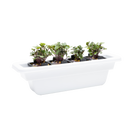
If you're growing herbs in a smaller space, the Personal Garden is a compact countertop hydroponic garden that fits on a kitchen counter and supports up to 9 plants — more than enough to keep your green goddess supply consistent.
The Hydroponic Green Goddess Dressing Recipe
This recipe is designed around what your indoor garden produces most abundantly. It's creamy, bright, deeply herby, and comes together in under five minutes once your herbs are harvested.
Ingredients
- 1 cup fresh basil leaves, loosely packed (harvested from your indoor garden)
- ½ cup flat-leaf parsley, loosely packed
- 3 tablespoons fresh chives, roughly chopped
- 1 tablespoon fresh tarragon leaves
- ½ cup full-fat Greek yogurt (or vegan mayo for a dairy-free version)
- ¼ cup good-quality mayonnaise
- 2 tablespoons fresh lemon juice
- 1 tablespoon white wine vinegar
- 1 garlic clove, peeled
- 2 tablespoons olive oil
- ½ teaspoon fine sea salt
- ¼ teaspoon freshly ground black pepper
- Optional: 2 anchovy fillets (traditional, adds depth and umami)
Instructions
- Harvest your herbs directly from your hydroponic garden right before blending. Rinse briefly under cold water and pat dry.
- Add all ingredients to a high-speed blender or food processor.
- Blend on high for 45 to 60 seconds, until completely smooth and vivid green.
- Taste and adjust — more lemon for brightness, more salt for depth, more herbs for intensity.
- Transfer to a glass jar and refrigerate. The dressing will keep for up to 5 days, though the color is most vibrant on day one.
Serving Suggestions
This hydroponic herbs salad dressing works on far more than salad. Use it as a dip for crudités, a sandwich spread, a grain bowl sauce, a marinade for grilled chicken or salmon, or drizzled over roasted vegetables. The brightness of freshly harvested hydroponic herbs means it doesn't need much help — it's already doing the work.
What Are the Nutritional Benefits of Making Dressing With Fresh Hydroponic Herbs?
Fresh herbs aren't just flavor delivery systems — they're nutritionally dense in ways that dried herbs and processed sauces simply cannot match. The USDA National Nutrient Database documents that fresh basil contains approximately 22% of the daily recommended value of Vitamin K per 5-gram serving, along with meaningful amounts of manganese and Vitamin A. Fresh parsley is one of the most concentrated plant sources of Vitamin K available, with a single tablespoon of fresh parsley providing roughly 62 micrograms — more than 50% of the daily recommended intake.
When you make a homegrown herb sauce from freshly harvested hydroponic herbs, you're preserving these nutrients at their peak. Heat, time, and processing degrade water-soluble vitamins rapidly. A blended fresh herb sauce made from just-harvested herbs and consumed within a day or two retains far more of that nutritional profile than any shelf-stable alternative.
The fat from Greek yogurt, mayonnaise, and olive oil in this recipe also plays a functional nutritional role: fat-soluble vitamins like Vitamin K and Vitamin A require dietary fat for absorption. The creaminess of this dressing isn't just textural — it makes the herbs' nutrients more bioavailable.
How to Scale Your Indoor Garden for Dressing-Ready Herb Harvests Year-Round
Making this dressing once is satisfying. Making it every week, year-round, without ever running to the grocery store for herbs — that's the real value proposition of an indoor hydroponic garden.
The math is straightforward: a single basil plant in a healthy hydroponic system can yield 4 to 6 ounces of harvestable leaves per month when maintained properly under full-spectrum LED lighting with consistent nutrients and water quality. One recipe of this green goddess dressing uses approximately 0.5 ounces of basil. That means a single well-maintained basil plant can support 8 to 12 batches of dressing per month — and that's one plant.
For a kitchen gardener who wants to go beyond herbs and grow salad greens alongside their dressing ingredients, the The Rise Loft is a premium indoor garden with furniture-grade design that integrates seamlessly into living spaces. It supports larger plant counts across multiple tiers, making it possible to grow the greens for your salad and every herb in your dressing from the same beautiful unit.
Year-round production is one of the most underappreciated advantages of indoor hydroponics. Outdoor herb gardens are seasonal. Grocery store herbs are expensive, often wilted, and wrapped in single-use plastic. An indoor hydroponic system growing basil, chives, parsley, and tarragon simultaneously gives you a permanent, reliable ingredient supply — one that improves every sauce, dressing, and dish you make.
Frequently Asked Questions
Can I make green goddess dressing with dried herbs instead of fresh hydroponic herbs?
Technically yes, but the result will be significantly different in both flavor and color. Fresh herbs contain volatile aromatic compounds and chlorophyll that give green goddess dressing its vivid color and bright, complex flavor. Dried herbs have lost most of those volatile oils during the drying process, producing a flatter, earthier sauce. If you have an indoor hydroponic garden, fresh herbs are always the better choice.
How long does homemade green goddess dressing last in the refrigerator?
Homemade green goddess dressing made with fresh herbs and dairy components typically keeps for 4 to 5 days in a sealed glass jar in the refrigerator. The color will shift from bright green to a more olive tone as the chlorophyll in the herbs oxidizes — this is normal and doesn't indicate spoilage. For best flavor and color, use within 48 hours of blending.
What hydroponic system is best for growing herbs for cooking?
The right system depends on how much you want to grow. For a focused herb setup producing enough for weekly dressings, a compact countertop system like the Personal Garden handles up to 9 plants efficiently. For larger households or anyone who wants to grow herbs alongside greens and vegetables simultaneously, a full-size system like The Rise Garden 3 provides significantly more growing capacity without requiring additional space footprint.
Do hydroponic herbs taste different from soil-grown herbs?
Many growers and culinary professionals report that hydroponically grown herbs taste cleaner and more concentrated than soil-grown equivalents. This is supported by research showing higher essential oil concentrations in controlled environment agriculture. Because hydroponic plants receive nutrients directly and consistently, they don't develop the soil-borne mineral variations that can create bitterness or inconsistency in flavor. The result is a more predictable, often more intense herb flavor — which is exactly what you want in a fresh herb green sauce.