This hydroponic herb compound butter roasted cod recipe is what happens when your indoor garden meets a weeknight dinner that feels genuinely special. Compound butter — softened butter blended with fresh herbs, aromatics, and seasoning — is one of the simplest ways to elevate a mild white fish like cod, and it gets dramatically better when the herbs come straight from living plants you grew yourself. This article walks you through growing the herbs hydroponically, making the compound butter from scratch, and roasting the cod to flaky, golden perfection.
Why Hydroponic Herbs Are the Secret Weapon in Any Seafood Dish
Fresh herbs from a hydroponic system are measurably different from what you find at the grocery store. Hydroponics grows plants in a nutrient-rich water solution rather than soil, giving roots constant, direct access to minerals. The result is faster, denser growth and significantly higher concentrations of the volatile aromatic compounds that give herbs their flavor and fragrance.
For a hydroponic herb white fish preparation like this one, that intensity matters. Cod has a clean, mild flavor that showcases herbs rather than competing with them. Dull, grocery-store parsley that sat in a plastic clamshell for five days will produce a compound butter that tastes flat. Herbs you snip from your The Rise Garden 3 fifteen minutes before cooking will produce something that tastes alive.
The best herb varieties to grow for this recipe include:
- Flat-leaf Italian parsley — bright, grassy, essential for classic compound butter
- Thyme — earthy and slightly floral, pairs beautifully with butter and lemon
- Chives — mild allium bite without the harshness of raw onion or garlic
- Tarragon — anise-forward, classically French, outstanding with white fish
- Dill — bright and citrus-adjacent, a natural partner for cod and seafood broadly
All five grow quickly in a hydroponic system, reaching harvestable size in 3 to 4 weeks from germination.
How to Grow Compound Butter Herbs in Your Rise Gardens System
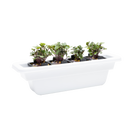
Setting up your herb garden for this recipe is straightforward regardless of which Rise Gardens system you're working with. The Personal Garden is a compact countertop unit ideal for a focused herb selection. The The Rise Loft is a furniture-grade floor-standing system with larger pod capacity, giving you room to grow all five herbs simultaneously.
Core growing parameters to keep in mind:
- pH: Maintain your reservoir between 5.5 and 6.5 for full nutrient absorption. A digital pH meter makes this easy to monitor weekly.
- EC (Electrical Conductivity): For leafy herbs, target an EC between 1.6 and 2.2 mS/cm. Higher EC levels can stress delicate herbs and produce bitter leaves.
- Light: Herbs generally need 14 to 16 hours of light per day. Rise Gardens app-controlled timers handle this automatically.
- Nutrients: Use a complete hydroponic nutrient formula. Rise Gardens nutrients are formulated specifically for their systems, removing much of the guesswork.
- Seed pods: Start from Rise Gardens seed pods, sized to fit the system's pod sites for consistent germination and proper root development.
Harvest your herbs in the morning when possible — essential oil concentrations are highest before heat volatilizes the aromatics. Use scissors rather than tearing, and cut stems just above a leaf node to encourage bushy regrowth.
What Is Compound Butter and How Do You Make It?
Compound butter is softened unsalted butter blended with flavorings — herbs, citrus zest, spices, aromatics — then re-chilled into a firm, sliceable log. When placed on hot food, it melts slowly and bastes the surface with concentrated flavor. It's a classical French technique used in professional kitchens on steaks, fish, vegetables, and bread.
For this compound butter seafood recipe, the formula is intentionally simple so the hydroponic herbs remain the star.
Herb Compound Butter (Makes enough for 4 portions of cod)
- 8 tablespoons (1 stick) unsalted butter, at room temperature
- 2 tablespoons fresh flat-leaf parsley, finely minced
- 1 tablespoon fresh thyme leaves, stripped from stems
- 1 tablespoon fresh chives, thinly sliced
- 1 teaspoon fresh tarragon, finely minced
- 1 teaspoon fresh dill, roughly chopped
- 1 teaspoon lemon zest (from about half a lemon)
- 1 small garlic clove, microplaned or very finely minced
- ¾ teaspoon kosher salt
- ¼ teaspoon freshly cracked black pepper
Instructions: Combine softened butter with all remaining ingredients in a medium bowl. Use a fork or rubber spatula to thoroughly blend until herbs are evenly distributed. Taste and adjust salt. Scrape onto plastic wrap, form into a cylinder about 1.5 inches in diameter, roll tightly, and twist the ends closed. Refrigerate for at least 30 minutes before using. The compound butter keeps refrigerated for up to 5 days or frozen for up to 2 months.
The Full Hydroponic Herb Compound Butter Roasted Cod Recipe
This complete indoor garden fish recipe serves four and takes about 35 minutes start to finish.
Ingredients
- 4 cod fillets, approximately 6 oz each
- 4 thick slices of herb compound butter (about ½ inch each)
- 2 tablespoons olive oil
- 1 teaspoon kosher salt
- ½ teaspoon freshly cracked black pepper
- ½ teaspoon smoked paprika (optional)
- Lemon wedges for serving
Instructions
- Preheat your oven to 400°F (205°C). Position a rack in the upper-middle position.
- Dry the fish. Pat cod fillets thoroughly dry with paper towels on both sides. Surface moisture steams the fish rather than browning it.
- Season. Drizzle fillets with olive oil and season on both sides with salt, pepper, and smoked paprika if using.
- Sear (optional but recommended). Heat an oven-safe skillet over medium-high heat. Add a thin layer of oil. When shimmering, add fillets presentation-side down and sear for 2 minutes until a light golden crust forms. Flip once.
- Add compound butter. Place one slice of herb compound butter on top of each fillet immediately after flipping.
- Roast. Transfer the skillet into the preheated oven. Roast for 8 to 12 minutes depending on fillet thickness, until an instant-read thermometer reads 145°F (63°C).
- Rest and serve. Let fillets rest for 2 minutes. Spoon the herb butter pan sauce over each portion and serve with lemon wedges.
Serving Suggestions
This dish pairs well with roasted fingerling potatoes, steamed white rice, or crusty sourdough bread to soak up the herb butter sauce. A simple green salad — ideally with greens also grown hydroponically — rounds out the plate beautifully.
Can You Use Other White Fish in This Compound Butter Recipe?
Cod is the anchor of this recipe because of its thick fillets, firm texture, and neutral flavor, but the compound butter technique works across a wide range of white fish:
- Halibut: Denser and meatier — increase oven time by 2 to 3 minutes for thick portions over 1 inch.
- Haddock: Very close to cod in texture and flavor — essentially a one-to-one swap with no timing adjustments.
- Striped bass: Slightly richer flavor that holds up well to the tarragon and thyme. Skin-on fillets get spectacular crispy skin when seared.
- Tilapia: Thinner fillets — skip the sear and roast entirely at 400°F for 8 to 10 minutes.
- Mahi-mahi: Firm and slightly sweet. Dill and lemon in the compound butter pair particularly well.
The compound butter itself can also be adjusted based on what's growing in your garden. A summer version might lean into basil and lemon verbena. A fall version could shift toward sage and rosemary. The framework — softened butter, fresh herbs, acid, allium, salt — stays constant even as the specific herbs rotate with your growing cycles.
How Does Growing Your Own Herbs Change the Cooking Experience?
When you grow herbs in a system like the The Rise Garden 3, you begin to think differently about what you cook. You're planning meals around what's ready to harvest rather than what's on sale at the store. That shift tends to make people cook more frequently and with greater attention to flavor.
There's also a sensory dimension that's hard to replicate otherwise. Snipping chives and tarragon from living plants thirty minutes before dinner is a categorically different experience than unwrapping refrigerated, packaged herbs. The aroma alone changes the cooking environment.
For this recipe specifically, having parsley, thyme, chives, tarragon, and dill all growing simultaneously means every component of the compound butter is available fresh on demand — no partial bunches going limp in the crisper drawer, no substituting dried herbs when fresh runs out.
Frequently Asked Questions
What herbs grow best hydroponically for cooking with fish?
Dill, tarragon, chives, flat-leaf parsley, and thyme are all excellent hydroponic herbs for seafood preparations. They germinate reliably, grow quickly — most reaching harvest size in 3 to 4 weeks — and produce aromatic oils at higher concentrations than soil-grown equivalents, which translates directly to more flavorful dishes.
Can I make compound butter ahead of time?
Yes, and it's actually recommended. Compound butter benefits from at least 30 minutes of chilling after it's made so the flavors meld and it firms up enough to slice cleanly. Made-ahead compound butter keeps in the refrigerator for up to 5 days wrapped tightly in plastic, or in the freezer for up to 2 months. Slice directly from frozen — no need to thaw before placing on hot food.
What internal temperature should cod reach when roasted?
The USDA recommends cooking fish to an internal temperature of 145°F (63°C). At this temperature, cod will be opaque throughout and will flake easily when pressed with a fork at the thickest point. An instant-read thermometer inserted into the center of the thickest fillet is the most reliable way to confirm doneness without overcooking.
How much nutrient solution do hydroponic herb gardens need?
Most home hydroponic systems for herbs operate best with an EC between 1.6 and 2.2 mS/cm and a pH between 5.5 and 6.5. Rise Gardens systems are designed with reservoir volumes and pump cycles calibrated for these ranges, and the companion app provides guidance on when to top off water and add nutrients to keep your herbs growing consistently.