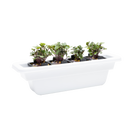
A hydroponic herb infused cream cheese recipe is exactly what it sounds like: a creamy, spreadable blend of softened cream cheese and freshly harvested herbs grown hydroponically — that is, in a soil-free water-based system that delivers nutrients directly to plant roots. The result is a homemade herb cream cheese spread that tastes noticeably brighter, more aromatic, and more flavorful than anything you'll find in a grocery store deli case. If you have a hydroponic garden on your countertop or in your living room, this recipe is one of the fastest and most satisfying ways to put your harvest to work.
Why Hydroponic Herbs Make a Better Cream Cheese Spread
The flavor difference between hydroponically grown herbs and conventionally sourced supermarket herbs is measurable, not just anecdotal. A study published by the University of Florida's Institute of Food and Agricultural Sciences found that hydroponically grown basil contained significantly higher concentrations of essential oils compared to field-grown samples — and essential oils are precisely what give herbs their signature aroma and taste.
When you grow herbs like chives, dill, parsley, and basil in a system like the Personal Garden — a compact countertop hydroponic garden — you control every variable: light cycles, water pH, and nutrient concentration (measured in EC, or electrical conductivity). A stable pH between 5.5 and 6.5 ensures herbs absorb minerals efficiently, and proper EC levels mean your plants aren't starved or oversaturated. The outcome is dense, vibrant foliage packed with flavor compounds that transfer beautifully into a cream cheese base.
Commercially harvested herbs are often cut days or weeks before they reach your kitchen, losing volatile aromatic compounds with every passing hour. When you snip chives directly into a mixing bowl, those compounds are still fully intact. That's the edge hydroponics gives you — and it shows up in every bite of your fresh herb bagel spread.
The Best Hydroponic Herbs to Grow for Cream Cheese
Not every herb performs equally in cream cheese, and not every herb thrives equally in a hydroponic system. Here's a breakdown of the top performers for both your garden and your recipe:
- Chives: The undisputed star of hydroponic chive cream cheese. Chives grow fast in hydroponic systems — often ready to harvest within 3–4 weeks from seeding — and their mild onion flavor blends seamlessly with cream cheese without overpowering it.
- Dill: Feathery and fragrant, dill adds a classic deli-style flavor that pairs especially well with smoked salmon on a bagel. It thrives in cool indoor conditions, making it ideal for year-round growing.
- Parsley: A reliable hydroponic grower that brings fresh, clean brightness to the spread. Flat-leaf (Italian) parsley delivers more flavor than curly parsley.
- Basil: For a Mediterranean twist on your homemade herb cream cheese spread, basil is excellent. It grows vigorously under LED grow lights and prefers slightly warmer temperatures (around 70–75°F).
- Thyme: Use sparingly — its earthy, slightly floral notes add depth without dominating the other flavors.
- Garlic chives: A bolder cousin of standard chives with a more pronounced garlic flavor. Outstanding for savory spreads.
You can grow all of these simultaneously using seed pods designed specifically for hydroponic systems, which come pre-seeded and ready to drop into your garden. No soil, no mess, no guesswork on germination depth.
What Is the Best Hydroponic System for Growing Herbs Indoors?
The right system depends on how much space you have and how much volume you want to harvest. For a household that regularly makes fresh herb bagel spreads, compound butters, and herb-forward recipes, having a continuous supply of multiple herb varieties is key.
The The Rise Garden 3 is a full-size indoor hydroponic garden system that supports up to 36 plant pods across three tiers. With that capacity, you can keep chives, dill, parsley, basil, and thyme all growing simultaneously at different stages of maturity, so you always have something ready to harvest. The system uses full-spectrum LED lighting on an automated timer, so you don't need to remember to turn lights on and off.
For smaller kitchens or apartment living, the The Rise Loft is a premium indoor garden with furniture-grade design — it looks like a piece of home décor while quietly growing fresh herbs around the clock. It holds up to 36 pods as well and fits into living spaces without looking like a science experiment.
According to NASA's Veggie project — a long-running research program studying plant growth in controlled environments — plants grown under optimized LED light spectrums show healthy growth rates and nutrient density comparable to or exceeding field-grown counterparts. Rise Gardens systems are built on the same foundational principles: controlled light, stable water chemistry, and consistent nutrient delivery.
Hydroponic Herb Infused Cream Cheese Recipe
This recipe takes about 10 minutes to prepare and produces a spread that keeps in the refrigerator for up to one week. The base ratio is simple enough to memorize, and once you have it down, you can riff on flavors endlessly based on what's ready in your garden.
Ingredients
- 8 oz (227g) full-fat cream cheese, softened to room temperature
- 3 tablespoons fresh chives, finely chopped (hydroponic chive cream cheese base)
- 2 tablespoons fresh dill, roughly chopped
- 1 tablespoon fresh flat-leaf parsley, finely chopped
- 1 small garlic clove, minced (optional but recommended)
- 1 teaspoon fresh lemon juice
- ¼ teaspoon fine sea salt
- ⅛ teaspoon freshly cracked black pepper
Instructions
- Soften the cream cheese. Remove it from the refrigerator at least 30 minutes before mixing. Room-temperature cream cheese blends more smoothly and absorbs herb flavors more evenly.
- Harvest your herbs. Using clean kitchen scissors, snip chives into small rings. Roughly chop dill fronds, discarding any thick stems. Finely chop parsley leaves.
- Combine. In a medium mixing bowl, use a fork or hand mixer on low to beat the cream cheese until smooth and fluffy — about 60 seconds.
- Add herbs and seasoning. Fold in chives, dill, parsley, minced garlic, lemon juice, salt, and pepper. Stir until evenly distributed.
- Taste and adjust. Add more salt, lemon, or a specific herb to balance the flavor to your preference.
- Rest before serving. For best results, cover and refrigerate for at least 20 minutes before serving. This resting period allows the herb oils to fully infuse into the cream cheese.
- Serve. Spread generously on toasted bagels, sourdough, crackers, or crostini. Use as a dip for raw vegetables or a filling for tea sandwiches.
Variations
- Lemon Herb: Double the lemon juice and add 1 teaspoon of lemon zest. Use basil and thyme in place of dill.
- Everything Bagel Style: Add 1 tablespoon of everything bagel seasoning and stick with chives and parsley for a classic fresh herb bagel spread.
- Spicy Garden: Add ½ teaspoon red pepper flakes and swap parsley for fresh basil. Pairs well with a drizzle of hot honey.
- Whipped Texture: Use a hand mixer on medium for 2–3 minutes for an ultra-light, mousse-like consistency that's excellent for entertaining.
How Do You Store Homemade Herb Cream Cheese and How Long Does It Last?
Proper storage is straightforward but worth getting right. According to the USDA Food Safety and Inspection Service, cream cheese and cream cheese-based spreads should be stored in an airtight container in the refrigerator at or below 40°F and consumed within 1–2 weeks of preparation. For maximum flavor and freshness, 5–7 days is the practical sweet spot — after that, the fresh herb notes begin to fade and the dairy notes become more dominant.
A few storage tips worth following:
- Press a sheet of plastic wrap directly onto the surface of the cream cheese before sealing the container. This minimizes oxidation and keeps the color of the herbs vibrant.
- Do not freeze herb cream cheese. Freezing causes the dairy fat to separate and the herbs to turn dark and mushy upon thawing.
- If you notice any off-smell, discoloration, or liquid pooling that doesn't reincorporate with stirring, discard it.
- Label the container with the preparation date so you always know where you stand.
Because you're growing herbs continuously in your hydroponic system, there's no need to make enormous batches. A fresh 8-ounce batch every 5–6 days is entirely achievable — your garden will keep up easily.
Nutritional Benefits of Adding Fresh Herbs to Your Diet
Beyond the flavor upgrade, there are genuine nutritional reasons to incorporate fresh herbs generously into everyday meals. The USDA's FoodData Central database lists fresh chives as containing approximately 3,120 IU of vitamin A per 100 grams, along with meaningful levels of vitamin K, vitamin C, and folate. Fresh dill provides similar micronutrient density, including calcium and iron.
Herbs are also among the most antioxidant-dense foods by weight. A 2010 meta-analysis published in the journal Nutrition Reviews found that culinary herbs and spices rank among the highest ORAC (Oxygen Radical Absorbance Capacity) values of any food category — meaning they deliver a substantial antioxidant load even in the small quantities typically used in cooking.
While cream cheese is not a low-calorie food, using a flavorful homemade herb cream cheese spread means you're more likely to use less of it — the intensity of fresh herbs makes each bite more satisfying. And when those herbs come from your own Personal Garden, you know exactly how they were grown: no pesticides, no synthetic waxes, no mystery. That kind of transparency is something no grocery store label can fully offer.
To keep your hydroponic herbs growing at peak nutritional and flavor density, maintaining proper nutrients in your water reservoir is essential. Nutrient solutions provide the nitrogen, phosphorus, potassium, and micronutrients that soil would otherwise supply. Without consistent nutrient management, herbs can become pale, slow-growing, and flavorless — the opposite of what you want for this recipe.
Frequently Asked Questions
Can I use hydroponic herbs in cream cheese the same day I harvest them?
Yes — in fact, same-day harvesting delivers the most intense flavor. Aromatic volatile compounds in herbs like chives and dill begin to dissipate after cutting, so the shorter the time between snipping and mixing, the better your spread will taste. Harvest directly into your mixing bowl if possible to minimize handling time.
How long does it take to grow chives hydroponically for hydroponic chive cream cheese?
Chives typically germinate within 7–10 days in a hydroponic system and are ready for a first harvest in approximately 3–4 weeks from seeding. After the initial harvest, chives regenerate quickly — you can cut them back to about 2 inches above the base and they'll regrow within 10–14 days, giving you a continuous supply.
Do I need to wash hydroponically grown herbs before using them in a fresh herb bagel spread?
A quick rinse under cool water is always a good practice, even for herbs grown in a clean indoor hydroponic system. While hydroponic herbs grown indoors are not exposed to soil-borne pathogens or outdoor contaminants, rinsing removes any dust or residual moisture from the growing environment. Pat dry thoroughly with a clean towel or paper towel before chopping, since excess water will thin your cream cheese.
What is the ideal water pH for growing herbs hydroponically?
Most culinary herbs — including chives, basil, dill, and parsley — thrive in a hydroponic solution with a pH between 5.5 and 6.5. At this range, plant roots can efficiently absorb the full spectrum of macro and micronutrients available in the water. pH levels outside this window cause nutrient lockout, a condition where minerals are present in the solution but chemically unavailable to the plant, resulting in yellowing leaves and stunted growth. Rise Gardens nutrient systems are formulated to work within this optimal range.