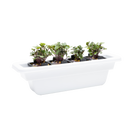
There's a meaningful difference between lemonade made with store-bought herbs and one built around leaves you've just snipped from a living indoor garden. A hydroponic herb infused lemonade recipe takes that gap and makes it tangible: you grow mint, basil, lavender, or rosemary in a soil-free, water-based system inside your home, then use those freshly harvested leaves to infuse your drinks with flavor that bottled syrups and pre-cut supermarket herbs simply can't replicate. This guide focuses on the full process — which herbs to grow, how to infuse them directly into your lemonade without a pre-made syrup, and what makes hydroponically grown herbs taste so different in a glass.
Why a Hydroponic Herb Infused Lemonade Recipe Tastes Better Than Café Versions
Flavor starts at the root level — literally. Hydroponically grown herbs consistently develop higher concentrations of aromatic essential oils compared to soil-grown counterparts because growers can dial in the exact nutrient ratios, light cycles, and water pH the plant needs. A peer-reviewed study published by the University of Mississippi found that hydroponically grown basil contained up to 25% more volatile aromatic compounds than field-grown basil under equivalent light conditions. Those aromatic compounds — linalool in basil, menthol in mint, camphor in rosemary — are precisely what you taste when you muddle a leaf into your drink.
Beyond flavor chemistry, there's a freshness factor that's hard to overstate. The USDA estimates that fresh herbs can lose 30–50% of their volatile aromatic oils within 24–48 hours of harvest when stored at room temperature. When you're growing indoors with a system like The Rise Garden 3, harvest-to-glass time can be under five minutes. That's an entirely different ingredient than what arrives in a plastic clamshell at the grocery store.
Hydroponics is the practice of growing plants in a nutrient-rich water solution without soil. The plant roots receive water, oxygen, and dissolved minerals — measured in electrical conductivity (EC) and pH — in precise ratios that support rapid, healthy growth. For herbs destined for beverages, this means clean-tasting, chemical-free leaves ready to infuse directly into your lemonade.
Which Herbs Should You Grow for a Hydroponic Herb Infused Lemonade Recipe?
Not every herb plays equally well in a glass of lemonade, but several are genuinely transformative. Here's a breakdown of the best performers for this style of drink:
- Spearmint — The classic lemonade companion. Spearmint has a softer, sweeter menthol profile than peppermint, making it ideal for drinks. It grows aggressively in hydroponics and is ready to harvest in as little as 3–4 weeks from transplant.
- Sweet Basil — Floral, slightly peppery, and surprisingly citrus-friendly. Basil-lemon is a combination used in high-end cocktail bars worldwide. Harvest leaves before the plant bolts for maximum sweetness.
- Lemon Verbena — Intensely citrusy and aromatic, a small handful of leaves produces an infusion that genuinely smells like lemon candy. Excellent for light, delicate lemonade variations.
- Lavender — Use sparingly. Two or three sprigs steeped directly in your lemonade base is enough to create a floral, Provençal-style drink that feels sophisticated without being soapy. Lavender thrives under the full-spectrum LED panels in most modern hydroponic systems.
- Rosemary — An adventurous choice that pairs beautifully with honey-sweetened lemonades. The piney, resinous notes create a surprisingly savory-sweet balance.
- Thai Basil — Anise-forward with a slight spice. Pairs well with ginger-lemonade variations and makes for one of the most interesting herb-infused drinks you can serve at a gathering.
All of these herbs are available as seed pods for Rise Gardens systems, pre-seeded and ready to drop into your garden. Most culinary herbs thrive at an EC between 1.6–2.2 and a pH of 5.5–6.5 — ranges that Rise Gardens systems help you maintain with the right nutrients formulated specifically for leafy herbs.
How to Directly Infuse Fresh Herbs Into Lemonade (No Syrup Required)
Most herb lemonade guides default to making a separate simple syrup first, then mixing it in. That approach works well and is detailed in the full recipe section below, but there's a faster method worth knowing: direct cold infusion. It skips the stovetop entirely and produces a brighter, more delicate herb flavor.
Here's how direct infusion works with hydroponically grown herbs:
- Squeeze your lemon juice and combine it with sugar and water in a pitcher (standard proportions: 1 cup lemon juice, 3/4 cup sugar, 4 cups cold water).
- Stir until the sugar dissolves — this takes a few minutes at room temperature with vigorous stirring, or you can dissolve the sugar in a small amount of warm water first, then add cold water.
- Add 1 to 1.5 cups of loosely packed fresh herb leaves directly to the pitcher. Gently bruise the leaves between your fingers before adding them to open up the oils.
- Cover and refrigerate for 1–2 hours. Hydroponically grown herbs, with their higher oil concentration, infuse noticeably faster than store-bought alternatives — check at the 60-minute mark.
- Strain out the herbs, taste, adjust sweetness or tartness, and serve over ice with fresh herb garnishes.
The result is a lemonade with clean, nuanced herb flavor rather than the cooked sweetness that a syrup can introduce. It's particularly good with lemon verbena, spearmint, and lavender.
The Full Hydroponic Herb Infused Lemonade Recipe
This is the complete pitcher recipe using the warm-infusion method, which gives you more control over intensity and works especially well for mint and basil. Makes approximately 6 servings.
Ingredients
- 1 cup fresh-squeezed lemon juice (approximately 6–8 lemons)
- 3/4 cup granulated sugar (or honey for a richer version)
- 1/2 cup warm water (for dissolving the sugar)
- 3.5 cups cold filtered water
- 1 to 1.5 cups loosely packed fresh herb leaves, harvested from your indoor garden
- 1 cup sparkling water (optional, for effervescence — add last)
- Fresh herb sprigs and lemon wheels for garnish
- Ice
Instructions
- Dissolve sugar in the warm water, stirring until fully clear. Allow to cool for 5 minutes.
- In a large pitcher, combine lemon juice, dissolved sugar mixture, and cold filtered water. Stir well.
- Gently bruise your fresh herb leaves and add them to the pitcher.
- Stir, cover, and refrigerate for 45–90 minutes. Taste at 45 minutes — hydroponically grown herbs infuse quickly.
- Strain herbs out through a fine mesh sieve. Taste and adjust: more lemon for tartness, a little extra dissolved sugar for sweetness.
- If using sparkling water, add it now and stir gently.
- Fill glasses with ice, pour, and garnish with fresh herb sprigs snipped straight from your indoor garden. Serve immediately.
Variations Worth Trying
- Rosemary Honey Lemonade: Substitute honey for sugar and use rosemary as the herb. Add a pinch of sea salt to the pitcher — it amplifies every other flavor.
- Lavender Basil Lemonade: Use a lavender-basil combination at a 30/70 ratio. Strain well and garnish with a single lavender sprig. This version photographs beautifully and is a consistent crowd-pleaser.
- Spicy Thai Basil Lemonade: Add 2–3 thin slices of fresh ginger alongside the Thai basil leaves during infusion. The result is a complex, slightly spicy drink that works equally well as a mocktail base or a cocktail mixer with gin.
What's the Best Indoor Hydroponic Garden for Growing Drink Herbs?
The best system for you depends on how much space you have and how many herbs you want to grow simultaneously. For someone who wants a dedicated countertop herb garden in a kitchen or apartment, the Personal Garden is a compact, countertop hydroponic garden that holds multiple pods and fits neatly beside a coffee maker or on a kitchen island. It's an ideal starting point for anyone who wants fresh herbs within arm's reach when mixing herb-infused drinks.
For households that want more variety — enough to keep several herb varieties running simultaneously while also growing salad greens and edible flowers — The Rise Loft is a premium indoor garden with furniture-grade design that fits seamlessly into living rooms, dining areas, or open-concept kitchens. It holds significantly more pods and doubles as a genuine piece of home decor.
NASA's Veggie project, which studied plant growth in controlled indoor environments aboard the International Space Station, confirmed that hydroponically grown plants in enclosed, light-controlled systems consistently produced harvestable crops with predictable growth cycles that soil-based systems could not reliably replicate. While your kitchen isn't a space station, the principle applies: consistent light, precise nutrients, and stable pH create predictable, high-quality harvests — exactly what you want when planning a dinner party around a signature herb lemonade.
Tips for Getting the Most Flavor From Your Indoor-Grown Herb Lemonade
Growing herbs is straightforward in a hydroponic system, but a few habits will consistently improve the quality of what ends up in your glass:
- Harvest in the morning. Essential oil concentration in herb leaves peaks in the early morning hours before heat causes them to volatilize. Even indoors, this principle holds — harvest before your grow lights reach peak intensity.
- Cut above a leaf node. When harvesting mint or basil, always cut just above a set of leaves. This encourages the plant to branch rather than go leggy, giving you more harvestable material within a week or two.
- Don't let herbs bolt. Once basil or mint flowers, the plant redirects energy to seed production and leaf flavor drops noticeably. Pinch off any flower buds you see to extend the productive life of the plant.
- Keep your pH in range. For herbs, a reservoir pH between 5.5 and 6.5 ensures optimal nutrient uptake. Drift outside this range and you'll see slower growth and potential yellowing — neither of which produces the vibrant leaves you want for a fresh herb-infused lemonade.
- Use the whole plant. Stems and smaller leaves that aren't visually perfect for garnishing are ideal for infusions. Don't discard them — every part of a hydroponically grown herb is flavorful.
According to the USDA Agricultural Research Service, indoor herb production in the United States grew by over 40% between 2015 and 2022, driven largely by consumer demand for fresher, traceable ingredients at home. If you've been thinking about starting your own indoor herb garden, you're very much in step with how home cooking and entertaining are evolving.
Frequently Asked Questions
Can I use any hydroponic herb in a lemonade recipe?
Most culinary herbs are safe to use in beverages, but flavor compatibility varies significantly. Mint, basil, lemon verbena, and lavender are the most universally crowd-pleasing options for lemonade. Stronger herbs like rosemary and thyme work well in small quantities or paired with complementary flavors like honey or ginger, but can easily overpower a drink if overused.
How long should I infuse fresh herbs in lemonade?
For a cold infusion directly in the pitcher, 45–90 minutes in the refrigerator is typically ideal. Hydroponically grown herbs — with their higher concentration of volatile oils — infuse faster than store-bought alternatives, so start tasting at the 45-minute mark. Over-infusing can introduce bitterness, particularly with stronger herbs like rosemary or lavender.
Do hydroponic herbs taste different from store-bought herbs?
Yes — and the difference is especially noticeable in beverages. Hydroponically grown herbs harvested fresh contain significantly higher concentrations of volatile aromatic compounds than herbs that have been cut, packaged, shipped, and stored. Research from the University of Mississippi found up to 25% more aromatic compounds in hydroponically grown basil compared to field-grown basil. In a direct infusion or fresh garnish, that difference translates directly to flavor intensity in your glass.
What pH should my hydroponic water be for growing drink herbs?
For culinary herbs used in beverages, maintain your reservoir pH between 5.5 and 6.5, with 6.0 being an ideal midpoint. At this pH range, plants can absorb the full spectrum of macro and micronutrients dissolved in the water. pH outside this range — even slightly — can lock out specific nutrients and result in slower growth or off-flavors in the leaves. Rise Gardens nutrient formulas are designed to work within this range when used as directed.