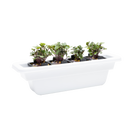
A hydroponic smoothie recipe is exactly what it sounds like: a blended drink made with leafy greens, herbs, and other ingredients harvested directly from a hydroponic garden — a soil-free growing system that uses a nutrient-rich water solution to feed plants directly at the root zone. When you grow your own spinach, kale, and herbs hydroponically indoors, you control what goes into the plants and when you harvest them, which means your smoothie starts with the freshest possible ingredients. This guide walks you through everything from why hydroponically grown greens make superior smoothie ingredients to step-by-step recipes you can make with produce right off your countertop or living room shelf.
Why Hydroponic Greens Make the Best Smoothie Ingredients
The window between harvest and nutritional peak matters more than most people realize. A study published by the University of California Davis found that spinach can lose up to 75% of its folate within seven days of being harvested and stored at room temperature. Even refrigerated spinach loses roughly 40% of its folate in the same timeframe. When you grow greens in a hydroponic system at home and harvest right before blending, you are locking in those nutrients at their highest concentration.
Hydroponic growing also tends to produce higher yields in shorter timeframes compared to soil gardening. Because the plant's roots have direct, constant access to water and dissolved nutrients — measured in terms of electrical conductivity (EC) and pH — plants can redirect energy toward leaf production rather than root searching. For smoothie makers, that means more usable green matter, more often.
A homegrown spinach kale smoothie tastes noticeably different from one made with store-bought greens that have been sitting in a refrigerated truck for days. The flavor is brighter, slightly sweeter, and less bitter — qualities that make it far easier to get kids (and skeptical adults) to drink their greens.
What Greens Can You Grow Hydroponically for Smoothies?
Almost any leafy green or soft herb thrives in a hydroponic environment, and most of them are excellent smoothie candidates. Here are the top performers for your blend:
- Baby Spinach: Mild flavor, high in iron and vitamin K, and ready to harvest in as few as 25–30 days. This is the backbone of most hydroponic greens breakfast smoothies.
- Kale (Lacinato or Curly): Dense in vitamins A, C, and K. Hydroponic kale tends to be more tender and less fibrous than field-grown varieties, which makes it easier to blend smooth.
- Swiss Chard: Earthy and slightly sweet, with high magnesium content. A great secondary green to layer with spinach.
- Mint: The most popular fresh herb for smoothies. A small mint plant in your indoor garden adds cooling flavor without any prep beyond a rinse and rough chop.
- Basil: Pairs surprisingly well with berries and citrus in smoothies. A fresh herb smoothie indoor garden setup that includes basil opens up Italian-inspired or Thai-style flavor profiles.
- Parsley: High in vitamin C and chlorophyll. Use small amounts — it's assertive.
- Cilantro: Excellent in tropical smoothies with mango and pineapple.
All of these can be started easily using pre-seeded seed pods designed specifically for hydroponic growing systems. Each pod contains a pre-measured growing medium and seed, so there's no soil, no mess, and no guesswork about germination depth or spacing.
How Do You Make a Hydroponic Smoothie Recipe at Home?
Making a smoothie with your hydroponic greens is no different procedurally from any other smoothie — the difference is entirely in the quality of your starting ingredients. Below are three tested recipes built around greens you can grow in any Rise Gardens system.
Recipe 1: Classic Green Breakfast Smoothie
This is the go-to hydroponic greens breakfast smoothie for busy mornings. It takes under five minutes from garden to glass.
- 2 large handfuls of freshly harvested hydroponic baby spinach (approximately 60g)
- 1 ripe banana, frozen
- ½ cup frozen mango chunks
- 1 cup unsweetened almond milk (or oat milk)
- 1 tablespoon chia seeds
- Juice of ½ lime
Instructions: Add liquid to the blender first. Layer in spinach, then frozen fruit, then chia seeds. Blend on high for 60 seconds. Pour and drink immediately for maximum nutrient retention.
Estimated nutrition per serving: ~220 calories, 6g protein, 8g fiber, high in vitamins A, C, and K.
Recipe 2: Homegrown Spinach Kale Smoothie With Lemon and Ginger
For those who want a more robust green flavor and an anti-inflammatory boost, this homegrown spinach kale smoothie delivers.
- 1 handful hydroponic spinach (approx. 30g)
- 1 handful hydroponic lacinato kale, stems removed (approx. 30g)
- 1 green apple, cored and chopped
- ½ cucumber, roughly chopped
- 1-inch piece of fresh ginger, peeled
- Juice of 1 lemon
- 1 cup cold water or coconut water
- Small handful of ice
Instructions: Blend ginger and liquid first until smooth. Add remaining ingredients and blend on high for 90 seconds. Serve immediately.
Recipe 3: Fresh Herb Smoothie With Mint, Basil, and Berries
This is where your fresh herb smoothie indoor garden really shines. Fresh mint and basil harvested that morning transform a simple berry smoothie into something genuinely special.
- 8–10 fresh hydroponic mint leaves
- 4–5 fresh hydroponic basil leaves
- 1 cup frozen mixed berries (blueberries, strawberries, raspberries)
- ½ cup hydroponic baby spinach
- ¾ cup Greek yogurt (plain, full-fat)
- ½ cup cold water
- 1 teaspoon honey (optional)
Instructions: Combine all ingredients in a blender and blend on high for 60–90 seconds until creamy. The basil and mint should be fully incorporated with no visible leaf pieces.
The Science Behind Growing Nutrient-Dense Greens at Home
The nutritional density of hydroponic produce is directly tied to the precision of the growing environment. In a well-maintained hydroponic system, growers dial in two key variables: pH (a measure of acidity or alkalinity, ideally between 5.5 and 6.5 for most leafy greens) and EC (electrical conductivity, a measure of dissolved nutrient concentration in the water). When both are in range, plants absorb minerals like calcium, magnesium, iron, and zinc at optimal rates.
NASA's Veggie project — a research initiative focused on growing food in microgravity environments — has demonstrated that hydroponic lettuce and leafy greens grown under controlled LED lighting conditions produce comparable or superior phytonutrient profiles to field-grown counterparts. The implications for home growers are significant: you don't need a farm to grow serious food.
According to the USDA, Americans consume an average of only 1.5 cups of vegetables per day, well below the recommended 2.5–3 cups for adults. A single smoothie made with two large handfuls of hydroponic spinach and kale can contribute nearly one full cup of vegetables toward that daily target — with minimal effort and no bitter aftertaste when the greens are harvested fresh.
Which Rise Gardens System Is Right for Your Smoothie Habit?
The right system depends on how much you plan to blend. If you're making one smoothie a day for yourself, a compact setup is plenty. If you're feeding a household or experimenting with multiple green varieties, a larger system gives you more planting capacity and harvest rotation options.
The Personal Garden is Rise Gardens' countertop hydroponic garden — a sleek, compact unit that fits on any kitchen counter and holds up to 12 plant pods at once. For a daily smoothie habit, this size lets you keep a continuous rotation of spinach, kale, and herbs going so you always have something ready to harvest. It uses full-spectrum LED lighting tuned specifically for leafy green growth and connects to an app for guided growing reminders.
If you want more capacity — say, you're growing for a family or want a wider variety of smoothie greens and herbs simultaneously — The Rise Garden 3 is a full-size, three-tier indoor hydroponic garden system that can support dozens of plants at once. You could dedicate one tier entirely to smoothie greens (spinach, kale, chard), a second tier to herbs (mint, basil, parsley), and use the third for whatever else you're growing. That kind of volume means you'll rarely run out of fresh ingredients, even if you're making smoothies every morning.
For those who want their indoor garden to double as a design statement, The Rise Loft is a premium indoor garden with furniture-grade design. It blends into a living room or dining area without looking like a piece of equipment, and its growing capacity rivals The Rise Garden 3. If you entertain and want to casually harvest mint from a beautiful piece of furniture to drop into a smoothie for a guest, the Loft is built for exactly that kind of lifestyle.
All three systems use the same nutrients — a two-part liquid formula that you add to the water reservoir. The nutrients dissolve completely and feed plants at every watering cycle, producing greens that are consistently healthy without requiring any soil amendment or composting knowledge.
Tips for Getting the Most Out of Your Hydroponic Smoothie Garden
Growing greens for smoothies is one of the most rewarding hydroponic applications because the turnaround time is fast and the payoff is immediate. Here are practical tips to keep your harvest consistent:
- Harvest on the outer-leaf principle: Always take the outermost, most mature leaves first. This keeps the plant producing new growth from the center and dramatically extends your harvest window — a single spinach plant can produce harvestable leaves for 6–8 weeks with this method.
- Stagger your plantings: Don't plant all your spinach at once. Offset new seed pods by 1–2 weeks so you always have plants at different maturity stages and never hit a gap period with nothing to harvest.
- Rinse before blending, not before storing: Wet leaves break down faster. Harvest dry, store in a container in the fridge if not using immediately, and rinse just before adding to the blender.
- Use your herbs generously: Mint and basil grow fast hydroponically. Harvesting frequently — including for smoothies — actually encourages bushier, more productive growth. Don't be shy about using a full handful of mint.
- Check your pH weekly: If your greens start tasting unusually bitter or growth slows, check the pH of your reservoir. A drift outside the 5.5–6.5 range is the most common cause of suboptimal flavor and nutrient absorption in hydroponic leafy greens.
Frequently Asked Questions
Can you use hydroponic greens raw in smoothies?
Yes — and raw is actually the preferred method for smoothies. Cooking leafy greens like spinach and kale reduces heat-sensitive vitamins, particularly vitamin C and certain B vitamins. Because hydroponic greens are grown without soil, there is no dirt contamination to worry about; a quick rinse under cold water is sufficient preparation before blending.
How long does it take to grow enough greens for a daily smoothie?
Most hydroponic leafy greens reach their first harvestable size in 3–4 weeks from seeding. Baby spinach can be ready in as few as 21–25 days. If you stagger two or three plantings one week apart, you'll have a continuous supply of fresh greens for daily smoothies within about a month of setting up your system.
Do hydroponic greens need to be washed before using in smoothies?
A light rinse under cold water is recommended, even though hydroponic greens are grown without soil. This removes any dust, residue from handling, or splashed nutrient solution from the leaves. There's no need for prolonged soaking or special produce washes — the controlled indoor growing environment means exposure to outdoor contaminants is minimal.
What is the best ratio of greens to fruit in a hydroponic smoothie recipe?
A good starting ratio is roughly 40% greens to 60% fruit and liquid by volume. For a standard 16-ounce smoothie, that's about two loosely packed cups of greens to one cup of frozen fruit plus one cup of liquid. If you're new to green smoothies, start with a higher fruit ratio and gradually increase the greens over a week or two as your palate adjusts.