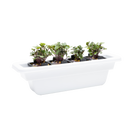
The best hydroponic nutrients for herbs are balanced, water-soluble formulas with an NPK ratio close to 3-1-2, delivered at an electrical conductivity (EC) of 0.8–1.6 mS/cm and a pH of 5.5–6.5. Most soft herbs thrive at the lower end of that EC range — around 1.0–1.2 mS/cm — which keeps growth lush without triggering bitterness or bolting.
Hydroponic nutrients are the mineral salts dissolved in your reservoir water that replace what soil would normally provide. Because there's no growing medium to buffer deficiencies, getting your nutrient strength and balance right matters more in hydroponics than in any other growing method. This guide breaks down exactly what herbs need, how to read a nutrient label, and how to dial in your setup for a continuous harvest of flavorful leaves.
What Are the Best Nutrients for Growing Herbs Hydroponically?
Herbs are light feeders compared to fruiting crops like tomatoes or peppers. A well-formulated hydroponic nutrient solution for herbs should include three macronutrients — nitrogen (N), phosphorus (P), and potassium (K) — plus calcium, magnesium, and a full suite of micronutrients including iron, manganese, and zinc.
The herb NPK ratio for hydroponics that most growers trust is roughly 3-1-2 (nitrogen-phosphorus-potassium). Nitrogen drives leafy, vegetative growth — exactly what you want from basil, cilantro, parsley, and mint. Too much phosphorus at the vegetative stage can actually reduce essential oil production, which is what gives fresh herbs their aroma and flavor.
A 2019 study from the University of Arizona's Controlled Environment Agriculture Center found that leafy crops grown at lower EC levels (under 1.6 mS/cm) produced higher yields of marketable leaf tissue than the same crops pushed to 2.4 mS/cm, where tip burn and bolting became measurable problems. That research reinforces what herb growers already know from experience: less is more when it comes to nutrient strength for indoor herbs.
Rise Gardens' own nutrients are formulated with this balance in mind — a two-part system that keeps calcium separate from sulfates to prevent precipitation and delivers a stable, complete feed every time you top off your reservoir.
What Are the Basil Nutrient Requirements in Hydroponics?
Basil is the herb most home hydroponic growers start with, and it has a few specific quirks worth knowing.
Basil nutrient requirements in hydroponics center on high nitrogen availability during the vegetative stage, combined with adequate calcium to prevent tip curl and edge browning. Target an EC of 1.0–1.4 mS/cm for young plants, stepping up to 1.4–1.6 mS/cm once a plant has 4–6 true leaves. Keep pH between 5.5 and 6.2 — basil is more sensitive to pH drift than hardier herbs like mint or chives, and a reading above 6.5 can lock out iron, causing yellowing between the leaf veins.
Magnesium deserves special attention with basil. NASA's Veggie project, which has grown leafy greens aboard the International Space Station since 2014, identified magnesium as one of the most commonly deficient minerals in recirculating hydroponic systems, because it gets depleted faster than most nutrient labels account for. Adding a small Epsom salt supplement (magnesium sulfate) at roughly 10–15 ppm can prevent interveinal chlorosis without throwing off your overall EC.
Temperature matters too: basil's nutrient uptake is most efficient when reservoir water stays between 65°F and 72°F. Below 60°F, calcium absorption slows noticeably regardless of how much is present in solution.
How Do You Adjust Nutrient Strength for Different Herbs?
Not all herbs have the same appetite. Here's a practical grouping to guide your EC targets:
- Light feeders (EC 0.8–1.2): Cilantro, dill, chervil — these bolt quickly under stress; low nutrient concentration keeps them calm and productive.
- Medium feeders (EC 1.0–1.6): Basil, parsley, mint, oregano, thyme — the bulk of common culinary herbs fall here.
- Heavier feeders (EC 1.4–2.0): Chives, lemon balm, and larger-format herbs that produce significant biomass.
When you're growing a mixed herb garden — which is one of the best features of systems like Personal Rise Garden or the larger The Rise Garden 3 — you're sharing one reservoir across multiple plant types. A middle-ground EC of 1.2–1.4 mS/cm keeps everyone reasonably happy. Pair that with a reliable pH meter and check your reservoir every 2–3 days, especially in the first two weeks after transplanting, when plants are drawing water and nutrients at their highest rate.
Change out your full reservoir every 7–10 days in warm months. In cooler, lower-light conditions, you may stretch that to 14 days. Stale nutrient solution accumulates sodium and other non-plant-available ions that artificially inflate your EC reading without actually feeding the plant.
How to Read a Hydroponic Nutrient Label for Herbs
Nutrient labels can look intimidating, but you only need to track a few numbers for herbs.
First, find the NPK values. For herbs, you want the N value to be the highest of the three during vegetative growth. A ratio like 5-1-4 or 6-2-4 works well; avoid anything that front-loads phosphorus (e.g., 2-8-4) — those are bloom formulas designed for flowering plants.
Second, check whether calcium and magnesium are included or need to be supplemented. Many single-bottle nutrient concentrates omit calcium to prevent precipitation in the bottle. If you see no calcium listed, you'll need a separate Cal-Mag supplement.
Third, look at the recommended dilution rate. Most concentrates for leafy herbs suggest 5–10 mL per gallon of water to reach a working EC of 1.0–1.4 mS/cm. Always verify with your own EC meter after mixing — water mineral content varies by region and will affect your final reading.
If you're growing in a system like The Rise Loft, with its multi-level design and shared reservoir, sticking to a two-part nutrient formula gives you consistent results across every pod. Start each batch of seed pods at half the recommended nutrient dose for the first week, then ramp up to full strength once roots are established.
Frequently Asked Questions
What pH should hydroponic herb nutrients be?
Maintain a pH between 5.5 and 6.5 for most hydroponic herbs. Basil prefers the lower end of that range — ideally 5.5 to 6.2 — while hardier herbs like mint and thyme tolerate up to 6.5 without issue. Check pH every 2–3 days, since nutrient uptake naturally shifts the water's pH over time.
Can you use too many nutrients for hydroponic herbs?
Yes, and it's one of the most common mistakes. An EC above 2.0 mS/cm in a herb system causes nutrient burn — brown leaf edges, wilting, and in some cases premature bolting. Start at the low end of the recommended range and increase gradually based on how your plants look, not just the calendar.
How often should you change the nutrient solution for hydroponic herbs?
Replace your full reservoir every 7–14 days depending on plant size, season, and ambient temperature. In addition to full changes, top off with plain pH-adjusted water between changes to replace what plants have transpired. This keeps your EC from climbing too high as water evaporates but nutrients remain in solution.