The best hydroponic seed varieties for a fast first harvest are leafy greens and herbs — especially lettuce, arugula, spinach, and basil. These crops can reach harvest-ready size in as few as 21 to 30 days when water pH is held between 5.5 and 6.5 and nutrients are dialed in consistently. No other crop category comes close for speed.
Hydroponics accelerates growth by delivering water, oxygen, and dissolved nutrients directly to plant roots — eliminating the energy plants normally spend searching for food in soil. The result is faster germination, faster vegetative growth, and a harvest timeline that often runs 25–50% shorter than traditional gardening. Knowing which seeds to start with makes that advantage even larger.
Which Seed Varieties Give You the Fastest Hydroponic Harvest?
These are the top performers based on days to harvest in a well-maintained hydroponic system:
- Butterhead Lettuce — 21 to 28 days to first cut. One of the most forgiving fastest growing hydroponic seeds on the market. Ideal pH: 6.0–7.0.
- Arugula — 21 to 30 days. Peppery flavor, fast canopy spread, and extremely high germination rates. pH sweet spot: 6.0–6.8.
- Spinach — 25 to 35 days. Prefers slightly cooler water temps around 65–70°F, which also helps prevent bolting.
- Basil — 28 to 35 days. Thrives at water temperatures of 65–75°F. One of the most popular quick harvest seed pods for home growers.
- Kale — 30 to 40 days for baby-leaf harvest. Nutrient-dense and highly productive over multiple cuttings.
- Bok Choy — 30 to 45 days. A compact grower that works well in smaller systems.
All of these varieties are available as seed pods pre-seeded and ready to drop into your system — no soil, no mess, no guesswork on spacing.
What Conditions Actually Drive Fast Growth in Hydroponics?
Seed selection matters, but conditions determine whether those fast genetics deliver on their promise. Three variables have the biggest impact on days to harvest hydroponic crops:
pH: This is the single most controllable factor in your system. Most leafy greens and herbs thrive between pH 5.5 and 6.5. Outside that range, plants lock out nutrients even when they're present in the water — and growth stalls visibly within days.
EC (Electrical Conductivity): EC measures the concentration of dissolved nutrients in your water. For seedlings and leafy greens, a target range of 0.8–2.4 mS/cm is standard. Too low and plants are underfed; too high and roots experience osmotic stress that slows growth.
Light duration and intensity: NASA's Veggie project — which has grown crops aboard the International Space Station — demonstrated that leafy greens like romaine lettuce can be successfully cultivated under continuous LED lighting with a photoperiod of 16–18 hours per day. Replicating that schedule at home is straightforward with any timer-equipped system.
Consistent, balanced nutrients formulated specifically for hydroponics also make a measurable difference. Generic fertilizers aren't calibrated for soilless systems and can introduce imbalances that delay harvest by a week or more.
How Do You Choose the Right System for Fast-Harvest Crops?
The system you grow in shapes how easily you can maintain the conditions above. Here's how to match your goals to your setup:
If you're new to hydroponics and want the simplest path to a fast first harvest, the Personal Rise Garden is a compact countertop system that holds up to 12 pods. It's designed for exactly this use case — leafy greens, herbs, and cut-and-come-again crops like lettuce and arugula in a small footprint.
If you want more growing capacity without sacrificing ease of use, The Rise Garden 3 is a full-size indoor hydroponic garden system that supports 108 pods across three tiers. That means you can stagger plantings of fast-harvest varieties every week and maintain a continuous supply of fresh greens rather than harvesting everything at once.
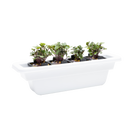
For growers who want something that fits into a living space as furniture, The Rise Loft combines premium furniture-grade design with a fully functional hydroponic system — no garage, no grow tent, no dedicated utility room required.
Realistic Timelines: What to Expect in Your First 30 Days
University of Kentucky Cooperative Extension research on hydroponic lettuce production found that head lettuce varieties averaged 30 days from transplant to harvest under optimized controlled-environment conditions — roughly half the time of field-grown equivalents.
For home growers using a pre-seeded pod system, a realistic first-harvest timeline looks like this:
- Days 1–5: Germination. Most leafy green seeds sprout within 3–5 days in a properly lit, properly fed system.
- Days 6–14: Seedling stage. Roots establish in the water column and true leaves emerge.
- Days 15–28: Vegetative growth. This is where the speed advantage of hydroponics becomes visible — growth is measurably faster than soil equivalents.
- Days 21–30: First harvest for cut-and-come-again varieties like lettuce and arugula. Take outer leaves and the plant continues producing.
That 21-to-30-day window is realistic for fast-harvest varieties under standard home conditions — 16 hours of light per day, pH between 5.5 and 6.5, and consistent nutrient delivery. Growers who log their pH and EC weekly consistently outperform those who don't, simply because they catch drift early.
FAQ
What is the absolute fastest crop to grow hydroponically?
Microgreens are technically the fastest, reaching harvest in 7–14 days, but they're a single-cut crop. For repeatable harvests from the same plant, butterhead lettuce and arugula are the top picks, with first harvest possible in 21–28 days under good conditions.
Do I need special seeds for hydroponics, or can I use any seeds?
Standard, non-coated open-pollinated or hybrid seeds work in hydroponic systems. The key difference with hydroponic-specific seed pods is that the growing medium, spacing, and moisture retention are already optimized for soilless systems, which improves germination rates and reduces setup time significantly.
How does water pH affect days to harvest in hydroponics?
pH directly controls nutrient availability at the root zone. When pH drifts outside the 5.5–6.5 range, plants cannot absorb key minerals like calcium, magnesium, and iron — even if those nutrients are present in the water. This causes visible growth slowdowns and can add 5–10 days to your harvest timeline if left uncorrected.