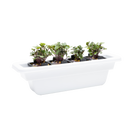
Growing watercress hydroponically at home is one of the most rewarding things you can do with an indoor garden. Watercress (Nasturtium officinale) is a semi-aquatic leafy green that thrives when its roots have constant access to oxygenated, nutrient-rich water — which is exactly what a hydroponic system delivers. Unlike soil gardening, hydroponics gives you precise control over the plant's environment, and watercress responds to that control with fast, vigorous growth and exceptional nutritional density. If you've been curious about adding this peppery superfood to your home setup, this guide covers everything from system selection and nutrient management to harvest timing and regrowth cycles.
Why Watercress Is One of the Best Crops for a Hydroponic System
Watercress is naturally suited to hydroponic cultivation for a simple reason: in the wild, it grows in shallow, fast-moving streams with its roots submerged in water. Hydroponics mimics that environment almost exactly. When you eliminate soil from the equation, you also eliminate common soil-borne pathogens and the inconsistency of outdoor growing conditions — giving watercress a clean, predictable foundation to thrive.
According to the USDA Agricultural Research Service, watercress ranks as one of the most nutrient-dense foods on the planet, scoring a perfect 100 on the Aggregate Nutrient Density Index (ANDI). A single 100-gram serving of raw watercress delivers 111% of the daily recommended value of vitamin K, along with meaningful amounts of vitamin C, calcium, and beta-carotene. When you grow it hydroponically, studies from university horticulture programs suggest that plants grown in controlled nutrient solutions can contain up to 30% more vitamin C compared to conventionally field-grown counterparts, because the plant isn't stressed by inconsistent water or nutrient availability.
Beyond nutrition, watercress is a fast grower. Under good hydroponic conditions — appropriate light, a pH between 6.5 and 7.5, and an electrical conductivity (EC) of 0.4 to 1.8 mS/cm — watercress can reach harvest size in as few as 14 to 20 days from transplant. That's a quick turnaround for fresh greens on your kitchen counter.
Choosing the Right Watercress Hydroponic System Type for Your Home
Selecting the right watercress hydroponic system type is the first decision you'll make, and it has a direct impact on how easily your plants grow and how much maintenance you'll handle week to week. Watercress prefers consistent moisture and does not tolerate drying out between watering cycles, so systems that keep roots in frequent or continuous contact with nutrient solution are the best fit.
Deep Water Culture (DWC) is arguably the ideal watercress hydroponic system type for home growers. In DWC, plant roots are suspended in a reservoir of oxygenated nutrient solution around the clock. An air pump and air stones keep dissolved oxygen levels high enough to prevent root rot — a critical detail for watercress, which needs moisture but also needs oxygen at the root zone.
Nutrient Film Technique (NFT) is another strong option. A thin film of nutrient solution flows continuously over a slightly tilted channel, bathing the root tips while the upper portion of the root mass stays in humid air. This replicates the shallow stream environment watercress loves.
Kratky Method (a passive, pump-free DWC variant) works for beginners on a budget, though you'll need to monitor and replenish the reservoir more carefully since there's no active oxygenation.
For home growers who want a system that handles the complexity for them, the Personal Rise Garden is a compact countertop hydroponic garden that maintains consistent water and nutrient delivery — exactly what watercress needs — without requiring you to manage reservoir pumps or timers manually. If you want to scale up and grow watercress alongside other herbs and greens simultaneously, the The Rise Garden 3 is a full-size indoor hydroponic garden system with multiple growing tiers that supports a diverse crop mix under one roof.
How Do You Set Up the Right Nutrient and pH Environment for Watercress?
Hydroponics gives you complete control over what your plants eat, and watercress has some specific preferences worth understanding before you fill your first reservoir.
pH: pH measures the acidity or alkalinity of your nutrient solution on a scale from 0 to 14. A pH of 7.0 is neutral. Watercress performs best in a slightly acidic to neutral range of 6.5 to 7.5. Outside this window, the plant can't absorb certain minerals even if they're present in the water — a condition growers call nutrient lockout. Check pH every 2 to 3 days with a digital pH meter and adjust with pH Up or pH Down solutions as needed.
EC (Electrical Conductivity): EC is a measure of how many dissolved minerals are in your nutrient solution. It tells you, indirectly, how concentrated your nutrients are. Watercress is a light feeder compared to fruiting plants. Keep EC between 0.4 and 1.8 mS/cm — starting at the lower end for seedlings and increasing slightly as plants mature.
Nutrients: Watercress needs a balanced macronutrient profile — nitrogen (N), phosphorus (P), and potassium (K) — along with secondary nutrients like calcium and magnesium and micronutrients like iron and manganese. A high-quality hydroponic nutrient solution formulated for leafy greens covers all of these. The nutrients available through Rise Gardens are specifically blended for leafy crops grown in indoor hydroponic systems, making them a reliable choice for watercress. Follow label directions and avoid over-fertilizing — excess nitrogen leads to lush but bitter leaves.
Water temperature: Watercress prefers cooler water, ideally between 50°F and 68°F (10°C to 20°C). Warmer water holds less dissolved oxygen and can encourage root pathogens. If your indoor space runs warm, consider placing your reservoir away from heat sources.
Light, Temperature, and Growth Conditions That Maximize Yield
Watercress is not a sun-hungry plant. In nature, it often grows under partial shade along stream banks, which makes it well-adapted to indoor growing under artificial light. It does not require the high light intensity that tomatoes or peppers demand, which means your energy costs stay lower and your setup stays simpler.
Aim for 14 to 16 hours of light per day using full-spectrum LED grow lights. Most quality indoor hydroponic systems include integrated lighting that hits the right spectrum for leafy greens. Watercress responds well to blue-spectrum light (around 400–500 nm), which promotes compact, leafy growth rather than stretching toward the light source.
Ambient air temperature should stay between 50°F and 75°F (10°C to 24°C). At the upper end of this range, watercress may bolt — sending up a flower stalk and turning bitter — so if your indoor space gets warm in summer, prioritize placing your garden in a cooler room or near air conditioning.
Air circulation matters too. A gentle fan pointed near (not directly at) your garden reduces humidity buildup around the leaves and helps strengthen stem development. NASA's Veggie project, which has studied plant growth in closed-loop environments aboard the International Space Station, consistently identifies adequate air movement as a key variable in preventing fungal issues in leafy crops — and the same principle applies in your home.
If you want a premium setup with smart aesthetics to match the quality of your growing environment, The Rise Loft is a premium indoor garden with furniture-grade design that fits naturally into modern living spaces while delivering the controlled environment watercress craves.
What Does Watercress Harvest and Regrowth Actually Look Like?
One of the most satisfying aspects of growing watercress hydroponically is how the harvest and regrowth cycle works. Watercress is a cut-and-come-again crop, meaning you don't pull the entire plant — you harvest the top growth and the plant regrows from the remaining stems.
When to harvest: Watercress is ready for its first harvest when the stems reach 4 to 6 inches tall and the leaves are deep green and fully unfurled. This typically happens within 14 to 20 days after transplanting young seedlings or 25 to 35 days from seed germination, depending on light and nutrient conditions.
How to harvest: Use clean scissors to snip the top 3 to 4 inches of each stem, cutting just above a leaf node (the point where a leaf attaches to the stem). Harvesting above a node triggers lateral branching, which means your next harvest will yield more stems than the first. Never remove more than one-third of the plant's total leaf mass in a single harvest — leaving sufficient foliage ensures the plant can continue photosynthesizing and feeding itself through regrowth.
Regrowth timeline: After the first harvest, watercress regrowth is fast — typically 7 to 14 days to the next harvestable size under consistent light and nutrient conditions. Many home growers report getting 4 to 6 harvests from a single watercress planting before the plant bolts or the flavor quality declines.
Signs it's time to replant: When stems become woody, flowers begin to form, or the flavor turns persistently bitter rather than pleasantly peppery, it's time to remove the plant and start a fresh cycle. Using quality seed pods designed for hydroponic growing makes starting new cycles quick and reliable — no soil, no mess, and consistent germination rates.
Troubleshooting Common Watercress Hydroponic Problems
Even with the right setup, issues can arise. Here's what to look for and how to respond quickly before small problems become big ones.
Yellow leaves: The most common cause is a pH that has drifted outside the ideal range, causing nutrient lockout. Check your pH first. If pH is correct, yellow leaves can indicate an iron or magnesium deficiency — both correctable with a properly balanced nutrient solution.
Leggy, pale growth: If stems are stretching toward the light and leaves look washed out, your plants are light-starved. Increase daily light hours or move plants closer to the light source. Aim for the 14 to 16-hour photoperiod mentioned earlier.
Root rot (brown, slimy roots): This is the most serious issue for watercress and is almost always caused by water temperatures above 70°F combined with low dissolved oxygen. Drop your reservoir temperature, increase aeration with a stronger air pump, and remove affected roots with clean scissors. Prevention is far easier than treatment.
Bolting (flowering): Caused by warm temperatures or day length exceeding 16 hours. Reduce light cycle to 14 hours and move your garden to a cooler spot. Once a plant has bolted significantly, harvest what you can and start a fresh cycle.
Slow germination: Watercress seeds are tiny and need consistent moisture and temperatures around 65°F to 70°F to germinate well. Using a seedling humidity dome for the first few days after planting accelerates germination rates noticeably.
Frequently Asked Questions
How long does it take to grow watercress hydroponically?
From seed germination to first harvest, watercress takes approximately 25 to 35 days under good hydroponic conditions — consistent light of 14 to 16 hours per day, a pH between 6.5 and 7.5, and an EC between 0.4 and 1.8 mS/cm. If you transplant established seedlings rather than starting from seed, you can reach harvestable size in as few as 14 to 20 days. After the first harvest, regrowth cycles are typically 7 to 14 days each.
What pH level does watercress need in a hydroponic system?
Watercress grows best at a pH between 6.5 and 7.5 — slightly broader than many other leafy greens, which makes it somewhat forgiving for beginners. Check your reservoir's pH every 2 to 3 days using a digital pH meter, and use pH adjustment solutions to keep it in range. Drifting outside this window is the leading cause of nutrient lockout and yellowing leaves in watercress.
Can watercress regrow after cutting in a hydroponic garden?
Yes — watercress is a cut-and-come-again crop that regrows vigorously after harvest. Cut stems to just above a leaf node, leaving at least two-thirds of the plant intact, and new lateral shoots will emerge within 7 to 14 days. Most home growers get 4 to 6 harvests from a single planting before replanting is needed. Consistent nutrients and light between harvests are the key factors in strong regrowth.
Is hydroponically grown watercress more nutritious than store-bought?
Research from university horticulture programs suggests hydroponically grown leafy greens can contain up to 30% more vitamin C than field-grown equivalents, largely because controlled growing conditions eliminate the nutrient stress caused by inconsistent water and soil quality. The USDA already ranks watercress as a nutritional powerhouse with a perfect score of 100 on the ANDI scale — growing it fresh at home and harvesting it just before eating eliminates the nutrient degradation that occurs during commercial shipping and storage, which can begin within hours of harvest.