A hydroponic herb butter board recipe is exactly what it sounds like: a beautifully spread, herb-studded butter board made entirely with fresh herbs harvested from your own indoor hydroponic garden. Unlike dried herbs from a supermarket shelf, hydroponically grown herbs pack noticeably brighter flavor and higher aromatic oil content — and when you smear them into softened butter on a wooden board, the result is one of the most impressive, crowd-stopping appetizers you can put on a table. This guide walks you through everything: which herbs to grow, how to harvest them at peak flavor, and how to build the ultimate herb butter board with homegrown herbs that will genuinely surprise your guests.
Why Hydroponically Grown Herbs Make the Best Herb Butter
There is a real, measurable reason why fresh herbs from an indoor hydroponic garden taste more vibrant than store-bought alternatives. Herbs sold in grocery stores are typically harvested days — sometimes weeks — before they reach your cart. During that time, volatile aromatic compounds called terpenes and phenols begin to degrade, taking flavor and fragrance with them.
Hydroponics changes that equation entirely. Because your herbs grow in a controlled, soil-free system where roots access water and nutrients directly, growth rates are accelerated and harvesting happens on your schedule — sometimes minutes before you cook. According to research from the University of Mississippi's National Center for Natural Products Research, essential oil concentrations in fresh herbs are significantly higher when plants are harvested at the peak of their growth cycle, which indoor growers can time precisely.
Beyond flavor, there is a nutritional argument too. The USDA National Nutrient Database confirms that fresh basil contains approximately 61 mg of vitamin K per 100 grams — a figure that drops substantially once herbs are dried or aged. When your herb butter board with homegrown herbs features just-cut basil, chives, and thyme, you are preserving those compounds at their peak.
Growing herbs hydroponically also means no soil, no pesticides, and no guesswork about what touched your food before it reached your kitchen. For a fresh herb spread recipe destined to be eaten straight off a board with crusty bread, that kind of transparency matters.
Which Herbs to Grow for Your Indoor Garden Charcuterie Board
Not every herb performs equally on a butter board. You want a combination of bold, savory, and bright flavors that complement butter's richness without overwhelming it. Here are the top performers for your indoor garden charcuterie board:
- Basil (Sweet or Genovese): Slightly sweet, peppery, and floral. Tear or chiffonade it right before serving so it doesn't oxidize and turn dark.
- Chives: Mild onion flavor with a grassy freshness. Snip them with scissors directly over the board for a clean, elegant look.
- Thyme: Earthy and slightly lemony. Strip the leaves from the stem and scatter generously — it holds up beautifully in butter.
- Flat-Leaf Parsley: Bright and clean, parsley acts as a palate refresher and adds vivid green color contrast.
- Rosemary: Piney and aromatic. Use sparingly — a little goes a long way in butter. Finely mince the leaves so they distribute evenly.
- Dill: Feathery and anise-like. Pairs especially well with compound butters served alongside smoked salmon or roasted vegetables.
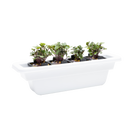
All of these herbs thrive in a home hydroponic system. If you are just getting started, the Personal Garden is a compact countertop unit that fits neatly on a kitchen counter and can grow multiple herb varieties simultaneously — making it a natural fit for anyone who cooks regularly and wants fresh ingredients at arm's reach.
For a more ambitious setup that lets you grow enough herbs to entertain regularly, The Rise Garden 3 offers a full-size indoor hydroponic garden system with multiple growing levels, giving you the capacity to keep basil, chives, thyme, parsley, rosemary, and dill all growing at once.
How Do You Make a Hydroponic Herb Butter Board Recipe Step by Step?
This is the core of the whole experience. A herb butter board is simpler than it looks, but a few techniques make the difference between good and genuinely outstanding.
What You Need
- 2 sticks (1 cup / 225g) of high-quality unsalted butter, softened to room temperature
- 1–2 cloves of garlic, finely minced or grated
- ½ teaspoon flaky sea salt (Maldon or similar)
- Freshly cracked black pepper
- A generous handful of freshly harvested mixed herbs: basil, chives, thyme, parsley
- Optional: lemon zest, red pepper flakes, edible flowers for garnish
- A large wooden or marble board for serving
- Crusty sourdough, baguette slices, or seeded crackers
Step 1 — Soften and Season the Butter
Leave your butter out at room temperature for 45–60 minutes. It should be spreadable but not melted. Stir in the minced garlic, a pinch of salt, and black pepper. Taste and adjust. This is your base layer — it should already be delicious on its own.
Step 2 — Spread the Butter
Using an offset spatula or the back of a large spoon, spread the butter generously across your board in a swooping, textured motion. You want peaks and valleys — not a smooth, flat layer. Those texture variations will catch the herbs and toppings you add next.
Step 3 — Add Your Fresh Herb Spread
This is where your indoor garden shines. Scatter your freshly harvested herbs across the butter, working in layers. Start with thyme and rosemary, pressing them lightly into the butter so they adhere. Then layer parsley and chives. Finish with basil on top so it stays bright and doesn't bruise. Add lemon zest if using, then finish with flaky sea salt and a crack of pepper.
Step 4 — Build the Board
Arrange your bread or crackers around the butter in clusters. Fill gaps with extras that complement the herbs — think sliced radishes, cornichons, honey in a small dish, or prosciutto. This transforms your fresh herb spread recipe into a full indoor garden charcuterie board experience that doubles as a centerpiece.
Step 5 — Serve Immediately
Herb butter boards are best served right after assembly. The fresher the herbs, the more aromatic the whole board becomes as the butter slowly releases their oils. If you need to prep ahead, spread and refrigerate the butter layer, then add herbs just before guests arrive.
What Are the Best Growing Conditions for Herbs in a Hydroponic System?
Getting great flavor from your herbs starts well before harvest. Hydroponic herb growing is highly consistent, but a few variables directly affect flavor intensity — particularly essential oil production, which is what you taste on that butter board.
Light: Most culinary herbs need 14–16 hours of light per day for robust growth. Rise Gardens systems use full-spectrum LED lighting optimized for plant growth, so you don't need to think about positioning near windows or supplementing with grow lamps separately.
Nutrients: Hydroponic plants feed directly through their roots from a water-nutrient solution, skipping the middleman of soil entirely. Maintaining the right balance of macro and micronutrients — nitrogen, phosphorus, potassium, calcium, and magnesium — determines both growth speed and flavor. Using high-quality nutrients formulated specifically for edible plants ensures your herbs are not just growing fast but developing the oils and compounds that make them taste exceptional.
pH: In hydroponics, pH refers to the acidity or alkalinity of your nutrient solution. Most herbs perform best in a pH range of 5.5 to 6.5. Outside that range, plants cannot absorb nutrients efficiently even if those nutrients are present in the water — a phenomenon called nutrient lockout. Rise Gardens systems are engineered to make pH management approachable, even if you've never thought about water chemistry before.
EC (Electrical Conductivity): EC measures the concentration of dissolved nutrients in your water. Higher EC generally means more nutrients available, but too high a level can stress plants. For culinary herbs, an EC of 1.0–2.0 mS/cm is a practical target range.
NASA's Veggie project — which developed plant-growing systems for the International Space Station — demonstrated that leafy crops and herbs can grow successfully in controlled hydroponic environments with minimal resources. Their research, conducted between 2014 and 2020, helped establish light spectrum and nutrient delivery protocols now used in consumer hydroponic products worldwide.
How to Harvest Herbs for Maximum Flavor Before Making Your Board
Harvest timing is one of the most underappreciated factors in home herb growing. Cut at the right moment and you get herbs loaded with aromatic oils. Cut too late and many herbs — basil especially — have already channeled their energy into flowering, at which point leaf flavor diminishes.
For basil, harvest just before the plant starts to flower. Pinch stems just above a pair of leaves and the plant will branch and grow more vigorously. For chives, cut with scissors about an inch above the soil line — they will regrow within days in an active hydroponic system. For thyme and rosemary, snip the soft, newer growth at the tips, which has higher oil content than woody older stems.
A practical rule: harvest in the morning (or just after your grow lights have been on for a few hours) when aromatic oil concentrations are highest in the leaves. Use immediately for maximum impact on your board.
Rise Gardens makes it easy to keep a continuous supply of harvest-ready herbs going. Their pre-seeded seed pods come ready to drop into any Rise system, with dozens of culinary herb varieties available — so you can stagger your plantings and always have something at peak harvest when you need it. For those who want a garden that doubles as a design statement in their home, The Rise Loft delivers a premium indoor garden with furniture-grade design that looks as intentional in your kitchen or dining room as the board it helps you build.
Variations and Serving Ideas for Your Herb Butter Board
Once you have the base technique down, the variations are nearly endless. Here are a few directions worth exploring:
- Mediterranean Style: Use basil, oregano, and flat-leaf parsley. Add Kalamata olives, sun-dried tomatoes, and a drizzle of good olive oil over the butter. Serve with pita and ciabatta.
- French-Inspired: Tarragon, chervil, and chives (the classic fines herbes combination) in a butter seasoned with Dijon mustard and white wine vinegar. Pair with baguette and Gruyère.
- Spicy Herb Butter Board: Cilantro, scallion greens, and a touch of minced jalapeño stirred into the butter with lime zest. Serve with tortilla chips and sliced avocado on the side.
- Breakfast Version: Dill, chives, and parsley in butter, topped with everything bagel seasoning. Serve alongside smoked salmon, capers, and toasted bagels.
According to a 2023 survey by the Specialty Food Association, herb-forward spreads and condiments saw a 34% increase in consumer interest year-over-year, making herb butter boards one of the most timely ways to showcase homegrown produce at the table.
Frequently Asked Questions
Can I make herb butter ahead of time and refrigerate it?
Yes — the seasoned butter base can be prepared up to 3 days in advance and stored in an airtight container in the refrigerator. However, for best results, add your fresh herbs just before serving. Fresh herbs wilt and discolor when compressed against butter for extended periods, and you lose much of the visual impact that makes the board so striking.
Do I need special equipment to grow hydroponic herbs at home?
A quality indoor hydroponic system eliminates most of the complexity. Systems like those from Rise Gardens include integrated LED lighting, water reservoirs, and nutrient delivery — so you don't need separate grow lights, soil, or complex irrigation setups. Starting with pre-seeded seed pods simplifies the process further, especially for first-time growers.
What is the difference between hydroponic herbs and soil-grown herbs in terms of flavor?
Hydroponically grown herbs are not inherently more or less flavorful than soil-grown herbs — what matters most is freshness at the time of harvest and the nutrient balance during growth. The advantage of a home hydroponic system is that you control both variables precisely. You harvest at peak ripeness and control the nutrient profile, which is difficult to replicate with store-bought herbs that may have traveled thousands of miles before reaching your kitchen.
How many herb plants do I need to keep a consistent supply for cooking and entertaining?
For regular home cooking and occasional entertaining, 2–3 plants each of your most-used herbs — typically basil, chives, and parsley — provides a reliable supply when you practice staggered planting. Staggered planting means starting new pods every 2–3 weeks so that as one plant matures and is harvested heavily, younger plants are already developing. A mid-size hydroponic garden with 12–24 pod slots gives you enough space to maintain this rotation comfortably across 4–6 herb varieties.