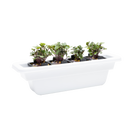
This hydroponic herb compound butter roasted Brussels sprouts recipe is the kind of dish that turns vegetable skeptics into believers. Compound butter — a mixture of softened butter blended with fresh herbs, garlic, and seasonings — melts over hot roasted Brussels sprouts to create a rich, aromatic coating that elevates every bite. What makes this version truly special is the herbs: grown fresh in your own indoor hydroponic garden, they deliver a brightness and intensity that dried or grocery-store herbs simply can't match. If you've been wondering what to actually cook with the herbs thriving on your countertop or living room shelf, this recipe is your answer.
Why Homegrown Hydroponic Herbs Make All the Difference
There's a measurable reason your homegrown herbs taste more vibrant than the ones shrink-wrapped in plastic at the supermarket. Fresh herbs begin losing their volatile aromatic compounds — the oils responsible for flavor and fragrance — within hours of being cut. According to the USDA Agricultural Research Service, leafy herbs can lose up to 40% of their essential oil content within 24 hours of harvest when stored at room temperature. Herbs you snip from your hydroponic garden and use immediately retain nearly all of those compounds.
Hydroponics, by definition, is a method of growing plants in a nutrient-rich water solution rather than soil. Because the plant's root system has direct, constant access to water and dissolved nutrients, it can focus its energy on leaf and stem development rather than searching for resources underground. The result is faster growth and, in many cases, more concentrated flavor in the finished herb.
For this recipe, the best hydroponic herbs to reach for include:
- Thyme — earthy, slightly floral, pairs beautifully with roasted vegetables
- Rosemary — piney and aromatic, holds up to high oven heat
- Flat-leaf parsley — fresh and grassy, brightens the richness of butter
- Chives — mild onion flavor, excellent stirred in at the finish
- Tarragon — subtle anise note that complements Brussels sprouts surprisingly well
All five of these herbs grow exceptionally well in an indoor hydroponic system. If you want a compact setup that lives right on your kitchen counter, the Personal Garden holds up to 10 pods and puts fresh herbs within arm's reach of your cutting board every single day.
What You Need: Ingredients and Equipment
This herb butter roasted vegetables recipe uses simple, accessible ingredients. The compound butter can be made up to a week ahead and stored in the refrigerator, which makes weeknight cooking dramatically faster.
For the Compound Butter
- 8 tablespoons (1 stick) unsalted butter, softened to room temperature
- 1 tablespoon fresh thyme leaves, stripped from stems
- 1 tablespoon fresh rosemary, finely minced
- 2 tablespoons fresh flat-leaf parsley, finely chopped
- 1 tablespoon fresh chives, thinly sliced
- 2 cloves garlic, minced or pressed
- 1 teaspoon fresh lemon zest
- ½ teaspoon flaky sea salt
- ¼ teaspoon freshly cracked black pepper
For the Roasted Brussels Sprouts
- 1½ pounds Brussels sprouts, trimmed and halved
- 2 tablespoons olive oil
- ½ teaspoon kosher salt
- ¼ teaspoon black pepper
- Optional: 2 tablespoons toasted pine nuts or chopped hazelnuts for serving
Equipment
- Large rimmed baking sheet
- Small mixing bowl
- Parchment paper or a silicone baking mat
- Oven preheated to 425°F (220°C)
How Do You Make Hydroponic Herb Compound Butter Roasted Brussels Sprouts?
The process breaks down into two stages: making the compound butter and roasting the sprouts. Each is straightforward on its own, and together they come together in under 40 minutes.
Step 1: Make the Herb Compound Butter
In a small mixing bowl, combine the softened butter with all the chopped fresh herbs, minced garlic, lemon zest, salt, and pepper. Use a fork or rubber spatula to mix everything together until the herbs are evenly distributed throughout the butter. Taste and adjust seasoning as needed.
To store, spoon the butter onto a sheet of plastic wrap or parchment paper, roll it into a log shape, and twist the ends closed. Refrigerate for at least 30 minutes before using, or up to 7 days. You can also freeze it for up to 3 months — slice off rounds as needed.
Step 2: Prepare and Roast the Brussels Sprouts
Preheat your oven to 425°F. Trim the stem ends of the Brussels sprouts and cut them in half from top to bottom. This flat cut side is critical: it creates maximum surface area contact with the hot pan, which produces the caramelized, slightly crispy crust that makes roasted Brussels sprouts so addictive.
Toss the halved sprouts on your parchment-lined baking sheet with olive oil, salt, and pepper. Arrange them cut-side down in a single layer — crowding the pan traps steam and prevents browning, so use two sheets if needed. Roast at 425°F for 20 to 25 minutes, until the cut sides are deeply golden and the outer leaves are crispy.
Step 3: Finish with Herb Butter
Remove the baking sheet from the oven and immediately add two to three tablespoons of herb compound butter directly onto the hot Brussels sprouts. The residual heat melts the butter quickly; use tongs to gently toss everything together so every sprout gets coated. Transfer to a serving platter, scatter with toasted nuts if using, and finish with a pinch of flaky sea salt and a few extra fresh herb leaves straight from your garden.
Can You Grow Brussels Sprouts in an Indoor Hydroponic Garden?
This is one of the most common questions from indoor gardeners curious about expanding beyond salad greens and herbs. Indoor garden Brussels sprouts are technically possible in a hydroponic system, though they come with some honest caveats worth understanding.
Brussels sprouts are cool-weather brassicas that naturally need a period of cold exposure (called vernalization) to develop tight, full sprouts. NASA's Veggie project, which researches growing food in confined environments including spacecraft, has shown that brassica crops can be successfully cultivated in controlled indoor hydroponic systems — but they require more vertical space, longer grow cycles (typically 80 to 100 days from seed to harvest), and careful light management compared to herbs or leafy greens.
For most home growers, the practical approach is to grow the herbs for this recipe hydroponically and source your Brussels sprouts from a farmers market or grocery store. That said, if you want to experiment, a multi-tier system like The Rise Garden 3 gives you the vertical real estate and capacity to attempt longer-cycle crops while still maintaining a continuous harvest of faster-growing herbs on other tiers. With 36 pod sites across three tiers, you can dedicate an entire level to an experimental crop without sacrificing your herb supply.
A 2019 study from the University of Arizona's Controlled Environment Agriculture Center found that hydroponic brassicas grown under optimized LED lighting and pH levels between 6.0 and 6.5 produced yields comparable to field-grown crops within a controlled indoor environment. Maintaining proper pH is straightforward with a quality nutrient solution designed specifically for leafy and brassica crops.
Tips for Growing the Best Herbs for This Recipe
Growing herbs hydroponically is genuinely one of the most rewarding things you can do with an indoor garden system. Herbs are fast-growing, productive, and respond immediately to good conditions. Here are the specific practices that lead to the most flavorful results for homegrown herb recipes like this one.
Harvest Strategically
Never harvest more than one-third of a plant at one time. With herbs like basil, thyme, and parsley, cutting back to just above a leaf node encourages the plant to branch and produce more growth. Regular harvesting actually makes the plant bushier and more productive over time — the opposite of what most new growers expect.
Monitor Your Nutrient Solution
Hydroponic herbs grow in a water-based solution containing dissolved mineral salts. The electrical conductivity (EC) of that solution — a measure of nutrient concentration — should typically fall between 1.0 and 2.0 mS/cm for most culinary herbs. Too low and the plants grow slowly with pale leaves; too high and you risk nutrient burn at the leaf tips. Rise Gardens nutrients are formulated specifically for the crops you grow in the system, which removes a lot of the guesswork.
Give Them Enough Light
Most culinary herbs need between 14 and 16 hours of light per day for optimal growth indoors. Research published by Purdue University's Department of Horticulture found that herbs grown under full-spectrum LED lighting at appropriate photoperiods produced 30% more biomass than those grown under standard fluorescent lighting. If you want a system that handles lighting automatically without thinking about it, the The Rise Loft features built-in, timer-controlled full-spectrum LED lighting in a furniture-grade design that fits naturally in any living space.
Use Fresh Seed Pods
Starting from quality seed pods ensures your herbs germinate reliably and are free from the soil-borne pathogens that can affect transplants from a garden center. Rise Gardens seed pods are pre-seeded and designed to drop directly into your garden's growing sites.
Serving Ideas and Recipe Variations
Once you've mastered the core herb butter roasted vegetables technique, there's a lot of room to make it your own based on what's growing in your indoor garden at any given time.
- Add a creamy finish: Toss the finished Brussels sprouts with two tablespoons of crème fraîche or a squeeze of lemon juice alongside the compound butter for a tangier, richer result.
- Swap the vegetable: This exact compound butter works beautifully on roasted carrots, cauliflower, fingerling potatoes, or asparagus. The technique is completely transferable.
- Add heat: Blend a teaspoon of Aleppo pepper or red pepper flakes into the compound butter for a spicy, aromatic variation.
- Make it a main: Serve alongside a simple roasted chicken and spoon extra compound butter over the chicken skin during the last five minutes of roasting.
- Go dairy-free: High-quality vegan butter works well as a substitute — the herbs are the star flavor here, and they come through just as clearly.
According to a 2022 survey by the National Gardening Association, 18 million U.S. households participated in indoor food gardening that year — a 30% increase from pre-pandemic levels. The most commonly grown indoor crops? Herbs, by a wide margin. If you're part of that group, recipes like this one are exactly the payoff that makes maintaining your garden worth it every week.
Frequently Asked Questions
What herbs grow best in a hydroponic system for cooking?
Basil, thyme, parsley, chives, cilantro, mint, and rosemary are among the easiest and most productive culinary herbs in a hydroponic setup. These herbs germinate quickly, grow consistently under artificial light, and produce frequent harvests when cut properly. Most reach their first harvestable size within two to four weeks of planting from seed.
How do I store compound butter made with fresh hydroponic herbs?
Roll the finished compound butter into a log using plastic wrap or parchment paper and refrigerate it for up to seven days. For longer storage, wrap it tightly and freeze for up to three months — slice off a round directly from frozen whenever you need it. Label the log with the date and herb combination so you remember what's inside.
Can I use dried herbs instead of fresh ones in compound butter?
You can, but the flavor difference is significant. Dried herbs are more concentrated, so use roughly one-third the amount called for in the recipe — about one teaspoon of dried herb for every tablespoon of fresh. That said, the aromatic brightness and color that fresh hydroponic herbs bring to compound butter is difficult to replicate with dried alternatives.
Why are my Brussels sprouts steaming instead of roasting in the oven?
The most common cause is overcrowding on the baking sheet. When vegetables are packed too tightly, they release moisture faster than the oven can evaporate it, which creates steam instead of the dry heat needed for browning. Use two baking sheets if necessary, and always arrange Brussels sprouts cut-side down in a single layer with space between each piece.