There is nothing quite like a hydroponic herb compound butter roasted lobster tail — a restaurant-worthy dish built on a foundation of intensely fragrant herbs you grew yourself, indoors, in water. Compound butter is simply softened butter blended with fresh herbs, aromatics, and seasoning, then chilled and sliced over hot proteins. When those herbs come straight from a hydroponic garden on your kitchen counter or living room shelf, the flavor difference is immediate and real. Hydroponically grown herbs are fed a precise balance of water-soluble nutrients directly at the root zone, which means faster growth, higher leaf density, and — according to research from the University of Mississippi — significantly elevated levels of volatile aromatic compounds compared to some conventionally grown counterparts. This guide walks you through growing the right herbs, building the perfect compound butter, and roasting lobster tails to buttery, golden perfection.
Why Hydroponic Herbs Make a Difference in This Lobster Tail Recipe
Flavor starts long before the pan heats up. The herbs you choose — and how they were grown — directly shape the final dish. Hydroponic growing controls every variable: light spectrum, nutrient concentration (measured as electrical conductivity, or EC), pH (the measure of acidity or alkalinity in your water solution, ideally kept between 5.5 and 6.5 for most herbs), and temperature. That level of precision produces herbs that are clean, potent, and free of soil-borne pathogens.
NASA's Veggie project, which has successfully grown leafy greens and herbs aboard the International Space Station using hydroponic techniques, demonstrated that controlled-environment agriculture reliably produces consumable, nutritious plant matter without soil. The principles are the same in your home system: give plants the right light, the right nutrients, and the right water chemistry, and they thrive consistently.
For this fresh herb lobster tail recipe, you will want a combination of tarragon, chives, flat-leaf parsley, and thyme. All four grow exceptionally well in indoor hydroponic systems. Tarragon adds an anise-forward depth that pairs classically with shellfish. Chives bring a mild onion note that cuts through rich butter. Parsley brightens the entire profile, and thyme adds a resinous, almost floral backbone. Having all four growing simultaneously — just a few steps from your cutting board — transforms this from a weekend splurge into something you can pull off on a Tuesday.
How to Grow the Right Herbs in Your Indoor Hydroponic Garden
If you are new to hydroponics, the concept is straightforward: plants grow in an inert medium (like the rock wool used in Rise Gardens seed pods) and receive water infused with a complete nutrient solution rather than drawing minerals from soil. The roots stay consistently moist and oxygenated, which is why hydroponic herbs typically reach harvest size 30–50% faster than soil-grown equivalents.
For this homegrown herb seafood recipe, start your herb pods 3–4 weeks before you plan to cook. Here is a quick-start breakdown for each herb:
- Tarragon: Prefers slightly lower light intensity. Harvest outer stems first and leave the central growth point intact.
- Chives: One of the fastest-growing herbs in any hydroponic system. You can snip them repeatedly — they regrow from the base within 10–14 days.
- Flat-Leaf Parsley: Takes 3 weeks to establish but produces abundantly. Rich in chlorophyll, it benefits from 14–16 hours of full-spectrum light daily.
- Thyme: A slower grower, but highly concentrated in flavor. Even a small harvest delivers big aromatic impact.
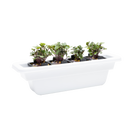
If you are working with a compact kitchen space, the Personal Garden is a countertop hydroponic system that holds multiple pods simultaneously — more than enough to keep all four herb varieties in continuous production. For households that cook with fresh herbs regularly or want to expand their indoor growing beyond just herbs, The Rise Garden 3 offers a full three-tier system that can support dozens of pods at once, giving you herbs, greens, and edible flowers growing in parallel. And if design matters as much as function in your home, The Rise Loft is a premium, furniture-grade indoor garden built to be displayed — it grows the same high-performance crops while looking like it belongs in an interior design magazine.
Keep your nutrient solution EC between 1.6 and 2.2 mS/cm for culinary herbs and check pH every 3–4 days. These two numbers are your most important quality controls.
Hydroponic Herb Compound Butter: The Full Recipe
Compound butter is the bridge between your garden and the lobster. It takes less than 10 minutes to prepare and can be made up to 5 days ahead, stored wrapped in parchment in the refrigerator.
Ingredients:
- 1 stick (8 tablespoons) unsalted European-style butter, room temperature
- 2 tablespoons fresh tarragon leaves, finely minced
- 3 tablespoons fresh chives, finely sliced
- 2 tablespoons flat-leaf parsley, finely chopped
- 1 teaspoon fresh thyme leaves
- 2 garlic cloves, microplane-grated
- 1 teaspoon lemon zest
- 1 teaspoon fresh lemon juice
- ½ teaspoon fine sea salt
- ¼ teaspoon white pepper
Method:
- Place softened butter in a bowl. Add all herbs, garlic, lemon zest, lemon juice, salt, and pepper.
- Use a fork or silicone spatula to fold and press everything together until fully combined and the butter is uniformly green-flecked.
- Taste and adjust salt. The butter should be forward in herb flavor — it will mellow slightly during roasting.
- Lay a sheet of plastic wrap or parchment on your counter. Spoon the butter into a log shape along the center, roll tightly, and twist the ends closed.
- Refrigerate for at least 1 hour before using. This firms the butter and lets the flavors meld.
According to the USDA FoodData Central database, fresh parsley delivers approximately 133 mg of vitamin C per 100 grams — more than most citrus fruits — which means your compound butter is not just delicious, it is nutritionally meaningful.
Hydroponic Herb Compound Butter Roasted Lobster Tail: Step-by-Step
This indoor garden lobster recipe serves two and scales easily. Use 6–8 oz cold water lobster tails for the best texture and sweetness.
Ingredients:
- 2 lobster tails (6–8 oz each), thawed if frozen
- 4 tablespoons hydroponic herb compound butter, sliced into rounds
- 1 tablespoon olive oil
- Flaky sea salt for finishing
- Lemon wedges and extra fresh chives to serve
Method:
- Butterfly the tails: Using kitchen shears, cut straight down the top center of the shell from the open end toward the tail fan, stopping just before the fan. Use your thumbs to gently open the shell and lift the meat up and over, resting it on top of the shell in the classic butterfly presentation. This is not just for looks — it ensures the meat roasts evenly and gives the compound butter a landing pad.
- Preheat your oven to 425°F (218°C). Place an oven-safe skillet or small roasting pan in the oven for 5 minutes to preheat.
- Season and sear: Brush the exposed lobster meat lightly with olive oil and season with a pinch of flaky salt. Place tails meat-side up in the hot pan. Immediately top each tail with 2 rounds of compound butter.
- Roast: Transfer to the oven and roast for 10–12 minutes, basting once with the melted butter pooling in the shell. The lobster is done when the meat is opaque throughout and reads 140°F (60°C) on an instant-read thermometer. Do not exceed 145°F or the texture will tighten and dry.
- Rest and serve: Pull the pan from the oven and let the tails rest 2 minutes. The residual heat will carry the internal temperature up slightly while the juices redistribute. Finish with a squeeze of lemon and a scattering of freshly snipped chives from your garden.
Serve immediately with crusty bread to capture every drop of the herb butter pooled in the shell. A simple green salad — also grown in your indoor system — keeps the plate fresh and balanced.
What Are the Best Herbs to Grow Hydroponically for Seafood Dishes?
This is one of the most common questions from indoor gardeners who are expanding beyond salad greens. The answer depends on the seafood, but a core collection covers most bases. For shellfish like lobster, crab, and shrimp, tarragon and chives are the workhorses. For white-fleshed fish, dill and fennel fronds are exceptional. Basil is a powerhouse across virtually all seafood preparations, particularly anything moving toward Mediterranean or Southeast Asian flavor profiles.
All of the above grow reliably in hydroponic systems. A 2020 study published in the journal Agronomy found that hydroponically grown basil contained up to 20% higher concentrations of linalool and eugenol — the primary aromatic compounds responsible for its signature scent — compared to soil-grown controls under equivalent light conditions. Higher aromatic concentration means you need less herb to achieve the same flavor impact, which matters when you are building something as precise as a compound butter.
Dill is worth a specific note for this fresh herb lobster tail context: it is a fast grower in hydroponic conditions (reaching harvestable size in as few as 21 days) and pairs beautifully with lobster in a cream sauce variation of this recipe. If you want to expand this dish into a series, a dill-caper compound butter over cold lobster tail on brioche is a natural next step.
Can You Use Hydroponically Grown Herbs in Any Lobster Recipe?
Absolutely — and the swap is always an upgrade. Any lobster preparation that calls for fresh herbs benefits directly from the cleaner flavor profile and higher aromatic density of hydroponically grown varieties. Lobster bisque becomes more nuanced with homegrown tarragon stirred in at the finish. A classic lobster roll gets a brighter lift from hydroponic chives and a whisper of lemon thyme in the mayo. Grilled lobster tail takes on a completely different character when basted with a homegrown herb oil instead of plain butter.
The key principle in any homegrown herb seafood recipe is timing: add delicate herbs (chives, tarragon, basil, dill) at the very end of cooking or after the heat is off to preserve their volatile compounds. Hardy herbs like thyme and rosemary can go in earlier or be used as a roasting bed. Your indoor garden gives you access to both categories, harvested at peak potency, year-round regardless of season or local market availability.
That last point carries real weight. The average American grocery store sources fresh herbs from commercial farms hundreds to thousands of miles away, with post-harvest windows of 7–14 days before quality degrades. When you harvest from your own hydroponic garden minutes before cooking, you are working with live plant matter at maximum volatile oil concentration. That is a competitive advantage no grocery run can replicate.
Frequently Asked Questions
How long does it take to grow enough herbs hydroponically for this recipe?
Chives and parsley are typically ready to harvest within 21–28 days from planting in a hydroponic system. Tarragon and thyme take slightly longer, usually 28–35 days to reach a productive size. If you stagger your planting by one week per variety, you can have all four ready simultaneously on the same timeline.
Can I make the compound butter ahead of time?
Yes — compound butter stores well in the refrigerator for up to 5 days wrapped tightly in parchment or plastic wrap, or in the freezer for up to 3 months. Slice off rounds directly from the frozen log and place them on hot lobster straight from the oven; they will melt beautifully without needing to thaw first.
What is the correct internal temperature for roasted lobster tail?
The USDA recommends cooking lobster to an internal temperature of 145°F (63°C). For the best texture in this recipe, pull the tails from the oven at 140°F and allow carryover cooking during a 2-minute rest to bring them up to the safe target temperature. Lobster cooked above 150°F becomes rubbery and dry.
What nutrient solution EC should I use for culinary herbs in a hydroponic system?
Most culinary herbs perform best at an EC (electrical conductivity, a measure of dissolved nutrient concentration in your water) between 1.6 and 2.2 mS/cm. Keep pH between 5.5 and 6.5. Running outside these ranges can cause nutrient lockout — a condition where roots cannot absorb minerals even when they are present in the water — leading to pale, slow-growing plants with reduced aromatic oil production.