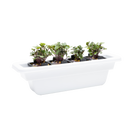
A hydroponic herb infused butter recipe is exactly what it sounds like: a rich, aromatic compound or clarified butter made by steeping freshly harvested herbs — grown without soil using a nutrient-rich water system — directly into melted butter. The result is a deeply flavored cooking fat that carries the concentrated essence of whatever herbs you grow at home. When those herbs come from your own indoor hydroponic garden, you know precisely what went into them: no pesticides, no mystery supply chains, just clean water, the right nutrients, and consistent light. This guide walks you through the full process, from harvesting your homegrown herbs to finishing a silky, restaurant-quality infused butter you'll reach for every single day.
Why Hydroponic Herbs Make Better Infused Butter
Not all herbs are created equal — and the method by which they're grown has a measurable impact on their flavor and potency. Hydroponically grown herbs consistently develop higher concentrations of essential oils, which are the compounds responsible for the bold aromas and flavors that make infused butter so satisfying.
According to research from the University of Mississippi's School of Pharmacy, plant essential oil content is directly tied to environmental stress and nutrient availability. In a controlled hydroponic environment, you can dial in both factors precisely, encouraging plants to produce more of the volatile compounds that end up in your butter. A 2021 study published in the journal HortScience found that hydroponically grown basil produced up to 20–30% higher essential oil content compared to soil-grown counterparts under equivalent lighting conditions.
NASA's Veggie project, which has grown leafy greens and herbs aboard the International Space Station using hydroponic techniques since 2014, specifically selected hydroponics for its precision control over nutrients and moisture — the same advantages that make your indoor harvest so flavorful here on Earth.
When you grow herbs like rosemary, thyme, basil, or chives in a system like The Rise Garden 3, you control every variable: water pH (ideally between 5.5 and 6.5 for most herbs), electrical conductivity (EC) of the nutrient solution, light cycles, and temperature. That control translates directly into more potent herbs and, ultimately, more flavorful butter.
What Herbs Grow Best for Indoor Garden Infused Cooking Butter?
Choosing the right herbs is the most important step before you even think about butter. Some herbs infuse beautifully into fat; others lose their character the moment they hit heat. Here's a breakdown of the best performers for your indoor garden infused cooking butter:
- Rosemary: Woody and resinous, rosemary is one of the most forgiving herbs to infuse. Its essential oils are fat-soluble and transfer readily into butter during a slow, low-heat steep. Perfect for roasted potatoes, grilled meats, and crusty bread.
- Thyme: Earthy and slightly floral, thyme pairs well with rosemary or on its own. Grows quickly in hydroponic systems and produces continuous harvests.
- Basil: Bright and peppery, basil makes a stunning finishing butter for pasta, pizza, and grilled fish. Use it in a raw compound butter rather than a cooked clarified version to preserve its delicate flavor.
- Chives: Mild allium flavor that shines in room-temperature compound butters for bread or baked potatoes.
- Sage: Rich, savory, and slightly earthy. Brown-butter sage is a classic Italian preparation — growing it hydroponically means you always have enough for a generous handful.
- Tarragon: Anise-forward and elegant, tarragon infused butter is exceptional over salmon or stirred into béarnaise.
You can start all of these from seed pods designed specifically for hydroponic systems, which take the guesswork out of germination and spacing. Most culinary herbs are ready to harvest within 3–4 weeks of germination in a well-maintained indoor system.
Hydroponic Herb Infused Butter Recipe: Step-by-Step
This recipe produces approximately 1 cup (225g) of finished infused butter. You can scale it up easily — just maintain the herb-to-butter ratio.
What You'll Need
- 1 cup (2 sticks / 225g) high-quality unsalted butter
- ½ cup loosely packed fresh herbs, stems removed (choose one variety or a blend)
- ¼ tsp fine sea salt (optional, or to taste)
- A small saucepan
- Fine mesh strainer or cheesecloth
- Glass jar or ramekin for storage
Method 1: Simple Compound Butter (No Heat Required)
This is the best approach for delicate herbs like basil, chives, or tarragon that lose flavor when cooked.
- Allow butter to soften at room temperature for 30–45 minutes until fully pliable but not melted.
- Finely chop your fresh hydroponic herbs. For every ½ cup of butter, use 2–3 tablespoons of chopped herbs.
- Place the softened butter in a bowl and fold in the herbs and salt using a spatula until evenly distributed.
- Turn the mixture out onto a sheet of plastic wrap. Roll into a cylinder shape, twisting the ends to seal.
- Refrigerate for at least 2 hours before slicing. Keeps refrigerated for up to 2 weeks or frozen for 3 months.
Method 2: Slow-Infused Homegrown Herb Clarified Butter
This method, ideal for hardy herbs like rosemary, thyme, and sage, produces a homegrown herb clarified butter with exceptional depth. Clarified butter (butter with milk solids and water removed) has a higher smoke point — around 450°F (232°C) compared to whole butter's 300–350°F — making it far more versatile for high-heat cooking.
- Melt butter in a small saucepan over the lowest heat setting your stove allows. Do not stir.
- As the butter melts, white foam will rise to the top. Skim this off gently with a spoon.
- Add your fresh hydroponic herbs to the clarified butter once the foam has been removed. The butter should be warm, not aggressively bubbling.
- Maintain a gentle heat between 160–180°F (71–82°C) for 20–30 minutes. You'll notice the herbs darkening slightly and the butter taking on their color and aroma.
- Remove from heat and allow to cool for 10 minutes.
- Strain through a fine mesh strainer or two layers of cheesecloth into a clean glass jar, pressing the herbs gently to extract all the butter.
- Season with salt if desired. Store in the refrigerator for up to 3 weeks.
Method 3: Hydroponic Herb Ghee Recipe
A hydroponic herb ghee recipe takes the clarified butter process one step further. Ghee is cooked longer until the milk solids toast and fall to the bottom of the pan, producing a nutty, caramel-like flavor. The USDA classifies ghee as a shelf-stable fat when properly prepared, meaning a sealed jar can be stored at room temperature for up to 3 months — a meaningful advantage over standard compound butters.
- Follow steps 1–2 from the clarified butter method above.
- Continue cooking the butter on low heat, without adding herbs yet. The milk solids will sink to the bottom and begin to turn golden-brown, and the bubbling will slow significantly. This takes approximately 15–20 minutes total.
- Once the solids are golden (not dark brown) and the butter is clear and fragrant with a nutty aroma, remove from heat immediately.
- Add your hardy fresh herbs to the hot ghee and allow to steep off-heat for 20–30 minutes as it cools.
- Strain through cheesecloth into a sterilized glass jar. Do not refrigerate if keeping at room temperature; ensure the jar is completely dry before filling.
- Use within 3 months at room temperature or up to 6 months refrigerated.
How Do You Harvest Hydroponic Herbs Without Killing the Plant?
Sustainable harvesting is the key to a continuous supply of fresh herbs for your butter. The rule that applies across virtually all culinary herbs is this: never remove more than one-third of the plant at a single harvest. Doing so stresses the plant beyond its recovery threshold and slows regrowth dramatically.
For leafy herbs like basil, always cut just above a leaf node — the point where two leaves meet the stem. This encourages the plant to branch outward rather than growing tall and leggy. For rosemary and thyme, snip the soft, green growing tips rather than cutting into the woody base.
In a hydroponic system, regrowth is noticeably faster than in soil because the roots have uninterrupted access to dissolved nutrients and oxygen. Studies from Cornell University's Controlled Environment Agriculture program have documented that hydroponically grown basil can achieve harvest-ready regrowth in as few as 7–10 days after a one-third cut, compared to 14–21 days for the same varieties in soil.
If you're cooking frequently and need a larger, consistent harvest, a multi-tier system like The Rise Loft lets you stagger plantings across multiple rows so you always have herbs at different stages of maturity. For smaller households or countertop kitchens, the Personal Garden is a compact option that keeps a rotating supply of 6–10 herb pods within arm's reach of your stove.
Storage, Serving Ideas, and Flavor Pairings
Once your infused butter is made, the applications are nearly endless. Here are some of the most effective uses organized by butter type:
Compound Butter
- Melt over grilled steak or fish immediately before serving
- Spread on warm sourdough or baguette
- Toss with hot pasta as a quick finishing sauce
- Dollop onto baked or mashed potatoes
Clarified Herb Butter
- Use as a high-heat sauté fat for vegetables, eggs, or seafood
- Drizzle over popcorn with flaky salt
- Brush onto flatbreads or naan before baking
Herb Ghee
- Stir into rice or lentils for depth and richness
- Use as a base for pan sauces
- Add a spoonful to soups or stews just before serving
For storage, always use clean, dry glass jars. Introduce no water to your clarified butter or ghee — even a single drop of water can dramatically shorten shelf life by introducing the conditions bacteria need to grow. Label jars with the herb blend and date made.
Is Hydroponic Herb Butter Worth Making vs. Store-Bought?
The honest answer is yes — and the gap is wider than most people expect. Pre-packaged compound butters sold at grocery stores are made with dried herbs or herb extracts, not fresh-cut herbs at peak volatile oil content. The aromatic compounds in fresh herbs begin degrading within hours of harvest; dried herbs can lose 40–60% of their essential oil content during the drying process, according to data published by the American Spice Trade Association.
When you grow herbs hydroponically and process them into butter on the same day they're harvested, you're capturing flavor at its absolute peak. The color is brighter, the aroma is sharper, and the taste is noticeably more complex. A tablespoon of rosemary-thyme ghee made from your own indoor garden carries a depth that no grocery store product can replicate.
Beyond flavor, there's a genuine cost efficiency at play. A single mature rosemary plant in a hydroponic system can yield multiple tablespoons of fresh needles per week for months. A comparable quantity of fresh rosemary from a grocery store costs between $2–4 per small clamshell. Over a growing season, the math favors the home grower significantly.
Frequently Asked Questions
Can I use any hydroponic herb for infused butter?
Most culinary herbs work well, but the best results come from herbs with high essential oil content: rosemary, thyme, sage, basil, tarragon, and chives. Avoid herbs with very high water content like cilantro or dill for clarified butter and ghee, as the extra moisture can affect shelf life. These work better in compound (no-heat) butters consumed within one week.
What is the difference between infused butter, clarified butter, and ghee?
Infused butter is any butter — whole, clarified, or ghee — that has been steeped with herbs or other flavoring agents. Clarified butter is whole butter with the water and milk solids removed, leaving pure butterfat with a smoke point around 450°F. Ghee is clarified butter taken one step further: the milk solids are allowed to toast before removal, producing a nuttier flavor and an even longer shelf life.
How long does homegrown herb clarified butter last?
Properly made herb clarified butter stored in a sealed glass jar will keep in the refrigerator for 2–3 weeks. Herb ghee, when made correctly with no water introduced, can be stored at room temperature for up to 3 months or refrigerated for up to 6 months. Whole-butter compound butter (the no-heat method) should be used within 2 weeks refrigerated or 3 months frozen.
What nutrient settings work best for growing culinary herbs hydroponically?
Most culinary herbs thrive at a pH between 5.5 and 6.5 and an electrical conductivity (EC) of 1.0–1.6 mS/cm. Higher EC encourages more compact, flavorful growth in herbs like basil and rosemary, but pushing above 2.0 mS/cm can cause nutrient burn. Rise Gardens' pre-formulated nutrients are calibrated for exactly this range, making it straightforward to maintain optimal conditions without manual testing at every watering.