There is something genuinely different about a hydroponic herb salad dressing vinaigrette recipe made with herbs you grew yourself. A hydroponic herb salad dressing is any sauce, vinaigrette, or emulsified dressing built around fresh herbs harvested from a soil-free, water-based growing system — and the flavor payoff compared to dried or store-bought herbs is remarkable. Hydroponically grown herbs contain their essential oils at peak concentration because you harvest them at exactly the right moment, not days after they were cut and shipped across the country. This guide gives you two complete recipes — a bright herb vinaigrette and a bold homegrown herb caesar dressing — plus everything you need to grow the herbs yourself indoors, year-round.
Why Hydroponic Herbs Make Better Dressings
Flavor in fresh herbs comes from volatile aromatic compounds — terpenes, phenols, and aldehydes — that begin degrading the moment a stem is cut. Research published by the University of California Cooperative Extension found that basil stored at room temperature loses up to 50% of its aromatic volatiles within 24 hours of harvest. When you grow herbs hydroponically on your countertop, that gap between harvest and plate collapses to minutes, not days.
Hydroponics — a method of growing plants in a nutrient-rich water solution rather than soil — also gives you precise control over plant health. You manage the pH (the measure of acidity or alkalinity in your water, ideally kept between 5.5 and 6.5 for herbs), the EC (electrical conductivity, which measures dissolved nutrient concentration in the water), and light exposure. That level of control means your basil, chives, parsley, and tarragon grow consistently robust and flavorful — exactly the profile you want in a dressing.
NASA's Veggie project, which has been growing leafy crops on the International Space Station since 2014, demonstrated that hydroponic systems can produce nutritionally comparable — and in some cases superior — crops to field-grown equivalents, even in highly constrained environments. If hydroponics works in microgravity, it absolutely works on your kitchen counter.
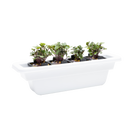
A compact system like the Personal Garden fits on most countertops and lets you keep three to six herb pods growing at any given time, so you always have fresh material ready for the recipes below.
What Herbs Should You Grow for Salad Dressings and Vinaigrettes?
Not every herb belongs in every dressing. Knowing which herbs to prioritize for salad applications will help you plan your indoor garden layout intelligently.
- Basil — Sweet, slightly peppery, indispensable in Italian-style vinaigrettes and summer herb dressings. Grows quickly hydroponically and benefits from frequent harvesting.
- Chives — Mild onion flavor that integrates seamlessly into creamy dressings and light lemon vinaigrettes without overpowering.
- Flat-leaf parsley — Fresh, grassy, and slightly bitter. The backbone of many herb-forward dressings; also the herb most often wasted when purchased in store bunches.
- Tarragon — Anise-forward and elegant. A small amount transforms a simple Dijon vinaigrette into something genuinely complex.
- Dill — Bright and feathery. Essential for tzatziki-style dressings, cucumber vinaigrettes, and as a finishing herb on caesar-style salads.
- Thyme — Earthy and resinous. Works best in vinaigrettes served on roasted vegetables or grain salads rather than delicate lettuces.
The USDA's FoodData Central database lists fresh parsley as containing 133 mg of vitamin C per 100 grams — more than many citrus fruits — which makes it a nutritional asset as well as a flavor one. Grow a dedicated parsley pod alongside your other herbs and you will rarely run short.
For a setup that accommodates a full herb collection alongside lettuce and other salad greens, the The Rise Garden 3 is a full-size indoor hydroponic system that gives you the capacity to grow herbs, romaine, and other greens simultaneously — a real advantage when you want to make a complete salad from scratch, including your indoor garden caesar salad recipe.
Hydroponic Herb Vinaigrette Recipe
This is the foundational recipe — a versatile herb vinaigrette that works on simple green salads, grain bowls, roasted vegetables, and grilled proteins. It takes about five minutes once your herbs are harvested.
Ingredients
- 3 tablespoons fresh flat-leaf parsley, finely chopped (harvested from your indoor garden)
- 1 tablespoon fresh tarragon leaves, chopped
- 1 tablespoon fresh chives, thinly sliced
- 1 small garlic clove, minced or grated
- 1 teaspoon Dijon mustard
- 2 tablespoons white wine vinegar or champagne vinegar
- 1 teaspoon honey or maple syrup
- 6 tablespoons extra-virgin olive oil
- Salt and freshly ground black pepper to taste
Method
- Combine the vinegar, Dijon mustard, honey, and garlic in a small bowl or jar. Whisk to combine.
- Slowly stream in the olive oil while whisking constantly to create a stable emulsion. Alternatively, combine everything in a jar and shake vigorously for 30 seconds.
- Fold in the chopped parsley, tarragon, and chives.
- Taste and adjust with salt, pepper, and a small splash of additional vinegar if you prefer more acidity.
- Use immediately for peak herb flavor, or refrigerate for up to three days. Re-shake before each use.
Tip: For a creamier texture, blend the dressing in a small food processor after adding the herbs. The chlorophyll from the parsley will turn the dressing a vivid green — visually striking and genuinely impressive at the table.
Homegrown Herb Caesar Dressing Recipe (and a Full Indoor Garden Caesar Salad)
A proper caesar dressing is an emulsion of fat and acid stabilized by egg yolk and anchovy, with garlic and lemon providing its signature sharpness. When you make a homegrown herb caesar dressing with hydroponically grown herbs and romaine, the difference in freshness is immediately apparent — crisper lettuce, brighter herb notes, and a dressing that tastes built for the leaves it's served on.
Caesar Dressing Ingredients
- 1 large egg yolk (room temperature)
- 3 anchovy fillets, minced to a paste (or 1 teaspoon anchovy paste)
- 2 garlic cloves, finely grated
- 2 tablespoons fresh lemon juice
- 1 teaspoon Dijon mustard
- 1 teaspoon Worcestershire sauce
- ½ cup extra-virgin olive oil
- 2 tablespoons freshly grated Parmigiano-Reggiano
- 2 tablespoons fresh flat-leaf parsley, finely chopped
- 1 tablespoon fresh chives, minced
- Salt and freshly ground black pepper to taste
Caesar Dressing Method
- In a medium bowl, whisk together the egg yolk, anchovy paste, grated garlic, lemon juice, Dijon, and Worcestershire sauce until smooth and slightly thickened.
- Add the olive oil in a very slow, thin stream while whisking constantly. The mixture should thicken into a creamy, cohesive emulsion.
- Stir in the Parmigiano-Reggiano, parsley, and chives. Season generously with salt and pepper.
- If the dressing is thicker than you like, thin with a teaspoon of cold water at a time until you reach your preferred consistency.
- Refrigerate for up to four days in an airtight container.
Indoor Garden Caesar Salad
For a complete hydroponic romaine caesar recipe, harvest your romaine heads when they reach 8–10 inches tall — a stage hydroponically grown romaine typically reaches in 35–45 days from transplant. Cut the outer leaves first, leaving the center intact to continue growing, or harvest the entire head if it has fully matured.
- 1 large head hydroponic romaine, torn or cut into 2-inch pieces
- Caesar dressing (full batch from above)
- Croutons (sourdough, cubed and toasted in olive oil)
- Additional shaved Parmigiano-Reggiano
- Fresh dill or parsley from your garden as a finishing herb
Toss the romaine in just enough dressing to coat each leaf — about three to four tablespoons for one head. Add croutons, shave cheese directly over the top, and finish with fresh dill fronds. Serve immediately.
The The Rise Loft is a premium indoor garden designed with furniture-grade materials, making it well-suited for living and dining spaces where aesthetics matter as much as function. Growing your caesar salad ingredients — romaine, parsley, chives — in a garden that looks like part of your home décor makes the farm-to-table concept genuinely literal.
How Do You Grow Hydroponic Herbs Indoors Successfully?
Growing herbs hydroponically indoors is more forgiving than most people expect, but a few fundamentals make the difference between thriving plants and struggling ones.
Light: Most culinary herbs need 14–16 hours of light per day for productive growth. Rise Gardens systems include full-spectrum LED grow lights calibrated for this range, so you do not need to think about spectrum or intensity — the hardware handles it.
Water temperature and pH: Keep your reservoir water between 65°F and 72°F. Water that is too warm promotes bacterial growth and root rot. Maintain pH between 5.5 and 6.5; outside this range, plants cannot absorb nutrients even if those nutrients are present in the water. A simple pH meter or test kit costs under $20 and takes seconds to use.
Nutrients: Hydroponic plants receive all their nutrition from the water solution. Rise Gardens offers specifically formulated nutrients designed to deliver the correct macro and micronutrient ratios for leafy herbs and greens at every stage of growth. Follow the dosing guide on the label and adjust based on your EC readings — a target EC of 1.2–2.0 mS/cm works well for most culinary herbs.
Harvesting technique: Always harvest in the morning when essential oil concentrations are highest. Cut stems just above a leaf node to encourage branching. Herbs like basil and chives will regrow repeatedly if harvested correctly — a single pod can produce multiple harvests over several weeks.
Starting with pre-seeded seed pods removes the germination guesswork entirely. Rise Gardens seed pods are pre-loaded with a growing medium and seed, calibrated for the specific nutrient and light conditions of the system, so you start with a meaningful head start.
Can You Use Hydroponic Herbs in Any Salad Dressing Recipe?
Yes — hydroponically grown herbs are botanically identical to field-grown herbs. The difference is in growing conditions, not in the plant's fundamental chemistry. This means any recipe calling for fresh herbs can use hydroponic herbs as a direct, one-to-one substitution.
Where you will notice the upgrade most clearly is in recipes where herbs are the primary flavor driver rather than a background note. A chimichurri made with hydroponically grown flat-leaf parsley and oregano, a gremolata made with parsley and lemon zest, or a green goddess dressing built on fresh tarragon and chives — these are the applications where the quality of your herbs is not masked by competing flavors.
A 2021 study comparing hydroponic and field-grown basil found that hydroponic samples had up to 30% higher concentrations of linalool and eugenol — the key aromatic compounds responsible for basil's flavor — compared to conventionally grown samples, depending on growing conditions and nutrient management. That kind of measurable difference shows up in your salad dressing.
Frequently Asked Questions
How long does homemade herb salad dressing last in the refrigerator?
A fresh herb vinaigrette made with olive oil and vinegar will keep for up to five days in a sealed glass jar in the refrigerator. Creamy dressings containing egg yolk, like the caesar above, are best used within three to four days. Always taste before using and look for any off aromas that would indicate the fresh herbs have turned.
What is the best hydroponic herb for caesar dressing?
Flat-leaf parsley is the most useful herb for a homegrown herb caesar dressing because it adds freshness and a mild, grassy bitterness that complements the anchovy and garlic. Chives add a subtle allium note that reinforces the garlic without overpowering the dressing. Growing both in your indoor garden gives you the complete flavor profile this dressing calls for.
Can I grow romaine lettuce hydroponically for a caesar salad?
Romaine is one of the most reliable lettuces to grow hydroponically and is well-suited for any hydroponic romaine caesar recipe. It typically matures in 35–45 days in a properly managed indoor system and produces crisp, tightly formed heads. Harvest outer leaves progressively for a cut-and-come-again approach, or take the full head once it reaches maturity.
Do I need special equipment to make a stable herb vinaigrette emulsion?
No special equipment is required. A bowl and a whisk work perfectly as long as you add the oil slowly and whisk continuously. A mustard emulsifier — Dijon is ideal — helps stabilize the vinaigrette without requiring a blender. If you want a creamier, more stable result, a small immersion blender or food processor will produce a tighter emulsion in about 30 seconds.