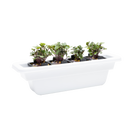
Hydroponic lettuce growing slowly in winter is almost always caused by one of three things: low light, cold water or air temperature, or diluted nutrients. Lettuce grows best at water temperatures between 65–72°F and needs at least 14–16 hours of light per day. Drop below 60°F in your grow space and you can expect growth rates to slow by 30–50% compared to warmer months.
Winter indoor garden growth rate surprises a lot of new hydroponic growers. Everything looks healthy — the leaves are green, the roots are white — but the harvest seems weeks away. What's happening is a compounding effect: shorter daylight hours reduce the light your plants receive, homes get colder at night, and root zone temperatures drop. Each factor alone would slow growth; together, they can stall a lettuce head that should be ready in 30 days to take 50 or more. Understanding which variable is most out of range in your setup is the fastest path to fixing it.
How Cold Room Temperature Affects Hydroponic Lettuce Growth
Lettuce is a cool-season crop, but "cool" has a range. The sweet spot for hydroponic lettuce is an air temperature of 65–70°F and a nutrient solution temperature of 65–72°F. When ambient room temperatures fall below 60°F — common in drafty kitchens, garages, or basements during winter — the root zone cools with it. Cold water holds more dissolved oxygen, which sounds like a benefit, but it also dramatically slows the rate at which roots absorb nutrients and water.
Research from Cornell University's Controlled Environment Agriculture program shows that lettuce grown at 59°F had a fresh weight roughly 40% lower than lettuce grown at 68°F under identical light and nutrient conditions. That's the difference between a satisfying harvest and wondering what went wrong.
Cold room temperature hydroponics is a real challenge, but it's fixable. If your grow space dips below 62°F at night, consider these adjustments:
- Move your garden away from exterior walls and windows. Even insulated glass radiates cold at night.
- Use an aquarium thermometer to monitor your reservoir water temperature directly — not just the room air.
- Run your grow lights on a timer that includes evening hours so waste heat from the fixture warms the canopy zone overnight.
If you're growing with The Rise Garden 3, its enclosed reservoir design provides some insulation against ambient temperature swings — but the above tips still apply if your room gets very cold.
Is Low Light Causing Your Winter Indoor Garden Growth Rate to Slow?
Light is the engine of photosynthesis, and in winter that engine gets starved. Even indoors, natural ambient light drops significantly between November and February in northern latitudes. If your hydroponic garden relies on a window for supplemental light, it's receiving far less photosynthetically active radiation (PAR) than it did in July.
Lettuce needs a daily light integral (DLI) of roughly 12–17 mol/m²/day to grow at full speed. NASA's Veggie project, which tested crop production aboard the International Space Station, confirmed that leafy greens including lettuce reach optimal yield under continuous or near-continuous artificial lighting in low-natural-light environments — making full-spectrum LED grow lights non-negotiable for winter growing.
Practical fixes:
- Extend your light cycle to 16 hours per day. Lettuce is a long-day plant and responds well to extended photoperiods without bolting prematurely when temperatures stay in the correct range.
- Check your light distance. LED panels lose intensity rapidly with distance. Most full-spectrum grow lights used in home hydroponics should sit 6–12 inches above the canopy for lettuce.
- Replace aging bulbs. LED output degrades over time; a fixture that was adequate in year one may be delivering 20–30% less PAR by year three.
The The Rise Loft includes integrated full-spectrum LED grow lights engineered for exactly this — delivering consistent light intensity year-round regardless of what's happening outside your windows.
What Nutrient and pH Adjustments Help in Winter?
Seasonal growth slowdown indoors often has a nutrient dimension that growers overlook. When plants are growing more slowly, they consume fewer nutrients per week. That means your nutrient solution can drift toward higher electrical conductivity (EC) — the measure of dissolved mineral concentration — which stresses roots and further slows growth in a frustrating feedback loop.
EC for lettuce should stay between 0.8–1.6 mS/cm. pH should be maintained at 5.5–6.5, with 6.0 being the commonly cited ideal for lettuce in hydroponic systems. Cold water can cause pH to drift upward, so check more frequently in winter — every two to three days rather than weekly.
A few nutrient-management habits that pay off in winter:
- Top off with plain pH-adjusted water first when reservoir levels drop, then check EC before adding more nutrients. Over-concentration is a common winter mistake.
- Change your reservoir solution every 7–10 days rather than stretching it to two weeks, since stagnant cold water is more prone to pH drift and microbial buildup.
- Use fresh seed pods if germination is sluggish — old seeds combined with cold, slow conditions make a tough start even harder.
For growers just getting started, the Personal Rise Garden is a compact countertop system that makes monitoring and adjusting a small reservoir genuinely easy, which matters most when you're learning to manage these winter variables.
Frequently Asked Questions
How long should hydroponic lettuce take to grow in winter?
Under optimized indoor conditions — 16 hours of light, 65–70°F air temperature, and correct nutrient levels — most hydroponic lettuce varieties reach harvest in 30–45 days from transplant. In an unoptimized cold room, that timeline can stretch to 60 days or longer. Fixing your light cycle is usually the fastest single improvement you can make.
What is the ideal water temperature for hydroponic lettuce in winter?
Aim for a reservoir water temperature between 65–72°F. Below 60°F, root nutrient uptake slows significantly and the risk of root rot from certain pathogens increases. An inexpensive submersible aquarium heater can maintain reservoir temperature in a cold room without affecting air temperature.
Can I use a cold basement or garage for hydroponic growing in winter?
Yes, but you'll need to compensate aggressively with heat and light. Spaces that drop below 55°F at night are genuinely difficult for lettuce without supplemental reservoir heating and a fully enclosed grow environment. A well-insulated, climate-controlled indoor space will always outperform an unheated outbuilding for cold-season growing.