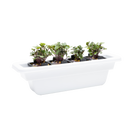
A hydroponic tabouli recipe is exactly what it sounds like: the classic Middle Eastern herb and grain salad — traditionally packed with flat-leaf parsley, fresh mint, bulgur wheat, lemon, and olive oil — made with herbs you've grown yourself in an indoor hydroponic garden. Tabouli (also spelled tabbouleh) is one of those dishes where the quality of the herbs is everything. The parsley isn't a garnish here; it's the star. That's why growing your own hydroponically changes this recipe entirely. You're harvesting at peak freshness, often minutes before you eat. No wilted bunches from the grocery store. No mystery about when the herbs were cut. Just bright, clean, intensely flavored greens that make every bite taste like it was made in a Lebanese grandmother's kitchen.
Why Hydroponic Herbs Make the Best Tabouli
Parsley grown hydroponically has a distinct advantage over its soil-grown counterpart: controlled nutrition and consistent moisture produce remarkably uniform, lush leaves with concentrated flavor. According to the USDA Agricultural Research Service, hydroponically grown leafy herbs can contain comparable or higher levels of certain phytonutrients compared to conventionally grown herbs, depending on nutrient solution composition and light exposure. That matters in a recipe like tabouli, where the herb's flavor is unmasked by cooking.
There's also a volume advantage. Traditional tabouli calls for roughly two large bunches of flat-leaf parsley — about 4 cups of finely chopped leaves. If you're growing parsley in a The Rise Garden 3, you'll have more than enough continuous supply to make this dish weekly without a trip to the store. Hydroponic parsley grows approximately 30–50% faster than soil-grown parsley under optimal conditions, meaning you're not waiting long between harvests.
Mint is the other key herb in this fresh herb grain salad, and it thrives just as well in an indoor system. Growing both side by side means your herb supply is always synchronized — you harvest parsley and mint at the same time, both at their peak, for a salad that tastes genuinely alive.
What You Need to Grow Parsley and Mint Hydroponically
Before you get to cooking, you need to get growing. Both flat-leaf parsley and spearmint are well-suited to indoor hydroponic systems. Here's what you need to know about setting them up successfully.
Light: Parsley and mint are moderate-light herbs. They thrive under full-spectrum LED grow lights at around 14–16 hours of light per day. Rise Gardens systems use built-in full-spectrum LEDs calibrated specifically for edible plants, so there's no guesswork involved.
Nutrient solution: Herbs perform best with an electrical conductivity (EC) level between 1.0 and 1.6 mS/cm. EC is a measure of the concentration of dissolved minerals in your water — too low and plants starve, too high and they get nutrient burn. Rise Gardens nutrients are formulated for edible herbs and take the math out of mixing your solution.
pH: Keep your reservoir pH between 5.5 and 6.5 for optimal nutrient absorption. pH is the measure of acidity or alkalinity of your water. In this range, parsley and mint roots can absorb everything they need efficiently.
Seed pods: Rise Gardens seed pods come pre-seeded and are ready to drop directly into your garden. Both Italian flat-leaf parsley and spearmint are available, making the setup process straightforward even if you've never grown herbs before.
From seeding to first harvest, parsley typically takes 3–4 weeks in a hydroponic system. Mint establishes even faster, often ready for a light harvest within 2–3 weeks. Once established, both plants can be harvested on a cut-and-come-again basis, meaning regular trimming encourages bushier, more productive growth.
The Hydroponic Tabouli Recipe
This is a classic, herb-forward tabouli — no shortcuts, no filler. The ratio here is intentionally parsley-heavy, which is how it's made throughout Lebanon and Syria. The bulgur is there for texture and body, not to dominate the bowl.
Ingredients (serves 4):
- 4 cups flat-leaf parsley, finely chopped (from your indoor garden)
- ½ cup fresh spearmint leaves, finely chopped (from your indoor garden)
- ½ cup fine bulgur wheat (#1 grade)
- 4 Roma tomatoes, finely diced
- 4 green onions, thinly sliced
- ⅓ cup fresh lemon juice (about 2–3 lemons)
- ¼ cup extra virgin olive oil
- ¾ teaspoon fine sea salt
- ¼ teaspoon ground allspice (optional but traditional)
- Pinch of ground cinnamon (optional but traditional)
Instructions:
- Soak the bulgur. Place bulgur in a small bowl. Pour the fresh lemon juice directly over it and let it soak for 20–30 minutes. The bulgur absorbs the lemon juice and softens without cooking — this is the traditional method and it keeps the grain light and bright-tasting. Do not cook the bulgur.
- Harvest and prep your herbs. Cut your parsley from the garden, rinse thoroughly, and spin dry. Finely chopping is non-negotiable — large pieces don't absorb the dressing the same way. Use a sharp chef's knife and chop until the parsley looks almost like a fine green rubble. Do the same with the mint.
- Dice the tomatoes. Cut tomatoes into very small dice, about ¼ inch. Some cooks salt the tomatoes briefly and drain them to reduce excess moisture — if your tomatoes are very juicy, this is worth doing.
- Combine. In a large bowl, add the soaked bulgur, parsley, mint, tomatoes, and green onions. Drizzle with olive oil, add the salt and spices, and toss well to combine.
- Taste and adjust. Tabouli should be bright, herby, and lemony. Add more lemon juice or salt as needed. The salad improves slightly after 10–15 minutes of rest as the flavors meld.
- Serve. Traditionally served alongside romaine lettuce leaves, which you can use as scoops. A drizzle of extra olive oil right before serving adds a final richness.
This is one of those homegrown parsley recipes that scales beautifully. Double the batch for a gathering, or keep it small for a weeknight side dish alongside grilled chicken or falafel.
Can You Grow All the Ingredients for Tabouli Indoors?
Great question, and the answer is mostly yes. The two primary ingredients — parsley and mint — are ideal indoor hydroponic crops. Green onions (scallions) also grow exceptionally well hydroponically and can be ready for harvest in as little as 3 weeks from seed. Cherry tomatoes take more space and longer to mature, but they are absolutely achievable in a larger system like The Rise Loft, a premium indoor garden with furniture-grade design that can accommodate fruiting plants alongside herbs.
Bulgur wheat, lemon, and olive oil will still come from the grocery store — hydroponic systems aren't grain farms. But when three or four of your key fresh ingredients come straight from your countertop or living room, the difference in this indoor garden middle eastern recipe is immediately noticeable. The parsley doesn't taste like refrigerator. The mint hasn't lost its oils sitting in a plastic clamshell. The green onions still have their bite.
NASA's Veggie project — the space agency's ongoing research into growing food in controlled environments — has demonstrated that freshly harvested crops provide measurably higher nutrient retention compared to produce that has been transported and stored. Their research found that some leafy greens lose up to 50% of certain vitamins within a week of harvest. Eating within hours of cutting your herbs sidesteps that loss entirely.
How to Keep a Continuous Herb Supply for Cooking
One harvest of parsley makes one batch of tabouli. But if this becomes a regular recipe in your home — and it tends to, especially in summer — you'll want a system that keeps the herbs coming. That's where staggered planting becomes your best strategy.
Staggered planting means starting new seed pods every 2–3 weeks, so you always have plants at different stages of growth. When one plant is getting harvested heavily, another is already growing in to replace it. In a compact setup like the Personal Garden — a countertop hydroponic garden designed for small spaces — you can run 2–3 parsley pods and 1–2 mint pods simultaneously, which is plenty for weekly cooking.
For the most productive parsley harvests, use the cut-and-come-again method: always harvest from the outside of the plant, cutting stalks at the base rather than snipping leaf tips. This encourages the plant to push out new growth from the center and extends your harvest window by weeks. Studies from controlled environment agriculture programs at Cornell University have shown that proper harvest technique can extend the productive life of leafy herbs by 40–60% compared to haphazard cutting.
Mint is a vigorous grower — some would say too vigorous in a garden bed. In a hydroponic pod, it stays contained and easier to manage. Harvest mint frequently; if you let it flower, the leaves lose some of their essential oil potency and the flavor weakens.
Variations on the Classic Recipe
Once you've mastered the classic hydroponic tabouli recipe, there are a handful of variations worth exploring with your indoor harvest.
Quinoa tabouli: Swap the bulgur for cooked and cooled quinoa for a gluten-free version. The flavor is slightly nuttier, and the texture is a bit more substantial. This makes it more of a main-dish fresh herb grain salad than a side.
Cauliflower tabouli: Pulse raw cauliflower in a food processor until it resembles coarse grains, then use it in place of bulgur. This version is lower in carbohydrates and has a surprising freshness that works well with the bright herb flavors.
Add cucumber: Many regional versions include finely diced English cucumber. It adds crunch and a cooling quality. If you grow cucumbers in a larger indoor garden, this keeps the recipe almost entirely homegrown.
Herb ratio variations: Some cooks use a 3:1 parsley-to-mint ratio. Others go equal parts. Play with the balance based on what's producing most in your garden at any given time. The recipe is forgiving.
These are some of the most satisfying homegrown parsley recipes to experiment with because the variable you're playing with — herb freshness — is something you're now fully in control of.
Frequently Asked Questions
How long does it take to grow enough parsley for tabouli in a hydroponic garden?
In a Rise Gardens hydroponic system, flat-leaf parsley is typically ready for a first harvest in 3–4 weeks from seeding. To yield the full 4 cups of chopped parsley needed for this recipe, plan on growing 2–3 established plants simultaneously. After the initial growth period, harvests can happen weekly on a cut-and-come-again basis.
Can I use curly parsley instead of flat-leaf parsley in tabouli?
Flat-leaf (Italian) parsley is strongly preferred for tabouli because it has a more robust, peppery flavor and a texture that holds up well when finely chopped. Curly parsley is milder and has a slightly bitter aftertaste that can come through in a raw preparation like this. If flat-leaf is what you're growing, stick with it — the flavor difference is significant in a dish where parsley is the main ingredient.
What is the difference between hydroponic and soil-grown herbs in terms of flavor?
Hydroponically grown herbs receive a precisely calibrated nutrient solution and consistent water, which often produces very uniform, lush leaf growth. Many growers report that hydroponic herbs have a clean, bright flavor — partly because the plants are free of soil-borne pathogens and stress, and partly because you're harvesting at peak freshness. The biggest flavor advantage of growing your own is timing: herbs harvested minutes before eating retain volatile aromatic compounds that begin to degrade within hours of cutting.
How do I store leftover tabouli made with fresh hydroponic herbs?
Store leftover tabouli in an airtight container in the refrigerator for up to 2 days. The parsley will continue to absorb the lemon and olive oil dressing, which deepens the flavor but slightly softens the texture. If you prefer a fresher texture, store the chopped herbs and the dressed bulgur-tomato mixture separately, then combine just before serving. Do not freeze tabouli — the herbs lose their texture and color entirely.