Redefine Your Winter Harvest
Introducing Malabar Vining Spinach, a nutritional powerhouse that's set to revolutionize your winter harvest. Originating from tropical Asia, this tender green offers a unique twist on the conventional spinach variety. According to the USDA, Malabar spinach provides an impressive range of micronutrients, and hydroponically grown leafy greens can contain up to 50% more vitamins than their store-bought counterparts — making it an especially rewarding crop to grow at home in a Rise Garden.
A Culinary Delight
Boasting thick, semi-succulent leaves, Malabar Vining Spinach not only enhances your garden's nutritional value but also adds a touch of ornamental elegance. With a flavor profile akin to traditional spinach, it brings a mildly peppery taste with delightful citrus undertones. Whether savored raw in salads or steamed for a robust side dish, its versatility knows no bounds.
Here are two recipes that include Malabar Vining Spinach.
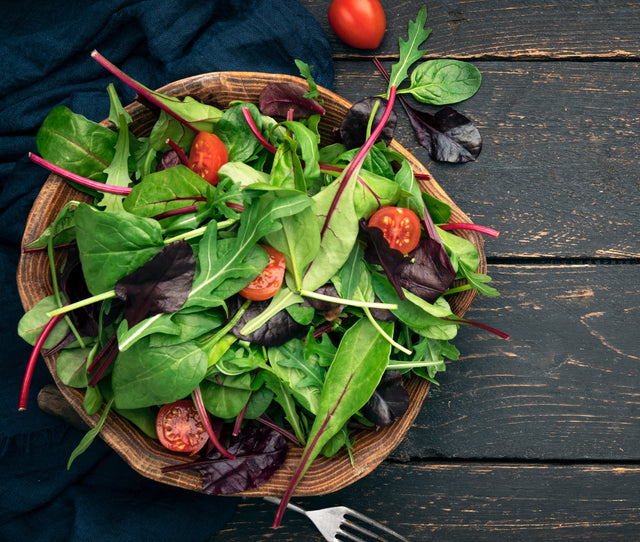
Malabar Vining Spinach Salad with Citrus Vinaigrette
- Ingredients:
- 2 cups fresh Malabar Vining Spinach leaves
- 1/2 cup cherry tomatoes, halved
- 1/4 cup sliced almonds
- 1/4 cup crumbled feta cheese
- 1/4 cup thinly sliced red onion
- 2 tablespoons olive oil
- 1 tablespoon fresh lemon juice
- 1 teaspoon honey
- Salt and pepper to taste
- Instructions:
- In a large bowl, combine the Malabar Vining Spinach leaves, cherry tomatoes, almonds, feta cheese, and red onion.
- In a small bowl, whisk together the olive oil, lemon juice, honey, salt, and pepper to make the citrus vinaigrette.
- Drizzle the vinaigrette over the salad and toss gently to coat.
- Serve immediately and enjoy!
Sautéed Malabar Vining Spinach with Garlic
- Ingredients:
- 2 cups fresh Malabar Vining Spinach leaves
- 2 cloves garlic, minced
- 1 tablespoon olive oil
- Salt and pepper to taste
- Instructions:
- Heat the olive oil in a skillet over medium heat. Add the minced garlic and sauté for about 1 minute or until fragrant.
- Add the Malabar Vining Spinach leaves to the skillet and sauté for 2-3 minutes, or until wilted.
- Season with salt and pepper to taste.
- Remove from heat and serve as a flavorful side dish.
- Enjoy these delicious recipes featuring Malabar Vining Spinach, and elevate your winter meals with this nutritional powerhouse! Happy growing!
What Nutrients Does Malabar Vining Spinach Offer?
This nutritional gem is a treasure trove of vital vitamins and minerals, including:
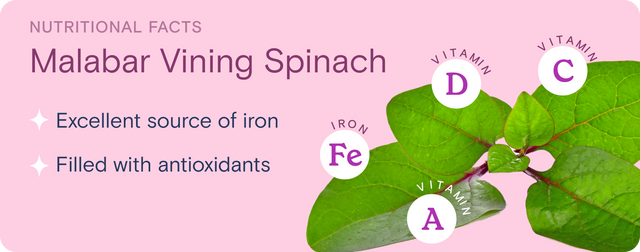
Vitamin A: Essential for vision, skin health, and immune function.
Vitamin C: Bolsters immunity and provides powerful antioxidants.
Vitamin D: Supports bone health and overall well-being.
Iron: Crucial for oxygen transport in the body. Research from Cornell University's CEA program notes that leafy greens grown in controlled indoor environments consistently deliver higher iron and mineral concentrations than field-grown alternatives — especially when nutrients are carefully managed throughout each grow cycle. Hydroponic systems also use up to 95% less water than traditional soil gardening, making your winter harvest as sustainable as it is nourishing.
Elevate Your Winter Garden Experience

Frequently Asked Questions
What is Malabar spinach and how is it different from regular spinach?
Malabar spinach is not a true spinach but a vining tropical plant with thick, succulent leaves that taste similar to spinach with a mild, earthy flavor. Unlike traditional spinach, which prefers cool temperatures, Malabar spinach thrives in warm conditions, making it an ideal year-round green for indoor hydroponic gardens. Its glossy leaves and climbing habit also make it an attractive addition to any indoor grow space.
Is Malabar spinach nutritious?
Malabar spinach is highly nutritious, offering significant amounts of vitamins A and C, calcium, iron, and dietary fiber in each serving. It also contains mucilaginous compounds that have traditionally been used in Ayurvedic medicine to support digestion and soothe inflammation. Gram for gram, it is one of the more nutrient-dense leafy greens you can grow in a Rise Garden.
How do you grow Malabar vining spinach hydroponically?
Malabar spinach grows vigorously in hydroponic systems when water temperature is kept between 65 and 75 degrees Fahrenheit and nutrients are consistently replenished. Because it is a vining plant, providing a small trellis or allowing it to climb the garden frame produces the best yields. Harvest regularly by snipping young leaves and stems to encourage continuous new growth.
Can you eat Malabar spinach raw?
Yes, young Malabar spinach leaves can be eaten raw in salads or used as a wrap, though the texture is slightly thicker and more substantial than baby spinach. Older, larger leaves are better cooked because they soften nicely and the slight mucilaginous quality helps thicken soups and stews. Because you control the growing environment with a Rise Garden, you can harvest leaves at the ideal young stage for salads consistently.