The best indoor garden for growing a lot of food is a multi-tier hydroponic system with full-spectrum LED lighting. A three-tier setup like The Rise Garden 3 holds up to 36 plant pods simultaneously, letting you harvest leafy greens, herbs, and vegetables year-round — roughly every 30 days per crop cycle.
If you want to move beyond a single pot on the windowsill and actually supplement your grocery bill, the right system, the right seeds, and a basic understanding of how hydroponics works make all the difference. This guide breaks down what drives yield, which setups handle maximum plant capacity, and how realistic it is to feed a family from an indoor garden.
What Makes a Hydroponic Garden the Highest Yield Option?
Hydroponics is a soil-free growing method where plant roots are bathed directly in a nutrient-rich water solution. Because roots don't have to search for food the way they do in soil, plants redirect that energy into leaf and fruit production. The result is faster growth and denser harvests from the same square footage.
According to research supported by the NASA Veggie project, hydroponically grown lettuce can reach harvest size up to 25% faster than its soil-grown counterpart under equivalent light conditions. That speed advantage compounds across multiple crop cycles per year — and indoors, you control every cycle.
Three variables drive indoor yield more than anything else:
- Light intensity and spectrum. Plants need light in the 400–700 nm range (photosynthetically active radiation). Full-spectrum LEDs that deliver at least 200 µmol/m²/s keep growth rates high without burning leaves.
- Nutrient solution. Hydroponic nutrients dissolved in water should keep electrical conductivity (EC) between 1.5 and 2.5 mS/cm for most leafy crops, with a pH held between 5.5 and 6.5. Outside that range, plants can't absorb nutrients even if they're present.
- Plant capacity. More pods mean more food. A countertop unit might hold 9 plants; a full three-tier system holds 36. That difference is the gap between a garnish and a grocery run.
How Many Plants Do You Actually Need to Feed a Family?
The USDA recommends adults eat about 2.5 cups of vegetables per day. A single mature head of butterhead lettuce yields roughly 6 cups of leaves. If your family eats salads four nights a week, you need to harvest approximately two heads per week — meaning you need a steady pipeline of 8–10 lettuce plants cycling at different stages simultaneously.
Add a few herb pods (basil, cilantro, parsley), some kale or spinach for cooking, and cherry tomatoes for snacking, and you're looking at 20–36 active plant sites to make a real dent in your produce spending. Studies from controlled-environment agriculture researchers at Cornell University have shown that a well-managed indoor garden can supply a meaningful share of a household's fresh produce needs when plant count and crop selection are optimized.
That's exactly where maximum plant capacity hydroponics matters. The The Rise Garden 3 holds 36 pods across three tiers, making it the practical choice for anyone serious about feeding a family from an indoor garden. Its adjustable light arms and self-watering reservoir take most of the daily management off your plate.
For smaller households or apartments where floor space is limited, The Rise Loft brings furniture-grade design without sacrificing plant capacity — a smart pick when the garden needs to live in a living room rather than a utility corner.
Which Crops Give You the Most Food from an Indoor Garden?
Not all plants are equal when it comes to yield per pod. Prioritize these categories if your goal is volume:
- Cut-and-come-again greens. Lettuce, spinach, arugula, and kale can be harvested repeatedly from the same plant over 4–8 weeks before bolting. You're not replanting constantly — you're cutting outer leaves and letting the center keep producing.
- Fast-cycling herbs. Basil hits harvest size in roughly 3–4 weeks. Cilantro and parsley follow close behind. These have a high use rate in most kitchens, so they punch above their weight in value.
- Cherry tomatoes and peppers. These take longer (60–80 days) and need pollination assistance indoors, but a single cherry tomato plant can produce 1–2 lbs of fruit per harvest cycle.
A diversified planting strategy — two-thirds leafy greens and herbs, one-third fruiting plants — keeps the harvest pipeline active year-round rather than leaving you with everything ready at once and nothing for weeks afterward.
Stocking your system with the right seed pods pre-seeded for hydroponic conditions removes a lot of the guesswork. Rise Gardens seed pods are calibrated for the nutrient concentrations and light schedules the systems run, so germination rates stay high.
Is a Large Indoor Garden Worth the Cost?
A full three-tier system represents a meaningful upfront investment, but the math often works in your favor within the first year. The average American household spends approximately $270 per month on groceries, with fresh produce making up a significant share of that total. If an indoor garden covers even 20% of your family's fresh vegetable needs, the savings accumulate quickly alongside the convenience of harvesting at home.
Running costs matter too. Full-spectrum LED systems typically consume 45–100 watts per tier — far less than older fluorescent setups — which keeps monthly electricity costs modest, generally under $10 for a full three-tier system depending on local rates.
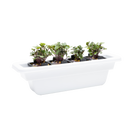
The Personal Rise Garden is worth mentioning here as a lower-commitment starting point. It holds 9 pods on a compact countertop footprint, which suits a one- or two-person household or anyone who wants to test indoor growing before scaling up to a larger system.
Frequently Asked Questions
How often do you harvest from an indoor hydroponic garden?
Leafy greens like lettuce and spinach are typically ready for first harvest in 21–30 days and can be cut repeatedly for another 4–6 weeks after that. Herbs follow a similar timeline. Fruiting plants like tomatoes take 60–80 days to first harvest but continue producing for several months.
What pH level should my hydroponic water be?
Maintain a pH between 5.5 and 6.5 for most hydroponic crops. At pH levels outside this range, plants can't properly absorb the nutrients dissolved in the water — a condition called nutrient lockout — even if the nutrient concentration is correct. Use a simple digital pH meter to check and adjust weekly.
Can you really grow enough food indoors to offset grocery bills?
Yes, realistically for fresh herbs and leafy greens. A 36-pod system running year-round can produce hundreds of harvests annually, covering a meaningful portion of a family's salad and herb needs. Staple crops like potatoes, corn, or grains aren't practical indoors, so think of an indoor garden as a high-value supplement to your grocery shopping, not a full replacement.