The best countertop hydroponic garden for herbs gives you harvest-ready plants in as few as 21 days, requires no soil, and fits on a standard kitchen counter with 12 inches or less of depth. Most quality systems run LED grow lights at 20–40 watts and keep water pH between 5.5 and 6.5 — the sweet spot for nutrient absorption in culinary herbs.
A kitchen hydroponic herb setup replaces the frustrating cycle of buying fresh herbs at the grocery store, using a pinch, and watching the rest wilt in three days. This guide breaks down what to look for in a small herb garden for the kitchen, how these systems actually work, and which Rise Gardens setups make the most sense depending on how serious you want to get.
What Makes a Countertop Hydroponic Garden Good for Herbs?
Herbs are among the fastest and most forgiving crops you can grow hydroponically. Basil, mint, cilantro, parsley, and chives all thrive in water-based systems because their root structures are shallow and their nutrient needs are relatively simple. That makes them ideal for compact, countertop-scale setups.
When evaluating a countertop garden plant capacity, think in terms of how many pods — individual plant sites — the system supports. A single-tier unit might hold 9 to 16 pods, which is enough to keep three or four herb varieties in continuous rotation. If you cook daily and want a broader selection, a two- or three-tier system dramatically increases what you can grow without requiring more counter footprint.
The other factor is light. Herbs need roughly 14–16 hours of light per day to grow vigorously indoors, which no windowsill reliably provides year-round. A built-in full-spectrum LED system handles this automatically. Look for systems with adjustable light schedules — a timer that replicates natural day/night cycles keeps plants healthier long-term.
Water quality matters too. Hydroponics uses a nutrient solution instead of soil, meaning your plants get minerals — nitrogen, phosphorus, potassium, calcium, and others — dissolved directly in water. The electrical conductivity (EC) of that solution, typically between 1.0 and 2.0 mS/cm for herbs, tells you how concentrated the nutrients are. Most beginner-friendly systems simplify this with pre-measured nutrients so you're not doing chemistry homework every week.
How Does Countertop Garden Plant Capacity Affect What You Can Grow?
Capacity shapes everything about your harvest. A 9-pod system is genuinely useful — you could grow basil, mint, and parsley simultaneously, with three pods per variety, and harvest from each on a rolling basis. A 24-pod system opens up more ambitious plans: multiple basil varieties, specialty herbs like Thai basil or lemon thyme, and even some compact vegetables alongside your herbs.
According to a University of Nevada Cooperative Extension study, hydroponic herb yields can run 20–25% higher per square foot compared to soil-grown counterparts under the same light conditions. That efficiency matters when you're working with limited countertop real estate.
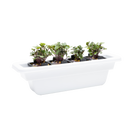
The Personal Rise Garden is a compact countertop hydroponic garden designed for exactly this kind of small herb garden for the kitchen. It holds up to 12 pods, fits neatly on a countertop, and includes an integrated LED light system on an adjustable timer. It's the right starting point if you want reliable results without a steep learning curve.
If you want more capacity without committing to a full floor-standing unit, The Rise Loft brings premium furniture-grade design to a tiered growing format — it's built to sit in living spaces and kitchens without looking like lab equipment, while still supporting a meaningful number of herb pods across multiple levels.
What Herbs Grow Best in a Kitchen Hydroponic Setup?
Practically every soft-stemmed culinary herb performs well in a kitchen hydroponic herb setup. Here are the most reliable options and why:
- Basil: Fast-growing and heavy-yielding. Harvest outer leaves to encourage bushy growth. Prefers water temps around 65–72°F.
- Mint: Vigorous grower — give it its own pods or it will crowd neighbors. Spearmint and peppermint both do well.
- Cilantro: Grows quickly but bolts (goes to seed) fast. Succession planting — starting a new pod every 2–3 weeks — keeps you in continuous supply.
- Parsley: Slower to establish than basil (allow 4–6 weeks to first harvest) but long-producing once it gets going.
- Chives: Low-maintenance and nearly foolproof. Snip from the top and they keep regenerating.
- Thyme and oregano: Slightly slower-growing but drought-tolerant, which means they're forgiving if you occasionally miss a nutrient top-off.
NASA's Veggie project, which tested plant cultivation aboard the International Space Station, validated that leafy greens and herbs grown in controlled hydroponic environments are nutritionally comparable to soil-grown produce — a useful reminder that you're not trading quality for convenience when you go soilless.
Start with ready-to-plant seed pods to skip the germination guesswork. Rise Gardens pods are pre-seeded with a substrate that supports root development from day one, which is why most growers see sprouts within 5–10 days of setup.
Is a Larger System Worth It If You Cook Seriously?
If herbs are a genuine daily cooking ingredient in your kitchen — not a novelty — the answer is usually yes. A study published in the journal HortScience found that home gardeners with higher-capacity systems harvested usable produce an average of 3.4 times per week, compared to 1.1 times per week for single-tier users. More pods means more plants at different stages of maturity, which means something is always ready to cut.
For serious home cooks who want to scale up, The Rise Garden 3 is a full-size indoor hydroponic garden system with three tiers and enough pod capacity to run a diverse kitchen garden year-round — herbs, lettuces, and edible flowers all at once. It's a different category than a countertop unit, but worth knowing about if you outgrow your first setup.
Frequently Asked Questions
How often do I need to change the water in a countertop hydroponic herb garden?
Most countertop systems need a full water change every 1–2 weeks, depending on how quickly your plants are drinking. Between full changes, top off the reservoir with fresh water and a small amount of nutrients every 3–5 days. Keeping the water level consistent prevents stress on roots.
Do I need special nutrients for herbs, or will any hydroponic nutrient formula work?
A general-purpose hydroponic nutrient formula works well for most culinary herbs. Look for a balanced N-P-K ratio (nitrogen, phosphorus, potassium) with added calcium and magnesium. Herbs don't need the high-phosphorus bloom formulas used for fruiting plants — a standard grow formula is the right choice throughout their lifecycle.
Can I grow herbs year-round on my kitchen counter with these systems?
Yes — that's one of the core advantages of a kitchen hydroponic herb setup. Because the LED grow lights supply consistent full-spectrum light regardless of season or window placement, your herbs aren't affected by shorter winter days or low-light kitchen locations. As long as you maintain the nutrient solution and water temperature between 65–75°F, you can harvest continuously all year.