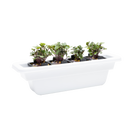
For most home growers, deep water culture wins on simplicity and cost — a basic DWC home garden setup runs $50–$150, requires no timed flood cycles, and keeps roots in oxygenated water at a steady pH of 5.5–6.5. Ebb and flow (flood and drain) gives you more flexibility with plant types but adds mechanical complexity. If you want low-maintenance results fast, DWC is usually the better starting point.
Choosing between hydroponic system types can feel overwhelming when you're staring at two very different approaches to delivering water and nutrients to plant roots. Both deep water culture and ebb and flow work — but they suit different growers, spaces, and goals. Here's a clear breakdown of how each system operates, where each excels, and which one makes more sense for your home garden.
How Does Deep Water Culture Actually Work?
In a DWC home garden, plant roots hang directly into a reservoir of nutrient-rich, oxygenated water. An air pump runs continuously, pushing oxygen through the solution via air stones, keeping roots healthy and preventing the stagnant conditions that lead to root rot. Plants sit in net cups above the reservoir, with roots dangling down into the water.
The simplicity is the appeal. There are no pumps cycling on timers, no flood trays to level, and no drain lines to clog. You top off the reservoir, monitor your nutrient concentration (measured in electrical conductivity, or EC) and pH, and the system does the rest. Most leafy greens and herbs reach harvest in 30–45 days in a well-maintained DWC setup.
Water temperature matters here. Keep your reservoir between 65°F and 72°F. Warmer water holds less dissolved oxygen, which stresses roots and invites pathogens. A simple aquarium thermometer is all you need to keep tabs on this.
What Makes Ebb and Flow Different from DWC?
A flood and drain indoor garden operates on a timed cycle. A pump fills a grow tray with nutrient solution on a schedule — typically 2–6 times per day depending on your growing medium and plant stage — then gravity drains it back into a reservoir below. Roots get wet, then dry, then wet again.
This wet-dry cycle is actually beneficial for certain plants. Tomatoes, peppers, and root vegetables that prefer drier conditions between waterings do particularly well in ebb and flow systems. The growing medium — usually clay pebbles or rockwool — provides physical support and retains some moisture between floods.
The tradeoff is complexity. You're relying on a timer, a pump, and a drain system that all need to work together. A clogged drain or a failed timer can mean waterlogged or bone-dry roots within hours. For a flood and drain indoor garden, regular system checks are non-negotiable.
Deep Water Culture vs Ebb and Flow: Side-by-Side Comparison
| Factor | Deep Water Culture | Ebb and Flow |
|---|---|---|
| Setup cost | $50–$150 | $100–$300+ |
| Moving parts | Air pump only | Water pump + timer + drain |
| Best crops | Lettuce, herbs, spinach | Tomatoes, peppers, strawberries |
| Maintenance | Low | Moderate |
| pH target | 5.5–6.5 | 5.5–6.5 |
| Failure risk | Low | Moderate (pump/timer failure) |
Both systems use the same nutrient chemistry. Your nutrients dissolve into water the same way regardless of delivery method — the difference is timing and exposure duration, not formulation.
Which System Is Right for Your Home Garden?
If you're growing leafy greens, herbs, and microgreens — which account for the majority of what home hydroponic growers actually harvest — DWC is hard to beat. NASA's Veggie project, which has grown food on the International Space Station since 2014, relies on a variation of DWC principles precisely because of its reliability and low mechanical complexity in constrained environments.
Research from the University of Arizona's Controlled Environment Agriculture Center has shown that hydroponic lettuce can yield up to 11 times more per square foot annually compared to field-grown lettuce, largely because of consistent nutrient delivery and elimination of soil-borne variables — an advantage both DWC and ebb and flow share over traditional gardening.
For beginners, the lower failure surface area of DWC is a genuine advantage. Fewer things can go wrong, and when something does (usually pH drift or low oxygen), it's straightforward to diagnose.
If you're committed to growing fruiting plants like tomatoes or want to run a more diverse garden with crops that prefer intermittent moisture, ebb and flow gives you that flexibility — just budget time for system monitoring.
For home growers who want a fully integrated approach without building a system from scratch, the Personal Rise Garden offers a compact countertop setup that takes the guesswork out of water and nutrient delivery. For larger harvests across multiple plant families, The Rise Garden 3 scales up beautifully with a full-size design engineered for consistent results. And if aesthetics matter as much as yield, The Rise Loft combines furniture-grade design with serious growing performance.
Whichever direction you go, pairing your system with quality seed pods pre-loaded for hydroponic growing removes another variable from the equation and gets you to harvest faster.
Frequently Asked Questions
Can I switch from ebb and flow to DWC without replacing everything?
You can reuse your reservoir, grow tray, and nutrient solution. The main change is removing the flood/drain pump and timer and adding an air pump with air stones. Most of the hardware cost is in the tray and reservoir, which carry over to either system.
What pH should I target in a DWC home garden?
Maintain pH between 5.5 and 6.5 for most vegetables and herbs in a DWC system. Check pH daily when plants are young and every 2–3 days once established. Drift outside this range locks out key nutrients even when EC levels look correct.
How often should a flood and drain indoor garden cycle run?
Most ebb and flow systems run 2–4 flood cycles per day during active vegetative growth, typically 15–30 minutes per cycle. Frequency depends on your growing medium — clay pebbles drain fast and may need more cycles, while rockwool retains moisture longer and needs fewer. Adjust based on how quickly your medium dries between floods.