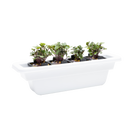
For most home growers, hydroponics is the better starting point. Hydroponic systems maintain a nutrient solution at a stable pH of 5.5–6.5 and cost anywhere from $80 to $400 for a quality home setup—far less than most home aeroponic systems, which often run $300–$800 and require more precise maintenance. If you're comparing hydroponics vs aeroponics for home growing, hydroponics wins on simplicity, reliability, and upfront cost.
Both methods grow plants without soil, delivering water and nutrients directly to roots. But the way they do it—and what that means for your daily routine—is very different. Here's what you need to know to pick the right system for your home.
What Is the Difference Between Hydroponics and Aeroponics?
Hydroponics suspends plant roots in, or regularly floods them with, a liquid nutrient solution. The roots stay moist and have consistent access to dissolved minerals. Most home hydroponic setups use one of two approaches: deep water culture (roots hang in nutrient-rich water) or ebb-and-flow (the grow tray floods and drains on a timer).
Aeroponics takes a different route. Roots hang in open air inside a chamber, and fine mist nozzles spray them with nutrient solution every few minutes. Because roots are exposed to more oxygen, aeroponic plants can grow up to 30% faster than those grown in soil, according to NASA's Veggie project research, which has tested both closed-loop aeroponic and hydroponic methods for space-based food production.
The tradeoff? Aeroponics depends on those nozzles staying clear and the timer running without interruption. A clogged mister or a two-hour power outage can stress or kill roots within hours, since there's no water reservoir to buffer the plant. Hydroponics carries a built-in safety net—roots sitting in solution can tolerate brief equipment hiccups without immediate damage.
For a hydroponic method comparison, think of it this way: hydroponics is the reliable daily driver; aeroponics is the sports car—faster on a clear road, but demanding more attention.
Are Home Aeroponic Systems Worth It for Beginners?
Home aeroponic systems have real appeal. Faster growth cycles, higher oxygen exposure at the root zone, and impressive yields from compact chambers attract experienced growers looking to push performance. Some commercial aeroponic towers report lettuce harvests in as few as 21 days from transplant.
But for beginners, the margin for error is thin. Aeroponic misters clog easily if your nutrient solution isn't mixed precisely—ideal electrical conductivity (EC) for most leafy greens sits between 1.2 and 2.0 mS/cm, and even slight mineral buildup can block a nozzle. You'll also need to monitor pH more frequently, often daily, to keep roots absorbing nutrients efficiently.
Hydroponic systems are more forgiving. A deep water culture setup holds a reservoir of solution that buffers fluctuations. If you forget to check pH for a day, your plants are far less likely to show stress. That buffer is exactly what beginners need while learning how nutrient management works.
If you want to start growing herbs and greens at home with minimal learning curve, a system like the Personal Rise Garden gives you a compact countertop hydroponic garden that handles most of the complexity for you—built-in lighting, a simple reservoir design, and clear guidance on keeping your nutrient solution in range.
Which Growing System Is Better for Beginners at Home?
Hydroponics. That's the direct answer for which growing system for beginners makes the most sense, and the data backs it up. A 2020 study from the University of Arizona's Controlled Environment Agriculture Center found that hydroponic lettuce yields averaged 11 times higher per square foot than field-grown lettuce—without the complexity of aeroponic equipment.
Hydroponic systems also scale gracefully. You can start with a single countertop unit, learn to manage pH and nutrients, and expand as your confidence grows. The The Rise Garden 3 is a full-size indoor hydroponic system designed for exactly that kind of growth—supporting dozens of seed pods across multiple levels while keeping the growing process approachable.
For those who want something that looks as good as it grows, The Rise Loft brings furniture-grade design to indoor hydroponic growing—a premium option that doesn't sacrifice performance for aesthetics.
Aeroponic systems make more sense once you understand how plants respond to nutrient changes, have practiced adjusting EC and pH, and want to optimize for speed. They're not a bad system—they're just a system that rewards experience.
What Do Both Systems Have in Common?
Despite their differences, hydroponics and aeroponics share the same core principles. Both eliminate soil, both deliver nutrients dissolved in water, and both require you to monitor pH (target range: 5.5–6.5 for most vegetables and herbs) and nutrient concentration regularly. Both systems grow plants significantly faster than traditional gardening—most hydroponic herbs are ready to harvest in 3–4 weeks from seed.
Both also thrive under consistent light. LED grow lights are standard for indoor setups, with most leafy greens needing around 14–16 hours of light per day. Water temperature matters in both systems too—roots perform best between 65°F and 72°F. Outside that range, dissolved oxygen drops and root pathogens become more likely.
The practical difference comes down to risk tolerance, budget, and how much time you want to invest in system maintenance. For most people growing food at home, hydroponics delivers the right balance of results and reliability.
FAQ
Can I switch from a hydroponic system to an aeroponic system later?
Yes. Many growers start with hydroponics to learn the fundamentals of pH, EC, and nutrient management, then move to aeroponics once they're comfortable. The knowledge transfers directly—the main adjustment is managing more frequent monitoring and keeping mist nozzles clean.
How often do I need to change the nutrient solution in a hydroponic system?
For most home hydroponic setups, a full reservoir change every 7–14 days is recommended. Between changes, top off with plain pH-balanced water as levels drop, and test pH every 2–3 days to keep it in the 5.5–6.5 range where nutrient absorption is most efficient.
Is aeroponic growing more expensive to run than hydroponics?
Generally, yes. Home aeroponic systems typically cost more upfront ($300–$800 compared to $80–$400 for hydroponic setups) and require pump timers precise enough to mist roots every 1–5 minutes. Nozzle replacements and more frequent nutrient checks also add to the long-term cost of ownership.