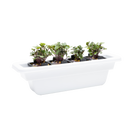
Growing a full salad bar in one indoor hydroponic garden is genuinely achievable. A three-tier system like The Rise Garden 3 holds up to 36 plant sites, enough space to grow 6–8 different crops simultaneously at a water pH of 5.5–6.5 — the sweet spot for leafy greens and herbs. Fast-maturing crops like arugula are harvest-ready in as few as 21 days.
Hydroponic gardening means growing plants in a nutrient-enriched water solution instead of soil. Without the need to dig, weed, or water manually, the system frees you up to focus on what actually matters: planning a mix of flavors, textures, and colors that turns your countertop into a genuine salad source. This guide walks through exactly how to do that — from choosing which crops share space well, to laying out your trays so every pod gets what it needs.
What Crops Can You Grow Together in a Hydroponic Salad Garden?
The good news: most salad crops thrive under the same basic conditions. Leafy greens, herbs, and compact vegetables all prefer a nutrient solution with an electrical conductivity (EC) of 0.8–2.0 mS/cm and water temperatures between 65°F and 75°F. That overlap is exactly what makes variety planting in an indoor garden so practical.
Here's a reliable crop mix that covers every part of a salad bar:
- Lettuce (Butterhead, Romaine, Red Leaf): Your bulk greens. Fast-growing, cut-and-come-again, and visually striking when you mix colors.
- Arugula: Peppery bite, ready in 21–28 days. Plant in smaller quantities so it doesn't overrun milder greens.
- Spinach: Higher nutrient uptake than lettuce — keep it in its own tray row if possible.
- Basil: Prefers slightly warmer temps (70–75°F) and higher light intensity. Position it on an upper tier closer to the light panel.
- Cilantro and Parsley: Slower to mature (40–60 days) but easy to stagger-plant so you always have fresh herbs on hand.
- Radishes: One of the fastest crops in hydroponics — harvestable in 18–25 days. Add crunch without taking up much space.
- Cherry Tomatoes or Mini Peppers: These need more vertical clearance and light, so reserve them for a top tier with adjusted spacing.
When you order seed pods from Rise Gardens, each variety comes pre-seeded and labeled, which removes the guesswork and keeps your salad garden layout hydroponic-ready from day one.
How Do You Plan a Mixed Crop Tray for Maximum Yield?
Mixed crop tray planning comes down to three variables: growth rate, light needs, and canopy size. Plants that mature at different rates let you harvest continuously instead of all at once. Plants with similar light needs can share a tier. Plants with large canopies need buffer space so they don't shade their neighbors.
A practical layout for a 36-pod, three-tier system:
- Top tier (highest light): Basil, cherry tomatoes, or peppers — 8–10 pods
- Middle tier: Arugula, spinach, cilantro — 10–12 pods
- Bottom tier: Butterhead and romaine lettuce, parsley, radishes — 14–16 pods
Stagger your plantings by 1–2 weeks so you're not harvesting everything at the same time. Succession planting — dropping a new pod into a vacated site as soon as you harvest — keeps the system in constant production. According to the USDA Agricultural Research Service, controlled-environment agriculture can produce yields 10 times higher per square foot than field growing, largely because succession planting is practical indoors year-round.
For a smaller household or a first attempt at variety planting in an indoor garden, the Personal Rise Garden holds 12 plant sites — still enough for 4–5 crop varieties and a rotating harvest cycle.
Lighting, Nutrients, and pH — the Numbers That Keep Everything Growing
Hydroponic salad crops need 14–16 hours of light per day. Rise Gardens LED panels are tuned to the full spectrum plants use for photosynthesis, so you don't need to manage bulb selection. What you do need to manage is your nutrient solution and pH.
NASA's Veggie project, which has grown lettuce and other crops aboard the International Space Station since 2014, confirmed that leafy greens perform best in hydroponic solutions maintained at pH 5.8–6.2 — a range that maximizes nutrient uptake without locking out key minerals like calcium and magnesium.
Use Rise Gardens nutrients formulated for each growth stage: a seedling formula for the first two weeks, then a grow formula once plants hit their stride. Check your pH weekly with a basic digital meter. If it drifts above 6.5, add a small amount of pH-down solution. If it drops below 5.5, pH-up corrects it quickly.
One more number worth knowing: a study from Wageningen University found that hydroponic lettuce uses up to 95% less water than soil-grown lettuce. For a home salad garden, that translates to roughly 1–2 gallons of top-off water per week for a full 36-pod system.
Ready to Build Your Salad Bar?
If you want furniture-grade design alongside full growing capacity, The Rise Loft gives you a three-tier growing system built into a piece you'd actually want in your living room — no basement or utility room required. It's a strong choice when the garden is going somewhere visible and the salad bar is part of how you use your kitchen regularly.
Whatever system you choose, the core approach stays the same: pick crops with overlapping pH and temperature needs, assign tiers by light demand, stagger your plantings, and top off your nutrients on a consistent schedule. Within three to four weeks of setup, you'll be pulling greens, herbs, and radishes from the same garden you planted in a single afternoon.
Frequently Asked Questions
How many different crops can one hydroponic garden realistically support at once?
A 36-pod system like The Rise Garden 3 can comfortably support 6–8 different crop varieties simultaneously. The key is grouping plants with similar pH and light requirements on the same tier so no single variety gets shortchanged on resources.
Do herbs and vegetables need different nutrient solutions in a mixed hydroponic garden?
Most salad herbs and vegetables share a compatible nutrient range — an EC of 0.8–1.8 mS/cm covers lettuce, arugula, basil, cilantro, and spinach. Heavy feeders like tomatoes prefer EC closer to 2.0–3.5 mS/cm, so if you include fruiting crops, position them in a dedicated tier and supplement nutrients accordingly.
How long before a new hydroponic salad garden produces its first harvest?
Fast-maturing crops like radishes and arugula are ready in 18–28 days from seeding. Lettuce typically takes 30–45 days for a full head, though you can start harvesting outer leaves at around 21 days. Herbs like parsley take 40–60 days but reward patience with months of continuous harvesting.