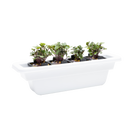
Growing herbs indoors to replace store-bought herb packs is practical and fast — most culinary herbs like basil, cilantro, and parsley reach harvest size in 3 to 4 weeks under a hydroponic system. A single $3 herb pack typically wilts within 5 days. Grow your own and that same $3 investment in seed pods yields continuous harvests for 3 or more months.
This guide covers the real cost comparison between fresh herb packs and home-grown herbs, which varieties perform best indoors, how to set up a continuous herb supply at home, and how to stop throwing money — and wilted cilantro — in the trash.
How Much Do Store-Bought Herb Packs Actually Cost You?
The sticker price on a grocery store herb pack is usually $2.99 to $3.99. That sounds reasonable until you factor in waste. According to the USDA Economic Research Service, American households throw away roughly 30 to 40 percent of the food they buy — and fresh cut herbs are among the most wasted items in the produce aisle because most recipes call for a tablespoon or two, leaving the rest to yellow in the fridge.
Run the numbers on a realistic herb pack cost comparison: if you cook with fresh herbs three times a week and buy one pack per use, you're spending between $450 and $600 per year on herbs alone — before accounting for the portion you never use. Even if you're more conservative and buy one pack per week, that's still over $150 annually for an ingredient that's mostly destined for the compost bin.
A hydroponic herb garden flips that equation. A Personal Rise Garden fits on a countertop and grows up to 12 plants simultaneously. You harvest only what you need — a few leaves of basil here, a sprig of thyme there — and the plant keeps producing. That's a continuous herb supply at home without the waste cycle.
Which Herbs Grow Best Indoors with Hydroponics?
Not every herb performs equally well in an indoor hydroponic setup, but the ones most people buy at the store are also the easiest to grow. Here's what thrives:
- Basil — Fast-growing, harvest-ready in 21 to 28 days, prefers water temperature around 65–70°F
- Cilantro — One of the most-purchased and most-wasted herbs; grows in about 3 weeks indoors
- Parsley — Slightly slower at 4 to 6 weeks, but highly productive once established
- Mint — Aggressive grower; thrives hydroponically and keeps producing for months
- Chives — Low-maintenance, snip-and-regrow habit makes them ideal for reducing herb waste
- Thyme and oregano — Mediterranean herbs that prefer slightly drier conditions but adapt well to hydroponic nutrient solution at an EC (electrical conductivity) of 1.0 to 1.6 mS/cm
Hydroponics delivers nutrients directly to plant roots in water rather than through soil. Plants absorb what they need when they need it, which is why hydroponic herbs typically grow 30 to 50 percent faster than their soil-grown counterparts, according to research from the University of Mississippi's hydroponic research program. Maintaining a solution pH between 5.5 and 6.5 keeps nutrient uptake efficient for most culinary herbs.
Rise Gardens seed pods come pre-seeded and ready to drop into any Rise system — no transplanting, no guessing on seed depth.
How Do You Build a Continuous Herb Supply at Home?
The key to never running out of fresh herbs is staggered planting — starting a new pod every two weeks so you always have plants at different growth stages. Here's a simple rotation:
- Week 1: Plant basil and cilantro pods
- Week 3: First harvest ready; plant a second round of the same herbs
- Week 5: You're harvesting from round one and round two is maturing
This staggered schedule eliminates the feast-or-famine problem that trips up most new indoor gardeners — you don't have to use an entire plant's worth of basil in a single week just to avoid waste.
For households that cook heavily or want to grow a wider variety, the The Rise Garden 3 offers three tiers of growing space with built-in LED lighting and an automated nutrient reminder system. It's designed for year-round growing without relying on natural light, which makes it consistent regardless of season or window orientation.
If you want the same growing capability in a design that fits a living space as naturally as a piece of furniture, The Rise Loft is a floor-standing garden built with furniture-grade materials — it grows up to 36 plants across three tiers while looking like it belongs in the room.
Whichever system you use, keep your nutrients topped up consistently. Nutrient deficiency is the most common reason indoor herbs turn yellow or stall — a problem that doesn't happen with pre-portioned nutrient packets dosed per the system's guidelines.
Does Growing Herbs Indoors Actually Reduce Herb Waste?
Yes — and the mechanism is simple. Store-bought herb packs are harvested weeks before you buy them and continue respiring in their plastic packaging, losing moisture and flavor the entire time. NASA's Veggie project research, which studied fresh food cultivation in closed environments, confirmed that freshness at point of harvest is the single largest factor in both flavor intensity and shelf longevity.
When you grow indoors and harvest a few leaves at a time, you're eliminating the delay between harvest and consumption entirely. You're also eliminating the all-or-nothing purchase — no more buying a full bunch of parsley for a recipe that calls for two tablespoons.
A 2023 consumer food waste study found that fresh herbs and leafy greens account for approximately 24 percent of household produce waste by value — the highest of any produce category. Shifting even two or three of your most-used herbs to a home-grown system meaningfully reduces that number.
FAQ
How long does it take to grow herbs hydroponically indoors?
Most fast-growing herbs like basil and cilantro are ready for first harvest in 21 to 28 days under a hydroponic system with full-spectrum LED lighting. Slower herbs like parsley and thyme take 4 to 6 weeks. After the first harvest, plants continue producing for 2 to 4 months depending on the variety and how frequently you harvest.
What pH level do herbs need in a hydroponic system?
Culinary herbs grow best at a solution pH between 5.5 and 6.5. At this range, plants can absorb nitrogen, phosphorus, and potassium efficiently. If pH drifts above 7.0 or below 5.0, nutrient lockout can occur even if your nutrient solution is properly dosed — so checking pH weekly with a simple test kit is a good habit.
Is it cheaper to grow your own herbs than to buy them at the store?
For most households that cook regularly with fresh herbs, yes. A single grocery store herb pack costs $2.99 to $3.99 and typically lasts 3 to 5 days. A hydroponic seed pod at a fraction of that cost produces harvests continuously for 2 to 4 months, reducing herb waste and eliminating repeated purchases. The breakeven point for a countertop hydroponic garden is usually reached within the first few months of regular use.