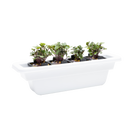
Growing kale hydroponically indoors means cultivating one of the world's most nutrient-dense leafy greens in a soil-free system that uses water, light, and dissolved nutrients to feed plants directly at their roots — all from the comfort of your home, year-round. Whether you're dealing with a short outdoor growing season, limited yard space, or simply want fresh greens on your kitchen counter, indoor hydroponic kale delivers faster growth, consistent harvests, and flavor that store-bought bunches can't match. This guide covers everything you need to know: the best kale variety for hydroponics, hydroponic kale light requirements, nutrient management, and kale harvest time in hydroponics so you can get growing with confidence.
Why Kale Thrives in a Hydroponic System
Kale (Brassica oleracea var. sabellica) is a cool-season crop that adapts exceptionally well to hydroponic growing. In soil, kale roots spend significant energy searching for water and nutrients. In a hydroponic setup, those resources are delivered directly to the root zone, which redirects that energy into leaf production. The result is faster, more vigorous growth than most gardeners expect from a brassica.
According to NASA's Veggie project, which has studied plant cultivation in controlled, resource-limited environments since the 1990s, leafy greens like kale are among the highest-priority crops for indoor growing systems because of their high nutritional yield per square foot and rapid production cycle. That research has direct real-world applications for home growers: compact, efficient hydroponic gardens can produce meaningful quantities of fresh greens in spaces as small as a countertop.
Kale also tolerates the slightly lower light levels common in indoor systems better than fruiting crops like tomatoes or peppers, making it a practical, rewarding choice for first-time hydroponic gardeners and seasoned growers alike.
What Is the Best Kale Variety for Hydroponics?
Not all kale varieties perform equally well in a hydroponic environment. When choosing the best kale variety for hydroponics, you want cultivars with compact growth habits, faster days-to-maturity, and tender leaves suited for both baby-leaf and full-size harvests.
Here are four top performers:
- Red Russian Kale: One of the most popular hydroponic varieties. Its flat, serrated leaves are tender and mild, and it matures quickly — ready for baby-leaf harvest in as few as 25–30 days. Excellent for continuous cut-and-come-again harvesting.
- Dwarf Blue Curled (Vates): A compact, tightly curled variety that stays manageable in indoor systems. Matures in approximately 55–60 days to full size, but baby leaves are harvestable much sooner.
- Lacinato (Dinosaur) Kale: Produces dark, bumpy, strap-shaped leaves with a rich, earthy flavor. Slightly slower to mature but highly productive over a long harvest window. Works beautifully in larger systems like The Rise Garden 3, a full-size indoor hydroponic garden system with multiple growing levels.
- Siberian Kale: Hardy, fast-growing, and very cold-tolerant — a trait that translates to resilience in indoor environments with slight temperature fluctuations. Baby leaves appear within 25–30 days.
For most indoor growers, Red Russian and Dwarf Blue Curled offer the best balance of speed, flavor, and manageability. Rise Gardens seed pods make it easy to start these varieties without any soil, germination mats, or complicated prep work.
Hydroponic Kale Light Requirements: How Much Does It Really Need?
Light is the engine of plant growth, and understanding hydroponic kale light requirements is one of the most important factors in a successful indoor harvest. Kale is a moderate-light crop compared to fruiting plants, but it still needs consistent, quality light to thrive.
Daily Light Integral (DLI): Kale performs best with a DLI of 12–17 mol/m²/day. DLI measures the total amount of photosynthetically active light a plant receives over a full day. Too little light produces pale, leggy plants; too much can stress leaves and cause bitter flavor.
Photoperiod: Run your grow lights for 14–16 hours per day with a consistent off period. Kale is a long-day plant and responds well to extended light exposure. A reliable timer is essential — inconsistent light schedules stress plants and slow growth.
Light spectrum: Full-spectrum LED grow lights that cover both the blue (400–500 nm) and red (600–700 nm) wavelengths produce the best results. Blue light promotes compact, leafy growth, while red light supports overall biomass accumulation. The integrated LED systems in Rise Gardens units are designed precisely around these spectral needs.
A compact setup like the Personal Garden — a countertop hydroponic garden with built-in full-spectrum LEDs — handles light management automatically, removing the guesswork for new growers. If you want more growing capacity with the same hands-off lighting experience, The Rise Loft is a premium indoor garden with furniture-grade design that fits beautifully into living spaces while providing optimized light for multiple plant levels.
Nutrients, pH, and Water: Getting the Chemistry Right
In hydroponics, nutrients are mineral elements dissolved directly in water and delivered to plant roots in precise concentrations. Unlike soil growing, where nutrients are buffered by organic matter, hydroponic systems require you to monitor and adjust the solution regularly. The good news: kale is not a demanding crop, and its nutritional needs are straightforward.
Electrical Conductivity (EC): EC measures the concentration of dissolved nutrients in your water. Kale grows best at an EC of 1.6–2.5 mS/cm. Seedlings prefer the lower end of that range (1.6–1.8), while established plants can handle up to 2.5. EC that's too high causes nutrient burn; too low leads to pale, slow-growing plants.
pH: pH is a measure of how acidic or alkaline your nutrient solution is, on a scale of 0–14. Kale's optimal pH range is 5.5–6.5. At this range, all essential nutrients remain soluble and available to roots. Outside this window — even slightly — nutrient lockout can occur, where plants can't absorb the minerals present in the water regardless of concentration. Check pH every 2–3 days and adjust as needed.
Macronutrients: Kale is a heavy nitrogen consumer, which drives leafy growth. A balanced hydroponic nutrients formula designed for leafy greens will provide the right ratio of nitrogen, phosphorus, potassium, calcium, and magnesium. Rise Gardens nutrient solutions are pre-formulated for the crops commonly grown in their systems, simplifying the process considerably.
Water temperature: Keep your reservoir water between 65–72°F (18–22°C). Warmer water holds less dissolved oxygen and encourages root pathogens; cooler water slows nutrient uptake.
When Can You Harvest? Kale Harvest Time in Hydroponics
One of the biggest advantages of growing kale hydroponically indoors is significantly faster kale harvest time compared to outdoor soil growing. In garden beds, kale typically takes 55–75 days to reach full maturity. In a well-managed hydroponic system, that timeline compresses noticeably.
Here's what to expect:
- Baby leaf stage (25–35 days): Leaves reach 3–4 inches in length and are at peak tenderness. This is the ideal harvest window for salads, smoothies, and light sautés. Harvesting at this stage also encourages the plant to produce more leaves.
- Full-size leaves (45–60 days): Leaves are 6–10 inches long with more robust texture and flavor. Better for cooking, braising, and hearty salads.
- Continuous harvest method: Rather than harvesting the whole plant at once, remove outer leaves from the bottom up, leaving the central growing tip and inner leaves intact. A single kale plant harvested this way can continue producing for 3–4 months in an indoor system.
According to USDA nutritional data, one cup of raw kale contains 206% of the daily recommended intake of Vitamin A, 134% of Vitamin C, and 684% of Vitamin K — making every leaf from your hydroponic garden a genuinely significant nutritional contribution to your diet.
Pro tip: harvest kale in the morning after the lights have been on for a few hours. Sugar accumulation in leaves is highest at this time, resulting in slightly sweeter, more tender greens.
How Do You Troubleshoot Common Problems When Growing Kale Hydroponically?
Even in a controlled indoor environment, kale can run into issues. Here's how to identify and fix the most common ones quickly.
Yellowing leaves (chlorosis): Most often a pH or nutrient issue. Check your pH first — if it's outside the 5.5–6.5 range, correct it before adjusting nutrients. Yellow older leaves typically signal nitrogen deficiency; yellow new growth can indicate iron or calcium lockout.
Leggy, stretched growth: Your plants are reaching for more light. Increase your photoperiod to 16 hours, ensure lights are at the correct distance from the canopy (follow your system's specifications), or consider upgrading to a system with higher light output.
Tip burn on leaves: A calcium deficiency symptom often triggered by poor airflow around the plant canopy, not necessarily a lack of calcium in the solution. Improve circulation with a small fan and verify your EC and pH are in range.
Slimy roots / root rot: Caused by Pythium species, a water mold that thrives in warm, oxygen-poor reservoirs. Lower your water temperature to below 72°F, increase aeration, and clean your reservoir thoroughly. Prevention is far easier than treatment.
Bitter flavor: Typically caused by heat stress (temperatures above 80°F), excessive light intensity, or plant stress during flowering. Keep temperatures in the 65–75°F range and harvest before plants bolt.
A study from the University of Arizona's Controlled Environment Agriculture Center found that optimizing root zone temperature and dissolved oxygen levels in leafy greens like kale can reduce incidence of root disease by more than 60% compared to unmanaged systems — a compelling reason to monitor your reservoir conditions consistently.
Frequently Asked Questions
How long does kale take to grow hydroponically?
Hydroponic kale is ready for baby leaf harvest in approximately 25–35 days from transplanting seedlings into your system. Full-size leaves are typically ready in 45–60 days, compared to 55–75 days in outdoor soil. Using a continuous harvest method, a single plant can produce fresh leaves for 3–4 months.
What is the best pH for growing kale hydroponically?
Kale grows best at a pH of 5.5–6.5 in a hydroponic system. This range keeps all essential nutrients soluble and available at the root zone. Check your pH every 2–3 days and use a pH up or pH down solution to adjust as needed — even small drifts outside this window can cause nutrient lockout and slow growth.
Can I grow kale hydroponically without a grow tent or grow room?
Absolutely. Kale is well-suited to compact, all-in-one indoor garden systems that include integrated LED lighting, a nutrient reservoir, and automated water delivery — no tent or dedicated grow room required. Systems like the Personal Garden sit on a countertop, while larger options like The Rise Garden 3 provide multiple growing levels in a single freestanding unit. As long as your system delivers 14–16 hours of full-spectrum light per day, kale will thrive.
How much kale can I expect to harvest from one hydroponic plant?
A single mature kale plant harvested continuously using the cut-and-come-again method can yield approximately 1–2 pounds of fresh leaves over its productive life in an indoor system. Yield varies by variety, light quality, nutrient management, and how frequently you harvest. Red Russian and Lacinato varieties tend to be among the most productive for indoor hydroponic growing.