A hydroponic herb compound butter roasted ribeye steak is exactly what it sounds like: a thick, bone-in or boneless ribeye finished in the oven and topped with a handcrafted compound butter made from herbs you grew yourself indoors, in water, without a single handful of soil. Compound butter is simply softened butter blended with fresh aromatics — herbs, garlic, citrus zest — then chilled into a sliceable log that melts dramatically over a hot steak the moment it hits the plate. When those herbs come straight from your own indoor hydroponic garden, the flavors are noticeably brighter and more intense than anything you'll find in a grocery store clamshell. This recipe walks you through growing the right herbs hydroponically, crafting the butter, and executing a reverse-sear ribeye that will make this your most-requested dinner all year.
Why Hydroponic Herbs Make a Better Compound Butter for Steak
Most supermarket herbs are harvested days before you buy them, then refrigerated during long-distance transport. By the time they reach your cutting board, the volatile aromatic oils that give herbs their punch have already begun to degrade. Hydroponic herbs you harvest minutes before cooking are a different ingredient entirely.
Hydroponics is a method of growing plants in a nutrient-rich water solution rather than soil. Because the roots have direct, constant access to water and nutrients, plants grow up to 30–50% faster than their soil-grown counterparts, according to research cited by the University of Arizona Controlled Environment Agriculture Center. That accelerated growth cycle means more frequent harvests and herbs at peak aromatic intensity every single time.
NASA's Veggie project, which has studied plant growth in controlled environments since 2014, confirmed that leafy greens and herbs grown in closed hydroponic systems can produce consistent, high-quality yields with significantly less water than field agriculture — up to 90% less water per pound of produce. That efficiency translates directly to your kitchen: you're growing premium ingredients sustainably, on your own schedule, for a fraction of the cost of specialty fresh herbs.
For a classic indoor garden herb butter steak, the herbs that perform best hydroponically and pair most beautifully with beef are:
- Thyme — earthy and slightly floral, a natural partner to beef fat
- Rosemary — bold, piney, and aromatic; use sparingly so it doesn't overpower
- Chives — mild onion notes that round out richer flavors
- Flat-leaf parsley — bright and grassy, adds color and freshness
- Tarragon — anise-forward, classic in French steakhouse butter
All five grow reliably in a home hydroponic system and reach harvestable size in as little as 3–4 weeks from seed.
How to Grow Hydroponic Herbs for Steak at Home
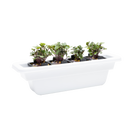
You don't need a greenhouse or any prior gardening experience to grow a steady supply of fresh herbs. A compact countertop unit like the Personal Garden holds up to 12 pods and fits neatly on a kitchen counter, keeping your herbs within arm's reach of your stove. If you want to scale up and grow herbs alongside lettuces, peppers, and edible flowers, the The Rise Garden 3 gives you a full three-tier growing system that can handle 108 plant sites at once — enough to supply your kitchen year-round regardless of season.
For the design-conscious home cook who wants their garden to double as a statement piece, The Rise Loft is a furniture-grade indoor garden built with premium wood finishes that looks as good in a dining room as it does in a kitchen.
Getting started is straightforward:
- Choose your seed pods. Rise Gardens offers pre-seeded seed pods for all five herbs listed above. Drop them directly into your garden's pod slots — no transplanting, no thinning required.
- Fill your reservoir. Use filtered or tap water that has sat out for 24 hours to off-gas any chlorine. Your system's app will guide you on reservoir levels.
- Add nutrients. Hydroponic plants depend entirely on the nutrient solution in the water since there's no soil to draw from. Follow your system's recommended dosage for herbs — typically a lighter EC (electrical conductivity) than fruiting plants.
- Set your light schedule. Most herbs thrive on 14–16 hours of light per day. The built-in LED grow lights in Rise Gardens systems are tuned to the specific light spectrums plants use for photosynthesis.
- Monitor pH. Herbs prefer a pH between 5.5 and 6.5. A simple pH meter lets you check your reservoir weekly.
- Harvest frequently. Snipping stems regularly — never more than one-third of the plant at a time — encourages bushier, more productive growth.
Within 3 to 5 weeks, you'll have enough herbs to make compound butter several times over.
Fresh Herb Compound Butter Recipe: Step-by-Step
This fresh herb compound butter recipe makes enough for four to six steaks. Leftover butter keeps refrigerated for one week or frozen for up to three months.
Ingredients:
- 1 cup (2 sticks / 227g) high-quality unsalted butter, room temperature
- 2 tablespoons fresh thyme leaves, finely chopped
- 1 tablespoon fresh rosemary, finely minced
- 2 tablespoons fresh chives, thinly sliced
- 2 tablespoons flat-leaf parsley, finely chopped
- 1 teaspoon fresh tarragon, minced
- 3 cloves garlic, microplaned or very finely minced
- 1 teaspoon flaky sea salt (Maldon or fleur de sel)
- ½ teaspoon freshly cracked black pepper
- 1 teaspoon fresh lemon zest
- 1 teaspoon Worcestershire sauce
Instructions:
- Add the softened butter to a medium bowl. It should be genuinely room temperature — soft enough to press a thumb print into easily but not melted or greasy.
- Add all herbs, garlic, salt, pepper, lemon zest, and Worcestershire sauce. Use a fork or rubber spatula to fold and press everything together until uniformly combined. Taste and adjust seasoning.
- Lay a sheet of plastic wrap flat on your counter. Spoon the butter mixture in a rough log shape along the edge closest to you.
- Roll the plastic wrap over the butter and use your hands to shape it into an even cylinder about 1.5 inches in diameter. Twist the ends tight like a candy wrapper.
- Refrigerate for at least 2 hours, or until firm enough to slice cleanly. For best flavor, make it 24 hours ahead to allow the herbs to fully infuse the butter.
What Is the Best Way to Cook a Ribeye Steak for This Recipe?
The reverse-sear method produces the most consistently perfect ribeye for this preparation. Traditional high-heat searing from raw can leave you with an overcooked gray band under the crust; the reverse-sear eliminates that entirely.
What you need:
- 1 ribeye steak, 1.5–2 inches thick (bone-in or boneless), approximately 16–20 oz
- Kosher salt and freshly cracked black pepper
- 2 tablespoons neutral oil (avocado or grapeseed)
- 2 tablespoons unsalted butter for basting
- 2 cloves garlic, smashed
- Fresh thyme sprigs (from your garden)
Reverse-Sear Method:
- Dry brine the night before. Season the steak generously on all sides with kosher salt — roughly ¾ teaspoon per pound. Place uncovered on a wire rack over a sheet pan in the refrigerator overnight. This draws moisture to the surface, then reabsorbs it for deeper seasoning, while drying the exterior for a superior crust.
- Low oven first. Preheat your oven to 250°F (120°C). Place the steak on the rack and insert a probe thermometer. Roast until the internal temperature reaches 120°F for medium-rare, roughly 45–60 minutes depending on thickness.
- Rest briefly. Remove the steak from the oven. Let it rest uncovered for 10 minutes while you heat your skillet. The surface moisture will evaporate, priming the steak for a clean sear.
- Ripping-hot sear. Heat a cast iron skillet over the highest heat your stove allows for at least 3 minutes. Add the oil. Sear the steak 60–90 seconds per side until a deep mahogany crust forms. In the final 30 seconds, add butter, smashed garlic, and thyme sprigs. Tilt the pan and baste continuously with the foaming butter.
- Serve immediately. Transfer to a cutting board or warmed plate. Slice a ½-inch round of your herb compound butter and lay it directly on top of the steak. Let it melt for 30 seconds before serving.
According to the USDA, beef reaches safe internal consumption temperatures at 145°F with a 3-minute rest. Medium-rare, which peaks around 130–135°F after carryover during the sear, is a personal preference that falls below that threshold — a factor to consider if you are cooking for immunocompromised individuals.
Can You Use Hydroponic Herbs the Same Way as Soil-Grown Herbs?
Absolutely — and in most cases, you'll find hydroponic herbs even more aromatic and tender than their soil-grown equivalents. Because hydroponic plants grow in a precisely controlled environment with optimized light, water pH, and nutrient ratios, they tend to have more consistent flavor profiles and fewer of the textural inconsistencies (woodiness, bitterness, or toughness) that can come from outdoor growing conditions like drought stress or pest damage.
One small but meaningful difference: hydroponic herbs often have slightly higher water content in their leaves because they are never water-stressed. This means they can wilt slightly faster once harvested than field-grown herbs that developed tougher cell walls. The practical fix is simple — harvest your herbs immediately before making the compound butter rather than letting them sit out. Since your garden is in your kitchen, this is effortless.
A 2021 analysis published in the journal Horticulturae found that hydroponically grown basil contained up to 20% higher concentrations of key volatile aromatic compounds compared to soil-grown controls under equivalent lighting conditions. While that study focused on basil, the underlying mechanism — controlled nutrient delivery and optimized light spectrum — applies broadly to culinary herbs including thyme, parsley, and chives.
Pairing, Plating, and Serving Ideas
The herb butter ribeye is rich, so your sides should offer contrast. Here are pairings that work particularly well and that you can partially grow yourself hydroponically:
- Watercress salad with lemon vinaigrette — peppery and bright, watercress grows well in hydroponic systems and cuts through beef fat cleanly
- Crispy roasted fingerling potatoes — the starchy neutrality lets the steak and herb butter remain the star
- Grilled or roasted asparagus — the slight char echoes the sear on the steak
- A dry, full-bodied red wine — a Cabernet Sauvignon, Malbec, or Côtes du Rhône all complement the herbal butter and beef richness
For plating, slice the ribeye against the grain into thick portions and fan them slightly on a warmed plate. Place the melting herb butter coin at the center where it can pool between the slices. Finish with a pinch of flaky sea salt and a few whole fresh herb leaves from your garden for visual contrast.
Frequently Asked Questions
Which hydroponic herbs grow fastest for use in compound butter?
Chives, basil, and parsley are among the fastest-growing herbs in a hydroponic system, often reaching harvestable size in 3–4 weeks from seed. Thyme and rosemary take slightly longer — typically 5–7 weeks — but once established, both produce continuously for many months with regular trimming.
Can I make the compound butter ahead of time?
Yes, and it actually improves with time. The butter can be made up to 24 hours in advance and refrigerated, which allows the herb and garlic flavors to fully infuse the fat. It also freezes exceptionally well for up to 3 months — slice the log into individual portions before freezing so you can pull exactly what you need for each steak.
What pH level should I maintain for growing steak herbs hydroponically?
Most culinary herbs, including thyme, rosemary, parsley, chives, and tarragon, thrive at a pH between 5.5 and 6.5 in a hydroponic reservoir. Keeping pH in this range ensures the plant roots can absorb all available nutrients efficiently. Check your reservoir's pH weekly using a calibrated pH meter and adjust with pH up or down solution as needed.
Is hydroponically grown food safe to eat raw in compound butter?
Yes. Hydroponically grown herbs are safe to consume raw and are actually considered lower risk for certain soil-borne pathogens since they never come into contact with soil or outdoor irrigation water. Rise Gardens systems use food-safe materials and closed reservoirs that minimize contamination risks. As with all fresh produce, rinse your harvested herbs briefly under cool running water before chopping and incorporating them into butter.