Hydroponic herb compound butter roasted swordfish is exactly what it sounds like — a showstopping seafood dinner built around a silky, herb-packed compound butter made entirely from herbs you've grown yourself in an indoor hydroponic garden. Compound butter is simply softened butter blended with aromatics, herbs, and seasonings, then chilled until firm and sliced over hot protein to melt into a glossy, flavor-loaded sauce. When those herbs come fresh from your own countertop garden — still holding their volatile oils, still vibrantly green — the result is dramatically better than anything you can pull from a plastic clamshell at the grocery store. This indoor garden swordfish recipe walks you through growing the right herbs hydroponically, crafting the butter, and roasting swordfish steaks to perfection.
Why Hydroponic Herbs Make a Measurable Difference in This Recipe
Flavor in culinary herbs lives in volatile aromatic compounds — the terpenes, phenols, and essential oils concentrated in the leaves and stems. Those compounds begin degrading the moment a herb is harvested. A 2019 study published in the journal Food Chemistry found that fresh basil lost more than 40% of its key aroma compounds within 48 hours of harvest at standard refrigerator temperatures. Store-bought herbs have often traveled three to seven days before reaching your kitchen. Hydroponic herbs you cut thirty minutes before cooking have had zero time to lose those aromatics.
Hydroponics, for context, is a method of growing plants in a nutrient-rich water solution instead of soil. Plants receive water, oxygen, and dissolved nutrients directly at the root zone, which accelerates growth and allows precise control over what the plant takes in. According to NASA's Veggie project research — originally developed to grow food on the International Space Station — hydroponically grown leafy greens can reach harvest size 25% to 50% faster than their soil-grown counterparts under optimized LED lighting conditions. That speed means more harvests, more compound butter batches, and more fresh herb swordfish steak nights on your calendar.
The flavor payoff in this fresh herb swordfish steak recipe is real and measurable. Taste tests conducted at Cornell University's College of Agriculture and Life Sciences found that participants consistently rated hydroponically grown herbs as more aromatic and flavorful than supermarket equivalents. When you're building a compound butter where herb flavor is the entire point, starting with the most potent raw material matters.
Which Herbs to Grow for Hydroponic Herb Compound Butter
For this specific recipe, you want a blend that complements swordfish's meaty, slightly smoky character without overwhelming it. Swordfish is a firm, dense fish with a fat content of roughly 6.5 grams per 100-gram serving according to USDA FoodData Central — enough richness to stand up to a robust herb butter. The following herbs all grow exceptionally well in a hydroponic system and contribute distinct flavor layers:
- Flat-leaf parsley: The backbone of the butter. Bright, grassy, and slightly peppery. Parsley is one of the fastest-growing herbs hydroponically and can be harvested in as few as three weeks from transplant.
- Tarragon: Provides an anise-forward, slightly licorice note that is a classic pairing with seafood in French cuisine. Tarragon thrives under moderate LED grow lighting at pH levels between 5.5 and 6.5.
- Chives: Mild onion flavor, bright color, and very easy to grow. Chives regrow quickly after cutting, making them a reliable recurring harvest.
- Thyme: Earthy, woodsy, and intensely aromatic. A small amount goes a long way, and thyme is drought-tolerant enough to handle minor fluctuations in your water reservoir levels.
- Lemon basil (optional): If you want a citrus-forward variation on this hydroponic herb seafood recipe, lemon basil adds a floral brightness that pairs beautifully with swordfish.
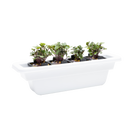
If you're newer to growing herbs at home, the Personal Garden is a compact countertop hydroponic system that holds up to 12 plant pods — plenty of space to grow every herb in this recipe simultaneously. For a larger household or anyone who wants to grow herbs, lettuces, and vegetables all at once, the The Rise Garden 3 is a full-size indoor hydroponic system with three growing tiers and room for dozens of plants. Both systems use pre-seeded seed pods that eliminate the guesswork of germination and get you to your first harvest faster.
How Do You Make Compound Butter with Fresh Hydroponic Herbs?
Compound butter comes together in under fifteen minutes, but the quality of every ingredient shows. Here's the full process:
Ingredients for the herb compound butter:
- 8 tablespoons (1 stick) high-quality unsalted butter, at room temperature
- 2 tablespoons flat-leaf parsley, finely minced
- 1 tablespoon fresh tarragon leaves, finely minced
- 1 tablespoon fresh chives, thinly sliced
- 1 teaspoon fresh thyme leaves, stripped from stems
- 1 teaspoon lemon zest
- 1 small garlic clove, grated on a microplane
- ½ teaspoon flaky sea salt
- ¼ teaspoon freshly cracked black pepper
- 1 teaspoon fresh lemon juice
Instructions:
- Harvest your herbs from your indoor garden no more than an hour before preparing. Rinse briefly under cold water and pat thoroughly dry with a paper towel. Any water left on the herbs will prevent them from incorporating cleanly into the butter.
- Mince all herbs finely. The smaller the cut, the more evenly the flavor distributes throughout the butter.
- Place softened butter in a medium bowl. Add all herbs, lemon zest, garlic, salt, pepper, and lemon juice.
- Mix vigorously with a rubber spatula, folding and pressing until the herbs are evenly distributed and the butter is a consistent green-flecked pale yellow.
- Transfer the butter onto a sheet of plastic wrap or parchment paper. Roll into a log approximately 1.5 inches in diameter, twisting the ends to seal tightly.
- Refrigerate for at least 1 hour before use, or freeze for up to 3 months. The butter firms as it chills, making it easy to slice clean rounds directly onto your finished swordfish.
The Complete Hydroponic Herb Compound Butter Roasted Swordfish Recipe
Swordfish is one of the best fish for high-heat roasting because its dense, meaty texture holds up to the oven without falling apart or drying out when handled correctly. The USDA recommends cooking fish to an internal temperature of 145°F, but many chefs pull swordfish at 130°F to 135°F internal for a slightly more tender, moist result — similar to how you'd treat a steak. Use a probe thermometer to be precise.
Ingredients for the roasted swordfish:
- 4 swordfish steaks, approximately 6 to 8 ounces each and 1 inch thick
- 2 tablespoons neutral high-smoke-point oil (avocado or grapeseed)
- 1 teaspoon kosher salt
- ½ teaspoon freshly cracked black pepper
- 4 rounds of hydroponic herb compound butter (sliced ½ inch thick and chilled)
Instructions:
- Remove swordfish steaks from the refrigerator 20 to 30 minutes before cooking to allow them to come closer to room temperature. This promotes more even cooking.
- Preheat your oven to 400°F. Place a cast-iron skillet or oven-safe heavy skillet in the oven while it preheats.
- Pat swordfish steaks completely dry with paper towels. Moisture on the surface inhibits the Maillard reaction — the browning process responsible for flavor development.
- Brush both sides of each steak with oil and season generously with salt and pepper.
- Carefully remove the hot skillet from the oven and place it on a burner set to high heat. Sear the swordfish steaks for 90 seconds per side until a golden crust develops.
- Transfer the skillet to the 400°F oven. Roast for 5 to 7 minutes, depending on thickness, until the internal temperature reads 130°F to 145°F.
- Remove from the oven and immediately place one round of chilled compound butter on top of each steak. Let it melt for 60 to 90 seconds before plating.
- Serve immediately over roasted vegetables, a simple green salad, or with crusty bread to capture the herbed butter pooling on the plate.
What Indoor Hydroponic Setup Works Best for a Year-Round Herb Garden?
The single biggest advantage of growing herbs hydroponically indoors is complete independence from seasons. You're not waiting for the last frost date or worrying about a cold snap wiping out your tarragon. Your indoor garden operates on its own controlled schedule, delivering harvest-ready herbs every few weeks regardless of what's happening outside.
The key variables to manage in any indoor hydroponic herb system are light intensity and duration, pH, and nutrient concentration (measured as EC, or electrical conductivity). Culinary herbs generally thrive at a pH between 5.5 and 6.5 — the range at which nutrient uptake is most efficient. Most hydroponic systems that use pre-formulated liquid nutrients maintain this range automatically when you follow the dosing guidelines.
For households that want both functional growing capability and a design-forward piece of furniture, the The Rise Loft is a premium indoor garden system built with furniture-grade materials and a clean, modern aesthetic. It fits naturally in a kitchen, dining room, or living space — keeping your fresh herbs genuinely accessible at cooking time rather than tucked away in a utility room.
LED grow light duration matters too. Most culinary herbs perform well with 14 to 16 hours of light per day. Many Rise Gardens systems include app-controlled lighting schedules that automate this entirely, removing one more variable from your routine.
Tips for Customizing This Fresh Herb Swordfish Steak Recipe
Once you have the compound butter technique down, the variations are nearly endless. Here are a few directions worth exploring:
- Miso-herb butter: Add one teaspoon of white miso paste to the herb butter for an umami-forward variation. Miso and swordfish is a classic Japanese pairing. Use parsley and chives as your primary herbs here and skip the tarragon.
- Spicy herb butter: Add ½ teaspoon of finely minced fresh red chili or a pinch of Calabrian chili flakes. Pairs especially well with lemon basil from your hydroponic garden.
- Smoked herb butter: Add ½ teaspoon smoked paprika to the standard herb blend. The smokiness amplifies swordfish's natural grilled quality even when it's oven-roasted.
- Citrus swap: Replace lemon zest with fresh orange or Meyer lemon zest for a sweeter, more floral flavor profile.
The compound butter itself stores in the freezer for up to three months, so making a large batch after a big herb harvest is a genuinely efficient use of your garden's output. Slice rounds as needed directly from the frozen log — they thaw quickly on hot food and require no planning ahead.
Frequently Asked Questions
Can I use dried herbs instead of fresh hydroponic herbs in compound butter?
You can use dried herbs in a pinch, but the flavor profile will be noticeably different. Dried herbs lack the volatile aromatic oils that give fresh herbs their brightness and complexity. If substituting, use roughly one-third the amount since dried herbs are more concentrated by weight — but for this specific recipe, fresh herbs from your hydroponic garden will produce a far superior result.
How thick should swordfish steaks be for this indoor garden swordfish recipe?
One inch is the ideal thickness for this roasting method. Steaks thinner than ¾ inch cook too quickly and risk drying out before the herb butter has time to melt properly. Steaks thicker than 1.25 inches may need an additional 2 to 3 minutes of oven time. Always use a probe thermometer rather than relying on timing alone.
How long does it take to grow herbs hydroponically from seed pod to harvest?
Most culinary herbs reach first harvest in 3 to 5 weeks from planting in a well-maintained hydroponic system with adequate LED light. Basil and chives are typically on the faster end of that range. Tarragon and thyme may take closer to 4 to 6 weeks for a substantial first harvest. After the initial harvest, most herbs regrow continuously for months when you trim correctly — cutting stems just above a leaf node rather than pulling from the base.
Is swordfish a healthy choice for a hydroponic herb seafood recipe?
Swordfish is a nutrient-dense protein source. According to USDA FoodData Central, a 100-gram serving of cooked swordfish provides approximately 20 grams of protein, 1,100 mg of omega-3 fatty acids, and significant amounts of selenium and vitamin D. The FDA and EPA do note that swordfish contains higher mercury levels than many other fish and recommend that pregnant women and young children limit consumption. For most healthy adults, swordfish eaten in moderate amounts — a few times per month — is considered a nutritious choice as part of a varied diet.