A homegrown spinach smoothie bowl recipe is exactly what it sounds like: a thick, blended bowl made primarily from fresh spinach — ideally spinach you've grown yourself indoors — topped with colorful, nutrient-dense ingredients and enjoyed as a satisfying breakfast or snack. When your spinach comes straight from a hydroponic garden on your countertop or in your living room, you're working with leaves that were harvested minutes ago, not days. That freshness changes everything about flavor, texture, and nutritional value. This guide walks you through the full recipe, the best fresh spinach bowl toppings, and how growing your own greens indoors makes every smoothie bowl better.
Why Hydroponic Spinach Is the Best Base for a Smoothie Bowl
Spinach grown hydroponically — meaning its roots are fed a precise mix of water and dissolved nutrients rather than soil — consistently produces leaves that are tender, mild, and remarkably clean-tasting. There's no grit, no bitterness, and no need to worry about pesticide residue. Because the plant receives exactly the minerals it needs in the right ratios, the leaves are often denser in micronutrients than conventionally grown spinach.
According to the USDA, one cup of raw spinach provides 56% of your daily recommended vitamin K, 16% of your daily vitamin A, and meaningful amounts of folate, manganese, and iron. When you're blending spinach into a smoothie bowl, you want leaves that are as fresh and nutrient-intact as possible — and nothing beats leaves harvested right before you blend them.
Hydroponic systems also give you control over your growing environment. You're not at the mercy of seasons, outdoor pests, or soil quality. Spinach thrives in hydroponic conditions because it has a relatively shallow root system and grows quickly, often ready to harvest in as few as 25–30 days from transplant. That means you can maintain a nearly continuous supply of fresh greens for your indoor garden breakfast recipes all year long.
How to Grow Hydroponic Spinach at Home for Your Smoothie Bowl
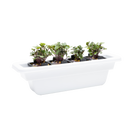
Growing spinach indoors for hydroponic spinach recipes doesn't require a greenhouse or specialized horticulture knowledge. With a system like the Personal Garden — a compact countertop hydroponic garden designed for everyday home use — you can grow enough spinach for multiple smoothie bowls per week in a space no larger than a cutting board.
Here's a quick-start breakdown for growing spinach hydroponically:
- pH range: Spinach prefers a pH between 6.0 and 7.0. The Personal Garden's built-in system is designed to keep water chemistry in this range automatically.
- EC (electrical conductivity): EC measures the concentration of dissolved nutrients in your water. For spinach, a target EC of 1.8–2.3 mS/cm is ideal. Higher EC can cause tip burn on the leaves.
- Light: Spinach needs about 12–14 hours of light per day. Rise Gardens systems include full-spectrum LED grow lights that mimic natural sunlight without the heat stress.
- Temperature: Spinach is a cool-weather crop. It performs best between 50–70°F (10–21°C), making it ideal for indoor growing environments.
- Seed pods: Start your spinach using Rise Gardens seed pods, which are pre-seeded growing media designed specifically for hydroponic systems. No transplanting, no soil mess.
If you want to scale up your growing capacity — to keep multiple varieties of spinach going alongside herbs and other smoothie bowl ingredients like kale or mint — the The Rise Garden 3 gives you a full-size hydroponic garden system with multiple growing levels and enough capacity to support a household's worth of fresh greens simultaneously.
The Homegrown Spinach Smoothie Bowl Recipe
This recipe is built around freshly harvested hydroponic spinach and designed to be both nutritionally complete and genuinely delicious. It takes about 10 minutes from harvest to bowl.
Ingredients (serves 1)
For the base:
- 2 cups fresh hydroponic spinach, loosely packed (harvested just before blending)
- 1 medium frozen banana (provides natural sweetness and thick texture)
- ½ cup frozen mango chunks
- ½ cup frozen pineapple chunks
- ¼ cup plain Greek yogurt or coconut milk yogurt (for creaminess and protein)
- 2–3 tablespoons coconut milk or oat milk (add gradually to control thickness)
- 1 teaspoon fresh lemon juice (brightens the flavor and helps preserve color)
- Optional: ½ teaspoon spirulina for an extra green boost
For the toppings (fresh spinach bowl toppings):
- Sliced fresh strawberries or kiwi
- Granola (look for low-sugar varieties)
- Chia seeds or flaxseeds
- Shredded unsweetened coconut
- A drizzle of raw honey or almond butter
- A few small, whole spinach leaves from your garden for garnish
- Hemp seeds for added protein and omega-3s
Instructions
- Harvest your spinach. Snip outer leaves from your hydroponic garden just before you blend. Rinse lightly and pat dry.
- Layer the blender correctly. Add your liquid (coconut milk) first, then spinach, then frozen fruit, then yogurt. This order protects your blender blade and ensures a smooth blend.
- Blend on high for 60 seconds. You want a completely smooth, thick consistency. If the blender struggles, add liquid one tablespoon at a time — but keep it minimal. The bowl should be thick enough to hold toppings without them sinking.
- Check consistency. Tilt the blender — the mixture should move slowly, like soft-serve ice cream. If it flows like a smoothie, add more frozen banana or a handful of ice.
- Pour and top immediately. Transfer to a wide, shallow bowl and arrange your toppings in sections for a visually appealing presentation.
- Serve right away. Smoothie bowls are best eaten within 10 minutes of blending, before the base begins to melt and separate.
Nutrition Snapshot (approximate, per serving without toppings)
Calories: 280–320 | Protein: 8–10g | Fiber: 5–7g | Vitamin K: 120%+ DV | Vitamin C: 90%+ DV | Iron: 15% DV
What Are the Best Fresh Spinach Bowl Toppings?
The toppings you choose turn a smoothie bowl from a simple blend into a complete, satisfying meal. For indoor garden breakfast recipes built around hydroponic spinach, the best toppings fall into a few functional categories:
Texture contrast: Granola, toasted coconut flakes, cacao nibs, or chopped nuts give you crunch against the creamy base. Without a crunchy element, smoothie bowls can feel monotonous to eat.
Protein and healthy fats: Chia seeds, hemp seeds, almond butter, and Greek yogurt dollops add staying power. A smoothie bowl without adequate protein and fat will leave you hungry within an hour.
Fresh fruit: Sliced bananas, berries, kiwi, or mango add visual color and natural sweetness. If you're growing strawberries or herbs in your Rise Garden alongside your spinach, freshly picked mint makes an especially fragrant garnish.
Superfoods: A sprinkle of bee pollen, a pinch of flaxseed meal, or a small square of dark chocolate (70%+ cacao) adds micronutrients without overwhelming the flavor profile.
A practical note on portioning toppings: research from the Harvard T.H. Chan School of Public Health recommends that breakfast meals include at least 25 grams of protein to support satiety through the morning. A smoothie bowl base provides roughly 8–10 grams — adding 2 tablespoons of hemp seeds (10g protein) and a quarter cup of Greek yogurt as a topping (6g protein) gets you close to that target without any supplements.
Can You Taste the Difference Between Hydroponic and Store-Bought Spinach?
Yes — and the difference is more significant than most people expect. Store-bought spinach is typically harvested, processed, packaged, and shipped over the course of 3–7 days before it reaches your grocery store shelf. During that time, spinach loses measurable amounts of its water-soluble vitamins. A study published in the Journal of Agricultural and Food Chemistry found that spinach stored at room temperature for just 4 days lost 47% of its folate content. Even refrigerated spinach loses around 15% of its folate in the first 3 days after harvest.
Hydroponic spinach harvested from your indoor garden and blended immediately retains nearly all of that folate, along with vitamin C, lutein, and other heat- and light-sensitive compounds. The flavor is also noticeably different: hydroponic spinach tends to be sweeter and less astringent than older store-bought leaves, because it hasn't had time to develop the oxalic acid sharpness that comes with age.
NASA's Veggie project — a space-based hydroponics research program — has demonstrated that hydroponically grown leafy greens like spinach can be successfully cultivated in controlled environments with consistent nutritional quality, validating what home growers have observed: control over the growing environment translates directly into control over what ends up on your plate.
If you want the most premium growing experience at home, the The Rise Loft is a furniture-grade indoor garden that integrates seamlessly into living spaces. It's designed for households that want serious growing capacity without sacrificing aesthetics — and it gives you access to fresh spinach (and dozens of other crops) every single day of the year.
How to Customize This Recipe for Your Taste and Nutrition Goals
The base recipe is a template, not a rulebook. Here's how to adapt it based on your personal preferences and nutritional needs:
For higher protein: Add a scoop of unflavored or vanilla plant-based protein powder to the base blend. Hemp protein integrates smoothly without affecting the green color. You can also increase the Greek yogurt portion from ¼ cup to ½ cup.
For lower sugar: Swap the mango and pineapple for frozen zucchini or cauliflower. These vegetables add body and thickness without the fructose load, and they're virtually tasteless when frozen and blended with strong flavors like lemon and banana.
For a fully vegan version: Use coconut milk yogurt instead of Greek yogurt and replace honey with maple syrup or agave. The recipe is otherwise plant-based by default.
For kids: Add half a ripe avocado to the base for extra creaminess and healthy fat. Avocado softens the flavor considerably and gives the bowl a vivid color that children often find appealing. Keep toppings simple — banana slices, granola, and a honey drizzle are usually crowd-pleasers.
Seasonal variations using your indoor garden: Because hydroponic gardens aren't limited by outdoor seasons, you can grow year-round. In winter, try blending your spinach with frozen açaí and pomegranate seeds. In spring and summer, fresh basil from your garden adds a surprising herbal note that pairs well with strawberry and lemon.
One of the most practical benefits of growing your own greens for indoor garden breakfast recipes is consistency. You're never stuck with wilted spinach or an empty crisper drawer. Your garden produces on your schedule.
Frequently Asked Questions
How much spinach should I put in a smoothie bowl?
For a single-serving smoothie bowl, 1.5 to 2 cups of loosely packed fresh spinach is the ideal amount. This provides substantial nutritional value — covering over 50% of your daily vitamin K — without overpowering the fruit flavors in the base blend. Hydroponic spinach tends to be milder than store-bought, so you can often use the full 2 cups without the bowl tasting overly green or vegetal.
Does blending spinach destroy its nutrients?
Blending does not significantly degrade spinach's nutritional content. The mechanical action of blending actually breaks down cell walls, which can make some nutrients like beta-carotene and lutein more bioavailable — meaning your body absorbs more of them. Heat is the primary enemy of water-soluble vitamins like folate and vitamin C, which is why cold-blended smoothie bowls preserve nutrients better than cooked spinach preparations.
How long does hydroponic spinach last after harvesting?
Freshly harvested hydroponic spinach stored in an airtight container in the refrigerator will stay fresh for 3–5 days. For smoothie bowls, harvesting just before blending gives you maximum freshness and nutrient density. If you need to store harvested leaves, wrap them loosely in a dry paper towel before sealing in a container — the paper towel absorbs excess moisture that would otherwise accelerate wilting.
Can I grow enough spinach in a small indoor garden to make smoothie bowls regularly?
A compact hydroponic system like the Personal Garden can support 6–12 spinach plants at a time, which — using a cut-and-come-again harvest method — is enough to supply 3–5 smoothie bowls per week. Spinach grows quickly in hydroponic conditions, often producing harvestable outer leaves every 7–10 days once established. For households making daily smoothie bowls, a larger system with more growing sites will provide a more reliable continuous supply.