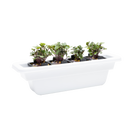
Most hydroponic plants live anywhere from 3 to 12 months before you need to replant, depending on species. Fast-growing herbs like basil and cilantro are ready to harvest and replace in as little as 30 days. Fruiting plants like tomatoes and peppers can produce for 6–12 months in the right system with a maintained nutrient solution pH of 5.5–6.5.
Understanding plant lifespan in a hydroponic garden helps you plan your harvests, avoid nutrient waste, and keep your system running at peak productivity. Every plant category follows a different replant cycle, and knowing which stage your plants are in makes all the difference between a thriving indoor garden and one that slowly stalls out.
How Long Do Hydroponic Plants Live by Plant Type?
Plant lifespan in a hydroponic garden breaks down clearly by growth category. Here's what you can realistically expect:
Leafy greens and herbs (30–60 days): Lettuce, spinach, arugula, basil, and cilantro are the sprinters of the hydroponic world. Most reach full harvest size in 3–5 weeks and are best replaced before they bolt—bolting triggers bitter flavor and signals the plant's reproductive stage, after which leaf quality declines fast. Cilantro, for example, can bolt in as little as 30 days under warm conditions.
Fruiting plants (4–12 months): Tomatoes, peppers, and cucumbers have a much longer indoor run. A single tomato plant in a well-maintained system can produce fruit for 6–9 months before yields drop enough to justify replanting. Peppers can stretch even longer—some growers report productive pepper plants at 12 months in a controlled environment.
Microgreens (7–14 days): These are the fastest crop in any indoor garden. You harvest them once at the cotyledon or first true-leaf stage and replant immediately. There's no extended lifespan—microgreens are a single-harvest crop by design.
Staggering your seed pods by 2–3 weeks ensures you always have something ready to harvest rather than everything maturing and declining at the same time.
How Do You Know When It's Time to Replace Hydroponic Plants?
Timing your replant cycle for your indoor garden doesn't require a strict calendar—your plants will show you the signs. Watch for these indicators:
- Bolting: Herbs and greens send up a central flowering stalk. Once this happens, leaf production slows and flavor turns sharp or bitter.
- Root crowding: In a recirculating system, roots can block water flow and oxygen delivery. Visible root congestion or water pooling are cues to act.
- Declining yield: Fruiting plants that once set 10–15 tomatoes per cycle and now set 2–3 have likely exhausted their productive window.
- Yellowing leaves despite correct nutrients: If your electrical conductivity (EC) and pH are in range—pH 5.5–6.5, EC 1.5–2.5 mS/cm for most vegetables—and leaves still yellow, the plant may simply be at the end of its cycle.
The Personal Rise Garden is a compact countertop system that makes rotation easy—its modular pod design lets you swap out individual plants without disrupting the rest of your garden.
What Affects Plant Lifespan in a Hydroponic Garden?
Several variables directly control how long your plants thrive before needing replacement:
Light hours and intensity: Most vegetables need 14–16 hours of light per day for optimal growth. NASA's Veggie project, which has studied plant growth in controlled environments since 2014, found that consistent light cycles are one of the primary drivers of healthy plant development and longevity. Inconsistent lighting shortens productive lifespan by stressing plants and triggering early flowering.
Nutrient management: Plants consume different ratios of nitrogen, phosphorus, and potassium at different life stages. Seedlings need higher nitrogen; fruiting plants need more phosphorus and potassium. Using the right nutrients at each stage extends productive life and delays premature decline.
Water temperature: Hydroponic solution should stay between 65°F and 72°F (18°C–22°C). Water above 75°F holds less dissolved oxygen, which stresses roots and accelerates plant aging. A University of Arizona Controlled Environment Agriculture Center study found that dissolved oxygen levels below 5 mg/L measurably reduce root health and plant productivity.
System size and spacing: Crowded plants compete for light and airflow, which shortens their lifespan. The The Rise Garden 3 offers a full-size setup with enough canopy space to let each plant reach its full productive potential without crowding.
Planning Your Replant Cycle for a Continuous Harvest
A smart replant cycle means you're never waiting weeks for your next harvest. Here's a practical approach:
Divide your garden into zones by plant type. Keep a fast-turnover zone for herbs and greens—replant every 4–6 weeks. Reserve a second zone for longer-lived fruiting plants and refresh it seasonally. If you're growing in a larger system like The Rise Loft, its furniture-grade design and expanded growing capacity make it practical to run multiple plant generations simultaneously.
According to the USDA Economic Research Service, U.S. households waste approximately 30–40% of their food supply. Growing on a staggered replant cycle directly reduces that waste by producing only what you'll use, when you'll use it.
A simple rotation rule: start new seed pods for herbs every 3 weeks, fruiting plants every 6–8 months, and leafy greens every 4–5 weeks. After two or three cycles, you'll dial in the exact timing that fits your household's harvest rhythm.
Frequently Asked Questions
Can you grow the same hydroponic plant indefinitely without replanting?
Most plants have a natural productive ceiling. Herbs and greens decline sharply after bolting and should be replaced. Fruiting plants like peppers can technically live longer than 12 months, but yield quality usually drops enough by month 9–10 that starting fresh gives better results.
Do hydroponic plants grow faster than soil plants?
Yes—hydroponic plants typically grow 30–50% faster than their soil-grown counterparts because nutrients are delivered directly to roots without the plant expending energy searching through soil. This shorter growth cycle also means your replant cycle comes around more frequently than it would in a traditional garden.
What should I do with my system between replanting cycles?
Clean your reservoir, channels, and net cups with a diluted hydrogen peroxide solution (3%) between cycles to remove algae and biofilm. Flush and refill with fresh water, then recalibrate your pH to 5.5–6.5 before adding new nutrients. This reset gives the next generation of plants the cleanest possible start.