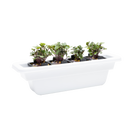
You can get 2 to 4 harvests from a single hydroponic seed pod by cutting leafy greens to about 1 inch above the crown rather than pulling the whole plant. Lettuce, kale, and herbs regrow in as few as 7 days when your nutrient solution stays at an EC of 1.2–2.0 and your water pH holds between 5.5 and 6.5.
This technique is called cut-and-come-again harvesting, and it's one of the simplest ways to extend plant productivity indoors without buying extra seed pods. Instead of treating each pod as a one-and-done crop, you treat it as a renewable resource. The sections below walk you through exactly how to do it, which plants respond best, and how to know when a pod has finally given you everything it has.
What Is Cut-and-Come-Again Harvesting in Hydroponics?
Cut-and-come-again is a harvesting method where you remove only the outer or upper leaves of a plant and leave the growing tip and root system intact. In soil gardening this is common practice, but in hydroponics it works even faster because the roots have constant access to oxygenated, nutrient-rich water 24 hours a day.
The key is leaving enough leaf mass for the plant to continue photosynthesizing. A good rule: never remove more than one-third of the plant at a single harvest. If you take more than that, regrowth slows significantly and the plant may bolt—sending energy to seed production instead of new leaves.
Research from NASA's Veggie project, which grew lettuce aboard the International Space Station, confirmed that repeated harvest leafy greens like 'Outredgeous' romaine regrew productively after multiple cuts when light levels stayed at or above 200 micromoles per square meter per second. Most Rise Gardens systems deliver right in that range.
Which Plants Give You the Most Repeated Harvests from a Single Seed Pod?
Not every plant is built for repeated harvest. Fruiting plants like tomatoes and peppers don't benefit from this technique—they need their full canopy. But leafy greens are almost purpose-built for cut-and-come-again hydroponics.
Best performers:
- Loose-leaf lettuce (Black Seeded Simpson, Oak Leaf, Butterhead) — regrows in 7–10 days per cut
- Kale and Swiss chard — can yield 3 to 5 harvests per pod over 60–90 days
- Arugula — fast regrowth, typically 5–8 days between cuts
- Basil — pinch just above a leaf node; 2–3 cuts before flavor diminishes
- Spinach — harvest outer leaves and the center keeps producing
Head lettuce varieties like iceberg are the exception—they form a compact head and don't regenerate well after cutting. Stick to loose-leaf types when your goal is extending plant productivity indoors across multiple harvest cycles.
A 2021 study from the University of Florida IFAS Extension found that loose-leaf lettuce harvested using a cut-and-come-again method produced up to 47% more total biomass over a growing cycle compared to a single full harvest at maturity.
How Do You Maximize Regrowth Speed Between Harvests?
Regrowth speed comes down to three controllable factors: light, nutrients, and water chemistry.
Light: After a cut, the plant temporarily loses photosynthetic surface area. Keeping your lights on a consistent 16-hour photoperiod gives the plant maximum recovery time. The Rise Gardens app makes this automatic—no timers to set manually.
Nutrients: Immediately after harvesting, the plant redirects energy to new leaf production. This is when a well-balanced nitrogen-forward nutrient solution makes a measurable difference. Nitrogen drives vegetative growth. Make sure your nutrients are topped off and your reservoir isn't running low—a depleted reservoir slows regrowth by days, not hours.
Water pH: Nutrient uptake is tightly pH-dependent. Outside the 5.5–6.5 range, plants can't absorb nitrogen and calcium efficiently even if those elements are present in the water. Check your pH every 3–4 days, especially in warmer indoor environments where pH tends to drift upward.
EC (electrical conductivity) measures the total dissolved nutrient concentration in your water. For leafy greens in a cut-and-come-again system, target an EC of 1.2 to 1.8 mS/cm. Too low and regrowth stalls. Too high and you risk nutrient burn on tender new leaves.
If you're growing on a compact system like the Personal Rise Garden, check your reservoir level after every harvest—smaller reservoirs dilute faster as plants drink up post-cut.
How Do You Know When a Seed Pod Is Finally Spent?
Plants don't regrow indefinitely. Here's what signals that a pod has reached the end of its productive life:
- Regrowth takes longer than 14 days after a clean cut
- New leaves come in small, pale, or misshapen despite correct pH and EC
- The plant bolts—sending up a tall flower stalk with small, bitter-tasting leaves
- Root mass becomes dense and brown rather than white and fibrous
Most leafy green pods in a well-maintained hydroponic system stay productive for 45 to 90 days depending on the variety. After that, swap in a fresh seed pod and start the cycle again.
If you want room to stagger your harvests—keeping some pods in early growth while others are in active cut-and-come-again cycles—a larger system like The Rise Garden 3 or The Rise Loft gives you the pod capacity to do that comfortably. Staggering plantings by two weeks means you're harvesting something almost every day.
Frequently Asked Questions
Can I use cut-and-come-again harvesting with herbs, or only leafy greens?
Yes, many herbs respond well to it. Basil, mint, and cilantro all benefit from regular pinching above a leaf node, which encourages bushy regrowth instead of a single tall stem. Avoid cutting more than one-third of the plant at once, and harvest before the plant flowers for the best flavor.
Does cutting a plant affect the flavor of regrown leaves?
In most cases, no—regrown leaves taste comparable to first-growth leaves when your pH and nutrients stay in range. Some growers actually prefer the slightly smaller, more tender second-growth leaves on arugula and kale. Flavor declines mainly when the plant is stressed by incorrect pH, low nutrients, or inadequate light between cuts.
How often should I change the water in my hydroponic reservoir when doing repeated harvests?
Top off with fresh water and nutrients every 3–5 days, and do a full reservoir change every 2–3 weeks. Organic matter from roots and old plant material can build up and alter your pH and EC readings over time. A clean reservoir between harvest cycles keeps your regrowth consistent and reduces the risk of root disease.