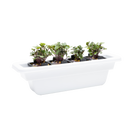
This hydroponic caprese skewers recipe is the ultimate way to show off what your indoor garden can do. Caprese skewers are bite-sized appetizers built on the classic Italian combination of fresh tomatoes, mozzarella, and basil — and when those ingredients come straight from your own hydroponic system, the flavor difference is immediately obvious. Hydroponic growing means your plants grow in a nutrient-rich water solution rather than soil, which gives you precise control over plant nutrition and produces herbs and tomatoes that are consistently vibrant, aromatic, and harvest-ready year-round. If you've been looking for a homegrown tomato appetizer recipe that doubles as a conversation starter, you've just found it.
Why Homegrown Hydroponic Ingredients Make Better Caprese
There's a measurable reason homegrown tomatoes taste better than store-bought ones. Research from the University of Florida found that commercially grown tomatoes are often harvested at the mature-green stage and ripened with ethylene gas post-harvest, a process that significantly reduces sugar content and volatile aroma compounds compared to vine-ripened fruit. When you grow tomatoes hydroponically indoors, you harvest them at peak ripeness — and that difference lands directly on your tongue.
Basil tells the same story. The herb's signature fragrance comes from essential oils including linalool, eugenol, and estragole. Those oils are most concentrated just before the plant flowers, which is exactly when you want to harvest. Growing basil in a controlled indoor hydroponic environment means you can time your harvest precisely, rather than buying a grocery store bunch that was cut days ago and shipped across the country.
A 2021 study published in Frontiers in Plant Science found that hydroponically grown basil produced up to 30% higher concentrations of total phenolic compounds compared to soil-grown counterparts under the same lighting conditions — compounds directly linked to flavor intensity and antioxidant value. Your guests won't know the science, but they'll taste the result.
What You'll Need to Grow Your Caprese Ingredients at Home
Before you build the skewers, you need to grow the stars of the dish. Here's what to set up in your indoor hydroponic garden:
For tomatoes: Choose a compact cherry or grape tomato variety well-suited to indoor growing. Cherry tomatoes tend to mature faster and produce prolifically in hydroponic systems. Start from seed pods designed for hydroponic growing — these pre-seeded, pre-buffered pods take the guesswork out of germination and are optimized for the nutrient solution your system delivers.
For basil: Genovese basil is the classic caprese choice. It grows quickly in hydroponic conditions, often reaching harvest size in 3 to 4 weeks from germination. Plan to grow at least two basil pods to have enough leaves for a full batch of skewers.
System recommendation: If you're growing tomatoes alongside herbs, you want a system with enough vertical clearance and lighting capacity to support both. The Rise Garden 3 is a full-size indoor hydroponic garden system with three growing levels, giving you the flexibility to dedicate one tier to tomatoes and another to basil and other herbs simultaneously.
For apartment dwellers or those with limited counter space, the Personal Garden is a compact countertop hydroponic garden that handles herbs beautifully and can support smaller tomato varieties with ease.
Nutrients: Hydroponic plants get all their minerals from the water solution rather than soil. Use quality nutrients formulated for hydroponic systems to ensure your plants have the full spectrum of macro and micronutrients — nitrogen, phosphorus, potassium, calcium, magnesium, and trace elements — they need at each growth stage. Maintaining your nutrient solution at an electrical conductivity (EC) between 2.0 and 3.5 mS/cm and a pH between 5.8 and 6.3 is ideal for both tomatoes and basil.
Hydroponic Caprese Skewers Recipe (Step-by-Step)
Once your tomatoes are ripe and your basil is lush, this recipe comes together in under 15 minutes. It's an ideal fresh basil skewers indoor garden showcase for dinner parties, holiday gatherings, or a weeknight appetizer you actually feel proud of.
Yield: Approximately 24 skewers
Prep time: 12 minutes
Cook time: None
Ingredients:
- 24 hydroponic cherry or grape tomatoes, harvested at full color
- 24 fresh hydroponic basil leaves (medium to large)
- 8 oz fresh mozzarella, cut into bite-sized cubes or use ciliegine (small fresh mozzarella balls)
- 3 tablespoons extra-virgin olive oil
- 1.5 tablespoons balsamic glaze
- Flaky sea salt and freshly cracked black pepper, to taste
- 24 short appetizer skewers or toothpicks
Instructions:
- Harvest and prep your produce. Snip tomatoes from the vine and rinse gently under cool water. Pat dry. Pinch basil leaves from stems, selecting leaves large enough to fold. Rinse and pat dry.
- Fold the basil. Fold each basil leaf in half lengthwise, bringing the underside of the leaf inward. This creates a neat, compact layer that stays on the skewer and releases more aroma when bitten.
- Build each skewer. Thread in this order: one tomato, one folded basil leaf, one mozzarella cube. Push gently to the base of the skewer so the stack holds together.
- Arrange on a platter. Lay completed skewers on a serving board or flat plate in a single layer.
- Dress and season. Drizzle extra-virgin olive oil evenly over all skewers, then drizzle balsamic glaze in a thin zigzag pattern. Finish with a pinch of flaky sea salt and a few cracks of black pepper.
- Serve immediately for peak flavor, or refrigerate uncovered for up to one hour before serving. Add the oil and balsamic just before serving if prepping ahead.
Variations to try:
- Add a thin slice of prosciutto folded between the basil and mozzarella for a heartier version.
- Swap balsamic glaze for a drizzle of pesto — especially if your indoor garden is overflowing with basil.
- Use heirloom or mixed-color cherry tomatoes for visual impact on the platter.
How Long Does It Take to Grow Hydroponic Tomatoes Indoors?
This is one of the most common questions new hydroponic gardeners ask, and the answer is more encouraging than most people expect. Under consistent LED grow lighting and with properly managed nutrients, cherry tomato plants in a hydroponic system typically begin producing harvestable fruit within 60 to 80 days from seed germination. That's significantly faster than outdoor soil growing in many climates, where plants are at the mercy of seasonal weather and soil variability.
Basil reaches its first harvest stage much faster — usually 21 to 28 days from germination for indoor hydroponic plants. You can begin harvesting individual leaves as soon as the plant has at least three sets of true leaves, which encourages bushier growth and a longer productive lifespan.
The NASA Veggie project, which developed plant growth hardware for the International Space Station, demonstrated that controlled-environment hydroponic growing with optimized light and nutrient delivery reliably accelerates plant growth timelines compared to traditional soil cultivation — a finding that applies directly to home hydroponic systems like the ones Rise Gardens builds.
A practical planning tip: start your basil pods about 4 to 5 weeks after you start your tomato pods so both are ready to harvest around the same time. That synchronization makes planning a hydroponic tomato and herb appetizer like this one much easier.
Is Hydroponic Produce Safe to Eat Raw?
Yes — and in many ways, hydroponically grown produce carries a lower risk of certain contaminants than field-grown crops. Because hydroponic systems don't use soil, there's no exposure to soil-borne pathogens or the runoff-related contamination risks that have driven several high-profile leafy green recalls in the conventional produce industry in recent years.
According to USDA data, approximately 48 million Americans experience foodborne illness each year, with contaminated fresh produce being a significant vector. Controlled indoor growing eliminates many of the environmental variables — birds, flooding, neighboring field runoff — that contribute to outdoor contamination events.
That said, standard food safety practices still apply to your home harvest. Rinse all tomatoes and basil under clean running water before eating, even produce you've grown yourself. Dry thoroughly before assembling skewers to prevent diluting your olive oil and balsamic glaze.
Your indoor hydroponic garden is also pesticide-free by design when you're growing with Rise Gardens systems. Because the plants live indoors in a clean, controlled environment, pest pressure is minimal, and chemical pesticide use is unnecessary — something you simply cannot guarantee with conventionally grown produce from a store.
Tips for Getting the Most Flavor From Your Indoor Garden Harvest
Growing the ingredients is only half of the equation. How and when you harvest makes a measurable difference in the final dish.
Harvest tomatoes at full color. For red cherry varieties, wait until the fruit is uniformly deep red and yields very slightly to gentle pressure. A tomato that's even slightly under-ripe will have noticeably less sugar and more acidity than one that hits full ripeness on the vine.
Harvest basil in the morning. Essential oil concentrations in basil are highest in the early part of the day, before heat causes volatilization. If your indoor garden space stays at a consistent temperature, this effect is less dramatic — but it's still a useful habit.
Use basil same-day if possible. Fresh basil begins to oxidize and blacken quickly once cut, especially on the cut edges of torn or chopped leaves. Folding whole leaves rather than cutting them for this recipe helps preserve their appearance and slows that process.
Don't refrigerate tomatoes before serving. Cold temperatures — even short periods in the fridge — suppress the volatile aroma compounds that make a homegrown tomato taste like a homegrown tomato. Keep harvested tomatoes at room temperature until the moment you're ready to build your skewers.
If you're designing your growing setup specifically to support regular entertaining and recipe work, The Rise Loft is worth considering — it's a premium indoor garden with furniture-grade design that integrates into a living space or dining room without looking like a piece of equipment. Having your garden visible in your entertaining space also makes for a genuinely impressive conversation piece when guests arrive for a party built around a hydroponic tomato and herb appetizer.
Frequently Asked Questions
Can I grow cherry tomatoes and basil in the same hydroponic system at the same time?
Yes, cherry tomatoes and basil grow well together in the same hydroponic system and actually prefer similar nutrient solution parameters. Both thrive at a pH between 5.8 and 6.3 and an EC between 2.0 and 3.5 mS/cm. The main consideration is height — tomato plants grow taller than basil, so positioning them on a lower tier of a multi-level system like The Rise Garden 3 gives them room to grow upward without shading the basil.
What type of mozzarella works best for hydroponic caprese skewers?
Fresh mozzarella — either ciliegine (small balls packed in water) or a larger ball sliced into cubes — gives you the soft, milky texture that makes caprese work as an appetizer. Avoid low-moisture shredded or block mozzarella, which is too firm and dry for this application. If you can find fresh mozzarella made from buffalo milk, the flavor is richer and pairs especially well with intensely flavored hydroponic tomatoes.
How many basil plants do I need to grow for a full batch of skewers?
For a batch of 24 skewers, you'll need at least 24 medium-to-large basil leaves. A single healthy hydroponic basil plant can easily provide this quantity at one harvest, especially if you've been regularly pinching the plant to encourage bushy, leaf-dense growth. Growing two basil pods gives you a comfortable surplus and ensures you have enough for garnishing the finished platter as well.
Do I need special lighting to grow tomatoes indoors hydroponically?
Tomatoes are high-light plants that require the equivalent of at least 8 hours of full-spectrum light per day to fruit successfully indoors. Natural window light is rarely sufficient for consistent tomato production, particularly in winter months when daylight hours are short. Rise Gardens systems use full-spectrum LED grow lights tuned to the wavelengths plants use most efficiently for photosynthesis, which means your tomatoes get what they need regardless of the season or how much natural light your space receives.