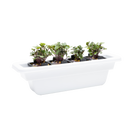
When comparing a hydroponic garden vs growing in pots indoors, hydroponics is the stronger performer for most indoor gardeners. Plants in hydroponic systems grow up to 50% faster than the same plants in soil, and you can harvest leafy greens in as few as 21 days. If space, speed, and clean growing conditions matter to you, hydroponics wins on all three counts.
That said, both methods can work indoors, and the right choice depends on what you want to grow, how much maintenance you're willing to do, and how much space you have. This guide breaks down the real differences between soil pots vs hydroponics indoors — growth rates, costs, effort, and results — so you can make a confident decision.
How Does Hydroponic Growth Rate vs Soil Actually Compare?
The speed difference between hydroponics and soil is measurable and consistent. In soil, plant roots spend energy searching for water and nutrients. In a hydroponic system, nutrients are delivered directly to the root zone in a water solution at a precisely controlled concentration — typically measured as electrical conductivity (EC) between 1.5 and 2.5 mS/cm for most vegetables. That efficiency translates directly into faster growth.
Research from NASA's Veggie project, which developed hydroponic systems for growing food aboard the International Space Station, confirmed that hydroponics allows reliable, accelerated plant production in controlled environments with minimal water use. NASA scientists found that hydroponic growing uses up to 98% less water than traditional soil farming — a figure that scales down meaningfully even to a countertop garden at home.
In practical terms: a basil plant started in a hydroponic system can reach harvest size in 3 to 4 weeks. The same plant in a pot of soil typically takes 6 to 8 weeks. Lettuce, herbs, and leafy greens show the most dramatic difference. Fruiting plants like tomatoes see a more modest but still real speed advantage.
The key variables in hydroponics are pH and nutrients. Keeping your reservoir pH between 5.5 and 6.5 ensures plants can absorb the nutrients in your water solution. Outside that range, plants lock out key minerals regardless of how much you add — one reason hydroponic beginners sometimes struggle before they understand this relationship.
What Are the Real Differences Between Soil Pots vs Hydroponics Indoors?
Soil gardening indoors has genuine advantages. It's forgiving. Soil buffers pH swings, retains moisture, and supports a microbial ecosystem that can recover from neglect. If you forget to water for a few days, most potted plants survive. It's also inexpensive to start — a bag of potting mix and a few containers costs under $20.
But soil indoors comes with tradeoffs. Overwatering is the most common cause of houseplant death, and it's easy to misjudge in a pot. Soil also attracts fungus gnats, can develop mold on the surface, and gets heavy if you're moving plants around. Nutrients deplete over time and require supplemental feeding after the first 4 to 6 weeks.
Hydroponics removes most of those variables. There's no soil, no gnats, and no guessing about whether your plant has enough phosphorus. A 2020 study from the University of the District of Columbia found that urban hydroponic systems produce significantly higher yields per square foot than container soil gardening, making them especially well-suited for apartments and small homes where growing space is limited.
The main commitment hydroponics requires is consistency: topping off your reservoir every few days, checking pH weekly, and refreshing your nutrient solution every 1 to 2 weeks. With a well-designed system, this takes about 10 minutes a week.
Which Indoor Gardening Method Is Right for Your Space?
The honest answer is that indoor gardening methods compared side by side show hydroponics outperforming soil for most edible crops — but soil remains a reasonable choice for certain plants and certain growers.
Choose soil pots if you're growing large fruiting plants that need deep root systems, if you enjoy the sensory experience of working with soil, or if you want a very low-cost entry point with minimal equipment.
Choose hydroponics if you want to grow food consistently year-round, harvest faster, keep your space clean, and see reliable results without guesswork. It's particularly strong for herbs, lettuce, spinach, kale, and microgreens — the plants most people actually want to grow indoors.
Rise Gardens systems are designed to make that choice easy. The Personal Rise Garden is a compact countertop system that fits on a kitchen counter and holds up to 12 plants — a practical starting point if you're new to hydroponics or working with limited space. For a larger harvest, The Rise Garden 3 supports up to 36 plants across three tiers and is built for households that want a serious year-round food supply. If design matters as much as function, The Rise Loft delivers furniture-grade construction alongside full hydroponic performance. All systems use pre-seeded seed pods that simplify setup and eliminate the mess of soil entirely.
Frequently Asked Questions
Does hydroponics really grow plants faster than soil indoors?
Yes, consistently. Plants in hydroponic systems typically grow 30% to 50% faster than the same varieties in soil because their roots access nutrients directly in the water rather than searching through a growing medium. Leafy greens and herbs show the most significant speed difference.
Is hydroponics more expensive than growing in soil pots?
The upfront cost is higher — a quality hydroponic system costs more than a bag of potting soil and some pots. However, hydroponic systems use up to 98% less water, produce higher yields per square foot, and eliminate ongoing costs like soil replacement and pesticides, so the value improves significantly over time.
Can beginners successfully grow with hydroponics indoors?
Yes. Modern home hydroponic systems are designed specifically to reduce complexity. The main things to monitor are reservoir water level, pH (keep it between 5.5 and 6.5), and nutrient concentration. Most beginners see their first harvest within 3 to 5 weeks of starting.