If you've been searching for a hydroponic green onion recipe that actually starts before the cutting board, you're in the right place. Growing green onions — also called scallions — hydroponically means cultivating them in a water-based nutrient solution rather than soil, delivering faster growth, cleaner harvests, and continuous snipping right from your kitchen counter. Green onions are one of the easiest and most rewarding crops for indoor hydroponic gardeners, and once you have a steady supply, the culinary possibilities are nearly endless. This guide walks you through the best homegrown scallion recipes, practical cooking tips, and everything you need to know to go from seed to plate with your indoor hydroponic setup.
Why Hydroponic Green Onions Are a Kitchen Game-Changer
Green onions grown hydroponically mature significantly faster than their soil-grown counterparts. In a well-maintained hydroponic system, scallions can reach harvest-ready size in as few as 3 to 4 weeks — roughly 30 to 50 percent faster than traditional soil growing. That speed matters when you want fresh ingredients on demand rather than a trip to the grocery store.
According to the USDA Agricultural Research Service, hydroponically grown vegetables can produce yields up to 11 times greater per square foot compared to conventional field farming. That kind of output from a compact indoor space means you'll rarely run out of fresh scallions for your favorite indoor garden green onion dishes.
Hydroponic green onions also tend to have a milder, cleaner flavor profile because they aren't competing with soil pathogens or variable outdoor conditions. The consistent pH (ideally between 6.0 and 7.0 for alliums), stable light exposure, and direct nutrient delivery — measured in electrical conductivity (EC) units, typically 1.4 to 1.8 mS/cm for green onions — all contribute to a more predictable and delicious harvest.
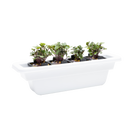
Ready to get started? The Personal Garden is a compact countertop hydroponic system perfectly sized for growing a continuous rotation of scallions alongside herbs and leafy greens.
How to Harvest Hydroponic Green Onions for Cooking
Harvesting correctly is the first step to great cooking results. Hydroponic green onions follow a "cut and come again" model — meaning you snip from the top, leaving at least 2 inches of the base intact, and the plant continues to grow new shoots. This regrowth cycle can repeat 3 to 5 times per plant before yields begin to taper.
For cooking purposes, here's what each part of the scallion does best:
- Dark green tops: Mild, grassy flavor — ideal raw as a garnish, folded into dips, or sprinkled over soups.
- Light green mid-section: Balanced bite — great for stir-fries, scrambled eggs, and grain bowls.
- White base: Sharpest, most pungent flavor — best cooked down in sauces, sautés, or caramelized as a topping.
Harvest in the morning before your grow lights have been on for more than an hour. Studies from controlled environment agriculture programs have shown that leafy alliums harvested in lower light temperatures retain higher concentrations of volatile sulfur compounds — the molecules responsible for that characteristic onion aroma and flavor depth.
Use clean scissors rather than pulling, rinse lightly under cold water, and pat dry. Your hydroponic scallions are ready for any of the recipes below.
What Are the Best Hydroponic Green Onion Recipes for Everyday Cooking?
This is where your indoor harvest really shines. Because hydroponic green onions are available year-round in small, steady quantities, they work best in recipes that use them as a fresh, flavorful accent rather than a primary bulk vegetable. Here are five standout homegrown scallion recipes to keep in rotation:
1. Scallion Pancakes (Pa Jun Style)
A savory Korean-inspired pan-fried flatbread that celebrates green onions as the star ingredient. Combine 1 cup all-purpose flour, 1 cup cold water, a pinch of salt, and 1 egg into a smooth batter. Fold in 1 cup of finely chopped hydroponic scallions (primarily the green tops). Pan-fry in a thin layer of sesame oil over medium-high heat for 3 to 4 minutes per side until golden and crisp. Serve with a dipping sauce of soy sauce, rice vinegar, a pinch of chili flakes, and a few raw scallion rounds on top.
2. Miso Soup With Fresh Scallion Garnish
One of the fastest indoor garden green onion dishes you can make. Dissolve 2 tablespoons of white miso paste into 3 cups of warm dashi or vegetable broth. Add cubed soft tofu and a small handful of dried wakame seaweed (rehydrated). Ladle into bowls and finish with a generous topping of thinly sliced green hydroponic scallion tops. The raw scallions add brightness and a pop of color that elevates the entire bowl.
3. Cream Cheese and Scallion Bagel Spread
Simple and consistently delicious. Blend 4 ounces of room-temperature cream cheese with 3 tablespoons of finely minced hydroponic green onion (all parts), a squeeze of lemon, cracked black pepper, and a pinch of garlic powder. Spread onto a toasted everything bagel. This is one of those homegrown scallion recipes that makes guests ask where you bought your scallions — and you get to say you grew them yourself.
4. Scallion and Ginger Fried Rice
A reliable weeknight staple and a perfect use for leftover rice. Heat 2 tablespoons of neutral oil in a wok or large skillet over high heat. Add 1 tablespoon of freshly grated ginger and the white parts of 4 to 5 hydroponic scallions; stir-fry for 60 seconds. Add 2 cups of day-old cooked rice and press flat to allow some crust to form. Drizzle with 2 tablespoons soy sauce and 1 teaspoon sesame oil. Remove from heat and top with the sliced green tops of your scallions and a fried egg. This is one of the most satisfying hydroponic onion cooking ideas for a quick, flavor-forward meal.
5. Green Onion Vinaigrette
Blend 4 scallions (roughly chopped), 2 tablespoons apple cider vinegar, 1 tablespoon Dijon mustard, 1 teaspoon honey, salt, and pepper with 1/3 cup of olive oil until smooth and emulsified. This bright, herby dressing works on grain salads, roasted vegetables, and grilled proteins. It stores refrigerated for up to five days and gets better as it sits.
Can You Use Hydroponic Green Onions the Same Way as Store-Bought Scallions?
Absolutely — and in most cases, your hydroponic harvest will outperform what you find packaged at the grocery store. Store-bought scallions are often cut days before you buy them, held in refrigeration, and may have lost some of their volatile aromatic compounds by the time they reach your kitchen. Research from the University of California Cooperative Extension found that fresh-cut leafy vegetables can lose up to 50 percent of their vitamin C content within three days of harvest when stored under typical retail conditions.
Your hydroponic scallions, snipped directly from your garden moments before cooking, retain maximum nutrition and flavor. They substitute 1:1 in any recipe calling for green onions, scallions, or spring onions. The only adjustment worth noting: homegrown hydroponic scallions may have a slightly more pronounced flavor — especially the white base — so taste as you go.
For growers who want to scale up their output and grow scallions alongside full rows of other vegetables, The Rise Garden 3 offers a full-size indoor hydroponic system with multiple growing tiers, giving you the capacity to maintain a steady supply of scallions, herbs, and greens simultaneously.
How to Maximize Flavor When Growing Scallions Hydroponically
The flavor of your scallions is directly tied to how well your hydroponic system is managed. Here are the variables that matter most:
Nutrient Solution
Green onions are moderate feeders. In hydroponics, nutrients refer to the mineral compounds dissolved in your water solution — nitrogen, phosphorus, potassium, calcium, and micronutrients — that replace what soil would otherwise provide. A well-balanced nutrient formula with slightly elevated nitrogen supports lush, flavorful green top growth. Using quality nutrients formulated specifically for hydroponic systems ensures your plants get the right ratios at every stage.
Light Exposure
Green onions thrive with 12 to 16 hours of light per day. LED grow lights in the 4000K to 6500K color temperature range promote dense, upright foliage. Insufficient light leads to etiolated (stretched, thin) scallions with reduced flavor compounds.
Water Temperature and pH
Maintain water temperature between 65°F and 72°F. pH should stay in the 6.0 to 7.0 range — too acidic or too alkaline and your plants can't absorb nutrients effectively, resulting in pale, weak growth regardless of how much nutrient solution is present.
Consistent Harvesting
Regular trimming actually stimulates more vigorous regrowth. If you let your scallions grow too tall without harvesting, the plant puts energy into seed production rather than lush leaf development. Snip regularly — even if you don't need the trimmings immediately — and freeze extras for later use in soups and stir-fries.
For gardeners who want maximum growing versatility without sacrificing home aesthetics, The Rise Loft is a premium indoor garden with furniture-grade design that fits seamlessly into living spaces while supporting a full hydroponic growing environment for scallions and beyond.
Growing Your Hydroponic Green Onions: From Seed Pod to Harvest
Getting your green onions started in a Rise Gardens system is straightforward. Each grow cycle begins with pre-seeded seed pods — small, self-contained growing media units designed to fit directly into your hydroponic garden's pod slots. No soil, no transplanting, and no germination guesswork involved.
Here's a general timeline for hydroponic green onion growth:
- Days 1–7: Germination. Seeds sprout and the first thin shoots emerge from the pod.
- Days 7–14: Establishment. Root systems develop and reach into the nutrient reservoir below.
- Days 14–28: Active growth. Plants reach 6 to 10 inches and develop their characteristic two-toned green-and-white coloring.
- Days 28+: First harvest window. Snip tops and allow regrowth to begin.
NASA's Veggie project — the space agency's ongoing research into growing food in controlled environments — identified green onions and scallions as among the most psychologically and nutritionally beneficial crops for closed-environment growing due to their fast growth cycle, consistent yield, and multi-harvest capability. That's validation that applies just as well to your kitchen countertop as it does to the International Space Station.
Keep a small journal noting your harvest dates, how many snips you get per plant, and which recipes you used them in. Over a few cycles, you'll develop an intuitive sense of exactly when your scallions are at peak flavor for each specific hydroponic onion cooking idea you want to pursue.
Frequently Asked Questions
How long does it take to grow green onions hydroponically?
Hydroponic green onions typically reach their first harvest in 3 to 4 weeks from seed germination under proper light and nutrient conditions. After the initial harvest, regrowth for subsequent cuttings happens in 1 to 2 weeks per cycle, giving you a near-continuous supply.
Can I freeze hydroponic green onions for use in recipes later?
Yes — green onions freeze well for use in cooked applications. Chop them to your desired size, spread in a single layer on a parchment-lined sheet to flash-freeze for one hour, then transfer to an airtight bag. Frozen scallions are best used within 6 months and work perfectly in soups, stir-fries, and sauces, though they won't have the crisp texture needed for raw garnishes.
Do hydroponic green onions taste different from soil-grown ones?
Hydroponic green onions tend to taste cleaner and slightly milder than soil-grown varieties, with a consistent flavor profile across harvests. Because they grow in a controlled environment without soil-borne variables, you get predictable results — though the white base retains its characteristic sharpness and is best used cooked when a more pungent flavor is needed.
What is the best way to store freshly harvested hydroponic scallions before cooking?
Wrap freshly cut hydroponic scallions loosely in a slightly damp paper towel and store them in the crisper drawer of your refrigerator — they'll stay fresh and flavorful for up to 7 to 10 days. For the best flavor, harvest just before cooking when possible, since aromatic compounds begin to dissipate shortly after cutting.