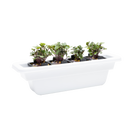
A hydroponic lettuce wraps recipe is exactly what it sounds like: a fresh, crispy, flavor-packed meal where the star ingredient — the lettuce — comes straight from your own indoor hydroponic garden. Hydroponics is a method of growing plants in a nutrient-rich water solution without soil, and it produces lettuce that is often crisper, cleaner, and more nutrient-dense than store-bought alternatives. Whether you're pulling leaves from a countertop setup or a full-size system in your living room, the experience of wrapping a savory filling inside lettuce you grew yourself is genuinely hard to beat. This guide walks you through everything: which lettuce varieties work best, a go-to filling recipe, fresh herb upgrades from your indoor garden, and the tips you need to keep a steady harvest going all year long.
Why Homegrown Hydroponic Lettuce Is Perfect for Lettuce Wraps
Not all lettuce is built for wrapping. You need leaves that are large, pliable, and strong enough to hold a filling without tearing — and that's exactly what a well-tended hydroponic plant delivers. Varieties like Butterhead (also called Boston or Bibb lettuce) and Romaine are the top choices. Butterhead produces wide, cup-shaped leaves with a soft, buttery texture, while Romaine offers a sturdier, more upright leaf that holds heavier fillings with ease.
Hydroponic lettuce grows significantly faster than soil-grown lettuce. Under optimized indoor conditions, most lettuce varieties are ready to harvest in 30 to 45 days from transplant — roughly twice as fast as conventional outdoor growing. That means you can maintain a near-constant supply of fresh leaves without ever making a grocery run.
The quality difference is measurable, too. A 2021 study published in the journal Horticulturae found that hydroponically grown lettuce had higher levels of antioxidants and vitamin C compared to field-grown counterparts when grown under full-spectrum LED lighting. NASA's Veggie project, which has been growing lettuce aboard the International Space Station since 2014, has consistently demonstrated that controlled-environment agriculture produces safe, nutritious, and high-quality leafy greens — proof that you don't need sunlight or soil to grow exceptional produce.
If you're ready to start growing your own wrap-ready lettuce, the Personal Garden is a compact countertop hydroponic system that fits in any kitchen and supports up to nine plant pods at once — plenty of lettuce and herbs for weekly wrap nights.
What You Need: Hydroponic Lettuce Wraps Recipe (Full Instructions)
This recipe serves four people and comes together in under 30 minutes. The filling is savory, lightly sweet, and deeply satisfying — it pairs beautifully with the mild, clean flavor of homegrown lettuce.
Ingredients
For the lettuce wraps:
- 12 to 16 large Butterhead or Romaine lettuce leaves, freshly harvested from your hydroponic garden
- 1 lb ground chicken, turkey, or crumbled firm tofu (for a plant-based version)
- 1 cup finely diced water chestnuts (one 8 oz can, drained)
- 1 cup shredded carrots
- 3 green onions, thinly sliced
- 3 cloves garlic, minced
- 1 tablespoon fresh ginger, grated
- 2 tablespoons sesame oil
- 3 tablespoons low-sodium soy sauce or tamari
- 1 tablespoon rice vinegar
- 1 tablespoon hoisin sauce
- 1 teaspoon chili garlic sauce (optional, for heat)
- Fresh basil, mint, or cilantro from your indoor herb garden (about ¼ cup, loosely packed)
Instructions
- Harvest your lettuce: About 30 minutes before cooking, harvest your lettuce leaves. Gently pull outer leaves from the base, rinse with cool water, and pat dry. Refrigerating them briefly will make them extra crisp.
- Cook the filling: Heat sesame oil in a large skillet or wok over medium-high heat. Add garlic and ginger and stir-fry for 60 seconds until fragrant.
- Add protein: Add ground chicken, turkey, or crumbled tofu. Cook, breaking it apart, until browned and cooked through — about 7 to 8 minutes.
- Season and finish: Stir in water chestnuts, shredded carrots, soy sauce, rice vinegar, hoisin sauce, and chili garlic sauce if using. Toss everything together and cook for another 2 minutes. Taste and adjust seasoning.
- Add green onions: Remove from heat and fold in the sliced green onions.
- Assemble and serve: Spoon about 2 to 3 tablespoons of filling into each lettuce leaf. Top with fresh basil, mint, or cilantro from your indoor herb garden. Serve immediately.
Nutritional Snapshot (per serving, approx.)
Using ground chicken: approximately 290 calories, 28g protein, 12g carbohydrates, 14g fat. Using tofu: approximately 210 calories, 16g protein, 15g carbohydrates, 10g fat.
How to Grow the Best Indoor Garden Lettuce Wrap Filling Ingredients
The filling in these wraps is good. The filling made entirely from homegrown ingredients is exceptional. Beyond lettuce, your hydroponic garden can supply several components that elevate this recipe dramatically.
Fresh Herbs That Transform the Recipe
Fresh herb lettuce wraps are a hydroponics success story. Basil, mint, and cilantro all thrive in hydroponic conditions and grow faster indoors than in most outdoor herb gardens. A few leaves of Thai basil add a subtle anise flavor that cuts through the richness of the filling. Fresh mint adds brightness. Cilantro brings an earthy, citrusy note that ties everything together.
These herbs need slightly different care than lettuce. Basil prefers warmer root temperatures (around 70°F) and slightly higher electrical conductivity (EC) in the nutrient solution — roughly 1.6 to 2.0 mS/cm. Mint is extremely vigorous and grows well at a slightly lower EC of 1.2 to 1.6 mS/cm. The Rise Gardens app provides personalized guidance on EC and pH targets for every plant in your system, taking the guesswork out of multi-crop growing.
Green Onions from Your Hydroponic System
Green onions (also called scallions) are one of the most practical plants to grow hydroponically. They are ready to harvest in as little as 21 days and can be trimmed and allowed to regrow multiple times from the same pod. Adding a dedicated pod or two of green onions to your setup means you'll rarely need to buy them at the store again.
If you're growing multiple crop types simultaneously, the The Rise Garden 3 is a full-size indoor hydroponic system with three tiers and space for up to 36 plant pods — enough to grow lettuce, herbs, and green onions all at once and keep your kitchen stocked year-round.
What Is the Best Lettuce Variety for Hydroponic Lettuce Wraps?
This is one of the most common questions from new hydroponic gardeners, and the answer depends on your filling style and personal preference — but there are clear leaders.
Butterhead lettuce is the gold standard for lettuce wraps. Its leaves form a natural cup shape, making them ideal for holding fillings without spillage. The texture is tender but not flimsy, and the flavor is mild and slightly sweet — it won't compete with your seasoning. In hydroponic systems, Butterhead typically reaches harvest size in 35 to 40 days.
Romaine lettuce is the better choice if you prefer wraps that are more structured and easy to eat on the go. Romaine hearts produce long, curved leaves that cradle fillings securely. Romaine also has a slightly higher water content than Butterhead, which means the leaves stay fresh longer after harvest — helpful if you're prepping wraps for meal prep.
Green leaf and red leaf lettuce can work but tend to be too delicate and irregularly shaped to wrap reliably. They're better used as supplemental garnish leaves layered inside your Butterhead or Romaine wraps.
All of these varieties are available as Rise Gardens seed pods, pre-seeded and ready to drop into your system. Each pod is formulated for hydroponic growing, with the seed already embedded in a specially designed growth medium that supports healthy root development from day one.
How Do You Keep a Steady Supply of Lettuce Growing Year-Round?
The key concept here is succession planting — starting new seed pods every one to two weeks so that as one plant reaches harvest maturity, another is just getting started. With a multi-pod system, you can stagger your planting schedule so you always have lettuce at multiple stages of growth at any given time.
Here's what a simple succession schedule looks like for lettuce wraps:
- Week 1: Plant four Butterhead pods
- Week 3: Plant four more Butterhead pods
- Week 5: Harvest first batch; plant four more pods
- Repeat every two weeks
This approach ensures you have 8 to 12 mature leaves available every week without any gaps in supply. It also prevents waste — lettuce left on the plant too long will bolt (send up a flower stalk), which makes the leaves bitter and less suitable for wraps.
To maintain healthy growth throughout the cycle, your nutrient solution is critical. Lettuce thrives at a pH of 5.5 to 6.5 and an EC (electrical conductivity, a measure of nutrient concentration) of 0.8 to 1.2 mS/cm. Using high-quality nutrients formulated specifically for hydroponic leafy greens ensures your plants get the right balance of nitrogen, potassium, calcium, and micronutrients at each stage of growth.
For those who want a beautifully designed system that fits seamlessly into a home or apartment, The Rise Loft is a premium indoor garden with furniture-grade design — it looks like a piece of home decor and functions as a high-performance growing system capable of supporting a full lettuce and herb rotation.
Tips for Getting the Most Flavor From Fresh Herb Lettuce Wraps Hydroponics
Growing herbs hydroponically gives you an advantage that store-bought herbs simply can't match: you harvest at peak freshness, often within hours of eating. That matters because volatile aromatic compounds — the molecules responsible for the flavor and scent of herbs like basil and mint — begin to degrade almost immediately after harvest. Studies from the University of California Cooperative Extension have documented that fresh basil loses up to 50% of its key flavor compounds within 24 hours of harvest under ambient storage conditions.
Here are a few techniques that maximize flavor in your wraps:
- Harvest herbs in the morning — aromatic oil concentration in leaves is highest before midday heat (even indoors, this pattern holds under grow lights that simulate day cycles).
- Tear, don't chop — tearing basil and mint by hand rather than cutting with a knife reduces oxidation at the cut edges and preserves more of the aromatic compounds.
- Add herbs after cooking — heat destroys volatile compounds quickly. Add your fresh basil, mint, and cilantro as a topping after the filling is cooked and slightly cooled.
- Layer textures — use one herb as a base inside the lettuce leaf, spoon filling on top, and finish with a second herb as a garnish. The layering creates a more complex flavor experience in each bite.
According to the USDA's Agricultural Research Service, leafy herbs grown under controlled indoor lighting conditions can contain 20 to 40% higher concentrations of certain phytonutrients compared to field-grown equivalents, particularly when LED lighting spectra are optimized for secondary metabolite production. Your indoor herb garden isn't just convenient — it's producing genuinely superior ingredients.
Frequently Asked Questions
Can I grow lettuce hydroponically if I've never gardened before?
Yes — lettuce is consistently ranked as one of the easiest crops for first-time hydroponic growers. It has a short growth cycle (30 to 45 days), tolerates minor fluctuations in nutrient levels, and doesn't require pollination or pruning. Rise Gardens systems are designed with beginners in mind, with guided app support that tells you exactly when to add nutrients, when to top off water, and when your plants are ready to harvest.
How many lettuce plants do I need to make wraps every week?
For weekly lettuce wraps for two to four people, plan on harvesting 12 to 16 large leaves per meal. A single mature Butterhead plant typically yields 8 to 12 outer leaves per harvest, so two to three active plants — refreshed with succession planting every two weeks — will keep you consistently supplied. If you're cooking for larger groups more frequently, growing four to six plants simultaneously is a reliable approach.
What is the ideal pH for growing hydroponic lettuce?
Lettuce grows best at a pH between 5.5 and 6.5, with 6.0 being the sweet spot most hydroponic growers target. pH (potential hydrogen) is a measure of acidity or alkalinity on a scale of 0 to 14 — at the right pH, nutrient molecules are in their most bioavailable form, meaning your plants can absorb them efficiently. Rise Gardens nutrients are formulated to work within this range, and the Rise Gardens app provides reminders to check and adjust your water pH regularly.
Can I use any type of lettuce for this hydroponic lettuce wraps recipe?
Technically yes, but results vary significantly by variety. Butterhead and Romaine are the two best choices because of their leaf size, shape, and structural integrity. Loose-leaf varieties like green leaf or oak leaf lettuce can be used as a double-layer wrap — place two leaves together to compensate for their thinner texture. Iceberg lettuce also works well structurally but takes longer to mature hydroponically and produces less flavor complexity than Butterhead.