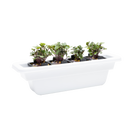
This hydroponic herb compound butter roasted beets recipe brings together two of the most rewarding parts of indoor gardening: harvesting your own fresh herbs and transforming them into something spectacular at the table. Compound butter — a mixture of softened butter blended with fresh herbs, aromatics, and seasoning — is one of the simplest ways to elevate roasted root vegetables, and when those herbs come straight from your own hydroponic garden, the flavor difference is genuinely noticeable. Roasted beets with herb butter make an impressive side dish or light vegetarian main, and growing the herbs yourself means you control exactly what goes into every bite.
Why Hydroponic Herbs Make the Best Compound Butter
The quality of your compound butter starts with the quality of your herbs — and hydroponic herbs consistently outperform their grocery-store counterparts in both flavor intensity and freshness. Hydroponics is a method of growing plants in a nutrient-rich water solution rather than soil, which means plant roots have direct, uninterrupted access to the exact nutrients they need. Because there is no soil acting as a buffer, plants in a hydroponic system can uptake minerals and water more efficiently, which translates to faster growth and more concentrated flavor compounds.
Research from the University of Mississippi found that hydroponically grown basil contained measurably higher concentrations of essential oils — the compounds responsible for flavor and aroma — compared to soil-grown basil under the same lighting conditions. Those essential oils are exactly what you want when you're making an herb butter destined to melt over steaming roasted beets.
For this recipe, the best herbs to grow hydroponically are thyme, rosemary, chives, parsley, and tarragon. All five thrive in an indoor hydroponic setup, and all five work beautifully in a compound butter. If you're just getting started, the Personal Garden — Rise Gardens' compact countertop hydroponic system — is a practical way to keep three to four herb varieties growing year-round without dedicating significant counter space.
What You'll Need: Ingredients for Roasted Beets with Herb Butter
This recipe serves four as a side dish. The ingredient list is short by design — when produce and herbs are this fresh, simplicity is the right strategy.
For the roasted beets:
- 6 medium beets (a mix of red, golden, and Chioggia adds color contrast), scrubbed and trimmed
- 2 tablespoons olive oil
- ½ teaspoon kosher salt
- ¼ teaspoon freshly ground black pepper
- 4–6 sprigs fresh thyme (harvested from your indoor garden)
For the hydroponic herb compound butter:
- 8 tablespoons (1 stick) unsalted butter, softened to room temperature
- 1 tablespoon fresh chives, finely minced
- 1 tablespoon fresh flat-leaf parsley, finely chopped
- 1 teaspoon fresh thyme leaves, stripped from stems
- ½ teaspoon fresh tarragon, finely chopped (optional but recommended)
- 1 small clove garlic, microplaned or very finely minced
- ½ teaspoon lemon zest
- ¼ teaspoon flaky sea salt
- Pinch of white pepper
Optional garnish: additional fresh chives, a drizzle of good balsamic glaze, or crumbled goat cheese.
Step-by-Step: How to Make This Indoor Garden Beet Recipe
Getting the compound butter right requires a bit of patience — mostly just waiting for butter to soften — but the technique itself takes less than ten minutes. The roasting time is hands-off, which makes this a relaxed recipe to pull together on a weekend afternoon.
Step 1: Make the compound butter (up to 3 days ahead). Place the softened butter in a medium bowl. Add all herb ingredients, garlic, lemon zest, flaky salt, and white pepper. Using a fork or silicone spatula, mash and stir everything together until fully combined and the herbs are evenly distributed throughout. Taste and adjust seasoning. Lay a sheet of plastic wrap flat on your counter, spoon the butter onto the wrap in a rough log shape, and roll it tightly into a cylinder about 1.5 inches in diameter. Twist the ends closed like a candy wrapper and refrigerate for at least one hour. The butter can be made up to three days ahead and kept refrigerated, or frozen for up to two months.
Step 2: Prep and roast the beets. Preheat your oven to 400°F (205°C). If you prefer not to stain your cutting board, keep the beet skins on during roasting and peel after — the skins slip off easily once roasted. Toss scrubbed beets with olive oil, kosher salt, and pepper. Place in a baking dish or on a sheet pan, tuck the thyme sprigs around them, and cover tightly with aluminum foil. Roast for 45–55 minutes, until a paring knife pierces the largest beet with no resistance. Remove from the oven and let rest, still covered, for 10 minutes.
Step 3: Peel and slice. Using paper towels or a clean cloth you don't mind staining, rub the skins off the beets. Slice into ½-inch rounds or wedges, depending on your preference.
Step 4: Finish with herb butter. Arrange the warm beet slices on a serving platter. Slice two or three rounds of compound butter from your refrigerated log and lay them directly on top of the hot beets. The warmth of the beets will melt the butter within about 60 seconds, creating a glossy, herb-flecked sauce that coats every slice. Serve immediately.
How Do You Grow Herbs Indoors for Year-Round Cooking?
This is the question that turns a single recipe into a permanent upgrade to your kitchen. Growing herbs indoors hydroponically means you're never more than a few snips away from the freshest possible flavoring — regardless of what month it is or what's available at the grocery store.
The basics of indoor hydroponic herb gardening come down to four variables: light, nutrients, pH, and water temperature. Most culinary herbs prefer a pH between 5.5 and 6.5 — pH being a measure of how acidic or alkaline your water solution is on a scale of 0 to 14. When pH drifts outside that range, nutrient uptake stalls even if the nutrients are present. Electrical conductivity (EC) measures nutrient concentration in the solution; for herbs, a target EC of 1.6–2.2 mS/cm is generally appropriate. Rise Gardens' pre-formulated nutrients are designed to keep these values in the right range without requiring you to become a chemistry expert.
Lighting is the other key factor. NASA's Veggie project — the space agency's ongoing research into plant growth aboard the International Space Station — has demonstrated that LED grow lights tuned to specific red and blue wavelengths can support healthy plant development without natural sunlight. Rise Gardens' LED systems are built on this same science, providing full-spectrum light that keeps herbs compact, flavorful, and productive.
For a serious herb-growing setup that doubles as a design feature in your home, The Rise Loft is worth considering. It's a furniture-grade hydroponic garden with the capacity to grow a wide variety of herbs simultaneously — enough to keep your kitchen fully stocked and your compound butter game strong through every season.
Getting started is straightforward with pre-seeded seed pods, which eliminate the germination guesswork and let you go from setup to first harvest in as little as three to four weeks for fast-growing herbs like chives and parsley.
Nutrition and Flavor: What Makes This Homegrown Herb Roasted Root Vegetable Dish Worth Making
Beets are one of the most nutrient-dense root vegetables you can put on a plate. According to USDA FoodData Central, one cup of cooked beets provides approximately 3.8 grams of dietary fiber, 442 milligrams of potassium, and 136 micrograms of folate — representing roughly 34% of the daily recommended intake for adults. Beets also contain betalains, the pigment compounds responsible for their vivid color, which have been studied for antioxidant properties.
Adding herb compound butter introduces fat-soluble benefits alongside flavor. The herbs themselves contribute meaningful micronutrients: fresh parsley is one of the most concentrated food sources of vitamin K, with just two tablespoons delivering over 100% of the daily recommended intake according to USDA data. Fresh thyme provides manganese and vitamin C, while chives are a reliable source of vitamin A.
This homegrown herb roasted root vegetables dish is also flexible enough to accommodate dietary preferences. For a dairy-free version, substitute a high-quality plant-based butter — the herb mixture works equally well. For a more substantial plate, serve the beets over a base of labneh or whipped ricotta with the melting herb butter pooling over everything.
Can You Pair Roasted Beets with Herb Butter for Special Occasions?
Absolutely — and this is where having a productive indoor herb garden really pays off. Compound butter scales effortlessly. One batch (one stick of butter) is enough for four servings, but you can triple or quadruple the recipe and freeze individual logs, each labeled with its herb combination. Having compound butter in your freezer means a restaurant-quality finishing touch is always one slice away.
For a dinner party, consider a roasted beet platter with two types of compound butter side by side: one with the thyme-parsley-chive blend from this recipe, and a second variation using rosemary, roasted garlic, and a pinch of smoked paprika for a more savory, earthy profile. Both work beautifully with the sweetness of roasted beets, and the visual contrast makes for a genuinely impressive presentation.
This recipe also pairs well as part of a larger grain bowl — slice the roasted beets over farro or freekeh, add arugula, toasted walnuts, and crumbled feta, then finish with compound butter rounds instead of a vinaigrette. The butter melts into the warm grains and functions as both fat and sauce in a single component.
If you're ready to make this dish a regular feature of your table rather than an occasional treat, The Rise Garden 3 gives you a full-size hydroponic growing system with the capacity to keep multiple herb varieties in continuous production — the kind of setup that makes spontaneous cooking with fresh homegrown ingredients genuinely realistic on any weeknight.
Frequently Asked Questions
What herbs work best in a hydroponic herb compound butter?
Chives, flat-leaf parsley, thyme, tarragon, and rosemary are the top performers in both hydroponic systems and compound butter recipes. Chives and parsley grow quickly and can be harvested within three to four weeks of starting seed pods, making them the fastest path from indoor garden to finished butter. Avoid overpowering herbs like oregano as the dominant flavor — use them as a small accent alongside milder herbs instead.
How long does compound butter made with fresh hydroponic herbs last?
Refrigerated compound butter wrapped tightly in plastic wrap will keep for up to one week. Frozen compound butter maintains quality for up to two months — slice it into rounds before freezing so you can pull individual portions as needed without thawing the entire log. Always label your frozen butter with the herb combination and date.
Do beets grow well in a hydroponic system?
Beets can be grown hydroponically, though root vegetables require a deeper growing medium than leafy herbs and may not be the most practical choice for compact countertop systems. They do best in deep water culture or nutrient film technique setups with sufficient root space. For most home cooks, sourcing beets from a local farm or market while growing the herbs hydroponically is the most practical approach — and still delivers the freshest possible flavor combination in this recipe.
What is the correct pH for growing culinary herbs hydroponically?
Most culinary herbs thrive at a pH between 5.5 and 6.5 in a hydroponic solution. pH is a measure of acidity or alkalinity on a 0–14 scale, with 7.0 being neutral. When pH rises above 6.5, herbs may show yellowing leaves due to nutrient lockout — a condition where nutrients are present in the water but chemically unavailable to the plant roots. Rise Gardens' nutrient system is formulated to support the appropriate pH range, and the garden app provides guidance on monitoring and adjusting your levels.