Hydroponic herb compound butter roasted cabbage is exactly what it sounds like: caramelized, tender cabbage steaks slathered in a rich, herb-packed butter made from fresh herbs you grew yourself indoors — no outdoor garden or farmers market required. Compound butter is simply softened butter blended with herbs, aromatics, and seasonings, and when that butter melts into the charred edges of a roasted cabbage steak, the result is nothing short of extraordinary. If you've been growing herbs in an indoor hydroponic system and wondering what to do with an abundance of chives, thyme, and parsley, this roasted cabbage recipe is your answer.
Why Hydroponic Herbs Make the Best Compound Butter
The secret to a truly standout herb butter cabbage dish lies in the quality of the herbs themselves. Hydroponic herbs — those grown in a soil-free system where plant roots sit in or are misted with a nutrient-rich water solution — consistently deliver more intense flavor and higher nutrient density than many store-bought alternatives.
According to research from the University of Nevada, Reno, hydroponically grown herbs can contain up to 50% more volatile aromatic compounds than their field-grown counterparts under optimal controlled conditions. Those aromatic compounds are exactly what give your compound butter its bold, layered flavor. When you snip chives, thyme, rosemary, or tarragon from your own indoor system minutes before cooking, you're capturing peak freshness that simply can't be replicated by a plastic clamshell that's been refrigerated for two weeks.
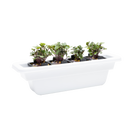
Growing herbs hydroponically is also remarkably efficient. The USDA reports that hydroponic production can use up to 90% less water than conventional soil farming — a meaningful benefit whether you're growing on a countertop or in a dedicated indoor garden setup. If you're just getting started with herbs at home, a compact system like the Personal Garden lets you grow up to 12 plant pods on your kitchen counter, putting fresh thyme and parsley within arm's reach of your cutting board year-round.
What Herbs Work Best for Compound Butter?
Not all herbs behave the same way in compound butter, and part of the fun of having an indoor garden is experimenting with combinations. Here's a breakdown of what works well and why:
- Chives: Mild onion flavor that blends smoothly into butter without overpowering. One of the fastest-growing herbs in a hydroponic system, often ready to snip in as little as 3–4 weeks from germination.
- Thyme: Earthy and slightly floral, thyme holds up beautifully under the high heat of roasting. Its oils infuse directly into the butter as it melts.
- Flat-leaf parsley: Bright and grassy, parsley adds color and a clean finish that balances richer herbs.
- Rosemary: Use sparingly — a little goes a long way. Its piney, resinous oils are intensely concentrated in hydroponically grown plants.
- Tarragon: A slightly underrated choice that brings a subtle anise note, pairing beautifully with the natural sweetness of roasted cabbage.
- Lemon balm or lemon thyme: Adds brightness and acidity without adding liquid, which keeps the butter texture firm.
For this roasted cabbage recipe, a combination of chives, thyme, and parsley hits the sweet spot — bold enough to stand up to the cabbage's caramelized bitterness, but balanced enough not to compete with it. If you want to expand your herb repertoire, seed pods are available in dozens of herb varieties so you can experiment across seasons without ever stepping outside.
How to Make Hydroponic Herb Compound Butter Roasted Cabbage
This indoor garden cabbage recipe comes together in under an hour, and most of that time is hands-off while the oven does the work. Below is the full method.
Ingredients
For the herb compound butter:
- 8 tablespoons (1 stick) unsalted butter, softened to room temperature
- 2 tablespoons fresh chives, finely minced
- 1 tablespoon fresh thyme leaves, stripped from stems
- 1 tablespoon fresh flat-leaf parsley, finely chopped
- 1 teaspoon fresh rosemary, minced (optional)
- 2 cloves garlic, grated or finely minced
- 1 teaspoon lemon zest
- ½ teaspoon kosher salt
- ¼ teaspoon freshly ground black pepper
- Pinch of red pepper flakes (optional)
For the roasted cabbage:
- 1 medium head of green cabbage (approximately 2 lbs)
- 2 tablespoons olive oil
- 1 teaspoon kosher salt
- ½ teaspoon black pepper
- Flaky sea salt for finishing
Instructions
- Make the compound butter first. In a medium bowl, combine softened butter, all minced herbs, grated garlic, lemon zest, salt, pepper, and pepper flakes if using. Use a fork or rubber spatula to mash and fold until everything is evenly incorporated. Taste and adjust seasoning. Spoon the butter onto a sheet of plastic wrap, roll into a log shape about 1.5 inches in diameter, twist the ends closed, and refrigerate for at least 20 minutes to firm up. The butter can be made up to 5 days in advance and stored refrigerated, or frozen for up to 3 months.
- Prep the cabbage. Preheat your oven to 425°F (220°C). Remove any damaged outer leaves from the cabbage. Keeping the core intact (it holds the steaks together), slice the cabbage from top through core into 1-inch-thick rounds. You should get 4–5 good steaks from one head. Place on a large rimmed baking sheet.
- Season and roast. Brush both sides of each cabbage steak generously with olive oil and season with salt and pepper. Roast for 20 minutes on the first side until deeply golden and charred at the edges. Flip carefully using a wide spatula and roast for another 12–15 minutes.
- Add the herb butter. Remove the baking sheet from the oven. Slice rounds of compound butter and place one or two coins directly on top of each hot cabbage steak. Return to the oven for just 2–3 minutes until the butter is fully melted and bubbling into the cabbage. Alternatively, remove from the oven and let the butter melt on the residual heat of the pan for a slightly less caramelized finish.
- Finish and serve. Transfer to a serving platter, spoon any pooled herb butter from the pan over the top, finish with flaky sea salt, and serve immediately.
How Do You Grow Cabbage Indoors Hydroponically?
Cabbage is a brassica that grows larger than most herbs, but that doesn't mean it's off-limits for indoor hydroponic gardening. Systems with deeper nutrient reservoirs and adequate vertical clearance — like The Rise Garden 3 — provide the right environment for brassicas to develop properly. Cabbage plants thrive in nutrient solutions maintained at an electrical conductivity (EC) of 2.5–3.0 mS/cm and a pH level between 6.0 and 6.5. EC, or electrical conductivity, measures how many dissolved nutrients are present in your water; keeping it in range ensures your cabbage gets everything it needs without nutrient burn.
Light is another critical factor. Cabbage needs approximately 14–16 hours of light per day during the vegetative phase. Indoor LED grow lights in a quality hydroponic system deliver the full spectrum your plants need — something natural window light rarely provides consistently, especially in winter months. NASA's Veggie project, which has been growing leafy brassicas aboard the International Space Station since 2014, demonstrated that controlled-environment agriculture with targeted LED lighting can produce healthy, harvestable crops in as little as 33 days — a compelling proof point for what's possible when light, water, and nutrients are dialed in precisely.
For home growers, maintaining the right nutrients in your hydroponic reservoir is the single biggest variable you can control. Cabbage is a heavy feeder compared to herbs, so check your EC levels every few days and top off your reservoir with fresh nutrient solution as needed.
Make-Ahead Tips and Flavor Variations for Herb Butter Cabbage
One of the most practical aspects of this herb butter cabbage recipe is how well each component holds up ahead of time. The compound butter, as noted above, can be made days in advance. In fact, a well-stocked freezer of herb butter logs — each labeled with its herb combination — is one of the best payoffs of maintaining an indoor garden year-round. When your thyme and rosemary are producing more than you can use fresh, rolling them into compound butter and freezing is a zero-waste approach that keeps your harvest alive for months.
A few variations worth trying:
- Miso-herb butter: Blend 1 tablespoon of white miso paste into the compound butter for a umami-rich depth that pairs exceptionally well with the roasted bitterness of cabbage.
- Spicy herb butter: Add ½ teaspoon of smoked paprika and a full teaspoon of red pepper flakes for a smoky heat version.
- Citrus-forward herb butter: Double the lemon zest and add a tablespoon of fresh dill or lemon balm from your garden for a brighter, spring-leaning profile.
- Brown butter base: Instead of softened raw butter, brown the butter first, cool it slightly until it re-solidifies, then blend in herbs. The nutty, toasty quality of brown butter takes this roasted cabbage recipe to another level entirely.
If you want a larger growing operation to support more adventurous cooking like this, the furniture-grade The Rise Loft offers a beautifully designed floor-standing system that lets you grow significantly more varieties at once — enough to keep a rotating stock of every herb in this recipe plus plenty of extras for freezing.
Serving Suggestions and Nutritional Notes
This herb butter cabbage dish functions equally well as a side or a main. As a side, it pairs beautifully with roast chicken, pan-seared salmon, or grilled sausages. As a vegetarian main, serve two cabbage steaks alongside a grain like farro or white beans cooked with garlic and broth.
From a nutritional standpoint, cabbage is a genuinely impressive vegetable. According to USDA FoodData Central, one cup of raw green cabbage contains approximately 22 calories, 2.2 grams of fiber, and 54% of the recommended daily value of vitamin C. Roasting concentrates the natural sugars and deepens the flavor without meaningfully reducing the fiber content, making this a dish that's as nourishing as it is satisfying.
The fresh herbs in the compound butter add more than flavor — thyme, for instance, contains the phenolic compound thymol, which has been studied for its antimicrobial properties. Parsley is a meaningful source of vitamin K, delivering approximately 547 micrograms per 100 grams according to USDA data, well above the daily recommended intake for most adults.
Leftovers reheat well. Place cabbage steaks on a baking sheet, add a fresh coin of compound butter on top, and warm in a 375°F oven for 8–10 minutes. The butter re-melts and refreshes the whole dish.
Frequently Asked Questions
Can I use dried herbs instead of fresh for compound butter?
Dried herbs can work in a pinch, but they won't deliver the same vibrant color, aroma, or texture. If you do substitute, use roughly one-third the amount since dried herbs are more concentrated — so 1 tablespoon of fresh thyme becomes 1 teaspoon dried. Fresh herbs from a hydroponic system are particularly superior here because they're harvested at peak oil content, which is exactly what makes compound butter taste exceptional.
How long does compound butter last in the refrigerator?
Properly wrapped herb compound butter keeps in the refrigerator for up to 5 days and in the freezer for up to 3 months. For freezer storage, wrap the butter log tightly in plastic wrap and then a layer of aluminum foil to prevent freezer burn. Slice off rounds directly from the frozen log — no need to thaw the whole thing.
What is the best pH for growing herbs hydroponically?
Most culinary herbs — including basil, thyme, chives, and parsley — thrive in a hydroponic nutrient solution with a pH between 5.5 and 6.5. pH is a measure of how acidic or alkaline your water is on a scale of 0–14, and keeping it in the right range ensures your plant roots can absorb the nutrients available in the solution. A pH that's too high or too low will lock out key nutrients even if they're present in the water, leading to yellowing leaves and stunted growth.
Can I roast cabbage on a grill instead of in the oven?
Absolutely — and grilled cabbage steaks with compound butter are spectacular. Brush the steaks with olive oil and grill over medium-high direct heat for 5–6 minutes per side until char marks develop and the cabbage is tender. Add the herb butter compound during the last minute of grilling with the lid closed so it melts fully. The smokiness from the grill adds another layer of complexity to the herb butter cabbage flavor profile.