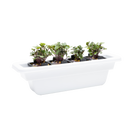
There are few things more satisfying than cracking into a perfectly roasted crab leg slicked with a glossy, herb-packed compound butter — especially when those herbs came from your own indoor garden. Hydroponic herb compound butter roasted crab legs is the kind of recipe that sounds restaurant-level ambitious but is genuinely achievable at home, particularly when you have a steady, year-round supply of fresh tarragon, chives, parsley, and thyme growing just a few feet from your stove. A compound butter is simply softened butter blended with aromatics, herbs, and seasonings, then chilled and sliced onto hot food. When those herbs are hydroponic — meaning grown in a nutrient-rich water solution rather than soil — the flavor intensity is noticeably sharper and cleaner. This guide walks you through growing the right herbs, building a perfect compound butter, and roasting crab legs that will make every guest at your table ask for the recipe.
Why Hydroponic Herbs Make the Best Compound Butter
Flavor starts at the molecular level, and hydroponic growing conditions give you real control over it. Plants grown in a hydroponic system absorb nutrients directly from water, bypassing the variable mineral content of outdoor soil. According to a study published by the University of Mississippi, hydroponically grown basil contained measurably higher concentrations of essential oils compared to soil-grown counterparts — and essential oils are exactly what give herbs their aroma and flavor punch.
For a compound butter, that potency matters. You want herbs that perfume the butter aggressively enough to compete with the briny, sweet richness of crab. Hydroponic tarragon carries its signature anise note more cleanly. Hydroponic chives are brighter and more pungent. Hydroponic flat-leaf parsley has a grassy freshness that dried parsley simply cannot replicate.
Beyond flavor, there is the matter of convenience. A fresh herb seafood recipe like this one demands herbs that are actually fresh — not a bunch that has been sitting in a refrigerator drawer for five days. When you grow herbs in a system like The Rise Garden 3, a full-size indoor hydroponic garden system capable of growing dozens of plants simultaneously, you harvest what you need at the moment you need it. No waste, no wilting, no emergency grocery run at 7 p.m.
Hydroponics also removes the seasonal barrier. Crab legs are available year-round at most seafood counters and warehouse stores, so there is no reason your herb supply should be the limiting factor. With an indoor garden running on a consistent light schedule and stable water temperature, your herbs grow roughly 30 to 50 percent faster than their soil-grown equivalents, according to NASA's Veggie project research, which has explored hydroponic growing in controlled environments since the early 2000s.
Which Herbs to Grow for This Indoor Garden Crab Recipe
Not every herb performs equally well in a compound butter, and not every herb is equally easy to grow hydroponically. Here is a focused lineup that works beautifully for this indoor garden crab recipe and thrives in a Rise Gardens system.
- French Tarragon: The classic pairing for seafood and butter. Its subtle licorice note lifts the richness of the compound butter without overwhelming the crab. Grows best at a pH between 5.5 and 6.5 in a hydroponic system.
- Chives: Mild onion flavor, bright green color, and one of the easiest herbs to maintain hydroponically. They regrow quickly after cutting, making them ideal for a recipe that calls for repeated harvests.
- Flat-Leaf Parsley: Acts as a flavor anchor in the butter, providing a clean herbal baseline. Rich in vitamin K and vitamin C. Grows well at an electrical conductivity (EC) level of 0.8 to 1.8 mS/cm.
- Thyme: Adds earthy depth and pairs naturally with lemon and garlic. Hydroponic thyme stays compact and productive with consistent light exposure of 14 to 16 hours per day.
- Lemon Balm (optional): A small handful brightens the entire butter and reinforces the citrus notes you will add with lemon zest. A pleasant surprise in a seafood compound butter.
You can start all of these from seed pods designed specifically for Rise Gardens systems. They arrive pre-seeded and ready to drop into your garden, with germination typically beginning within 3 to 7 days depending on the variety.
How Do You Make Hydroponic Herb Compound Butter for Seafood?
Making compound butter is a technique, not just a recipe. Once you understand the ratios and method, you can adapt it endlessly. This version is built specifically as a hydroponic herb compound butter seafood preparation — bold enough for crab, versatile enough to use on lobster, shrimp, or grilled fish.
Ingredients
- 1 cup (2 sticks) high-quality unsalted butter, room temperature
- 2 tablespoons fresh hydroponic tarragon, finely chopped
- 2 tablespoons fresh hydroponic chives, finely sliced
- 2 tablespoons fresh hydroponic flat-leaf parsley, finely chopped
- 1 tablespoon fresh hydroponic thyme leaves
- 1 tablespoon fresh hydroponic lemon balm, finely chopped (optional)
- 3 garlic cloves, minced and briefly sautéed to mellow sharpness
- Zest of 1 large lemon
- 1 tablespoon fresh lemon juice
- 1 teaspoon flaky sea salt (such as Maldon)
- ½ teaspoon freshly cracked black pepper
- Pinch of cayenne for gentle heat
Method
- Place softened butter in a large bowl. It should be soft enough that a spoon leaves an impression easily — not melted.
- Fold in all chopped herbs, sautéed garlic, lemon zest, lemon juice, salt, pepper, and cayenne. Mix thoroughly until the herbs are evenly distributed throughout the butter.
- Taste and adjust. More lemon zest for brightness, more salt for punch, more cayenne if you want heat.
- Lay a sheet of plastic wrap flat on your counter. Spoon the butter in a rough log shape along the bottom third of the wrap. Roll the wrap around the butter, twisting the ends to form a tight cylinder.
- Refrigerate for at least 2 hours or freeze for up to 3 months. The USDA notes that butter stored at 0°F remains safe indefinitely, though flavor quality is best within the first three months of freezing.
How Do You Roast Crab Legs with Compound Butter?
Roasting crab legs is one of the most underused cooking methods for shellfish. Most home cooks default to steaming or boiling, which works perfectly well but misses the caramelization and flavor concentration that dry oven heat provides. For this fresh herb seafood recipe, roasting is the move.
Ingredients
- 3 to 4 pounds king crab legs or snow crab legs (thawed if previously frozen)
- Half the compound butter log, sliced into rounds
- Extra lemon for finishing
- Flaky salt for garnish
Method
- Preheat your oven to 425°F. Line a large rimmed baking sheet with foil for easier cleanup.
- Using kitchen shears, cut along the top shell of each crab leg section, exposing the meat slightly. This allows the compound butter to melt directly into the flesh as it roasts.
- Arrange crab legs in a single layer on the baking sheet, cut side up. Place rounds of compound butter directly on the exposed meat and along the shells.
- Roast for 12 to 15 minutes, until the butter is fully melted, bubbling, and beginning to brown around the edges of the shell. The crab meat should be opaque and just heated through — since most crab legs are pre-cooked, you are reheating and flavoring rather than cooking from raw.
- Remove from oven and squeeze fresh lemon over everything immediately. Scatter a pinch of flaky salt across the top.
- Serve with the remaining compound butter on the side, softened, for extra dipping. Crusty bread to soak up the pan drippings is not optional — it is mandatory.
Snow crab legs are more budget-friendly and widely available, while king crab legs offer larger, sweeter meat. Either works beautifully with this compound butter. According to USDA FoodData Central, a 3-ounce serving of king crab provides 16 grams of protein, making this a genuinely nutrient-dense meal despite how indulgent it tastes.
Setting Up Your Indoor Garden for a Year-Round Herb Supply
The most practical investment you can make for recipes like this one is a reliable indoor herb garden. A Personal Garden is a compact countertop hydroponic garden that fits easily on a kitchen island or shelf and can support up to 12 plants at once — more than enough to keep tarragon, chives, parsley, and thyme all growing simultaneously.
If you cook with herbs regularly and want to expand into growing salad greens, edible flowers, or even small vegetables alongside your herbs, The Rise Loft offers a premium indoor garden with furniture-grade design that blends into a living room or dining room space without looking like a laboratory experiment. It is a serious growing system with a serious aesthetic.
Both systems use a recirculating nutrient-water solution, which means your plants receive consistent feeding without daily attention. The key metrics to monitor are pH (target range 5.5 to 6.5 for most herbs) and EC (electrical conductivity), which measures the concentration of dissolved nutrients in the water. Rise Gardens nutrients are formulated specifically for the system, taking the guesswork out of mixing ratios. A properly maintained system requires roughly 10 to 15 minutes of attention per week — a small time investment for the flavor payoff in recipes like this one.
NASA's Veggie project has demonstrated that controlled-environment agriculture using hydroponic systems can produce crops with consistent nutritional profiles and minimal resource use. Your indoor herb garden operates on the same fundamental principles that NASA researchers use to grow food in space — closed-loop water systems, calibrated light cycles, and precise nutrient delivery.
Serving, Storing, and Scaling This Recipe
This recipe scales cleanly. Double the compound butter batch and freeze half for next time. The butter keeps its flavor beautifully for up to 90 days in the freezer, meaning you do most of the herb-prep work once and coast on it for months.
For serving, set the table simply. Crab is a tactile, messy, communal food. Provide shell crackers, small picks, extra napkins, and a warm bowl of the remaining herb butter for dipping. The compound butter, when fully melted and mixed with the crab's natural juices in the pan, becomes something close to a light sauce — spoon it over the meat directly if you want every drop accounted for.
Leftover compound butter has endless uses beyond this recipe. Melt a round onto a grilled steak in the last minute of cooking. Toss it with roasted vegetables. Blend it into scrambled eggs. Spread it on sourdough toast under a fried egg. When you grow your own herbs hydroponically, compound butter stops being a special-occasion condiment and becomes a pantry staple you reach for constantly.
Frequently Asked Questions
Can I use dried herbs instead of fresh hydroponic herbs in compound butter?
You can, but the result will be noticeably less vibrant. Dried herbs have lost their volatile essential oils, which are responsible for the bright, aromatic quality that makes compound butter exceptional. If you must substitute, use one-third the volume of dried herbs compared to fresh, and add them to the butter at least 24 hours ahead to allow the flavors to rehydrate and bloom. Fresh hydroponic herbs are genuinely superior for this application because of their higher essential oil concentration.
What is the difference between hydroponically grown herbs and soil-grown herbs in terms of flavor?
Hydroponic herbs receive nutrients directly through water rather than extracting them from variable soil compositions, which tends to produce more consistent and often more concentrated flavor profiles. Research from the University of Mississippi found that hydroponically grown basil had higher essential oil content than soil-grown basil. For culinary applications like compound butter where herb flavor is the star, that intensity is a meaningful advantage.
How long do crab legs stay fresh after roasting?
Roasted crab legs are best eaten immediately, but leftovers can be refrigerated in an airtight container for up to 2 days according to USDA food safety guidelines. Reheat gently in a 300°F oven covered with foil to prevent drying out. The compound butter will re-melt during reheating and continue to flavor the meat. Avoid microwaving, which tends to make crab meat rubbery.
Which herbs grow fastest in a hydroponic indoor garden?
Chives, basil, and cilantro are among the fastest-growing herbs in a hydroponic system, often reaching harvestable size within 3 to 4 weeks from seed. Tarragon and thyme grow more slowly, typically taking 6 to 8 weeks to reach full production, but once established they are prolific and regrow quickly after harvest. Starting a staggered planting schedule — sowing a new set of seed pods every two to three weeks — ensures you always have herbs at the right stage of growth for cooking.