If you have ever wondered what to do with an overflowing harvest of fresh herbs from your indoor garden, hydroponic herb compound butter roasted oysters might be the most delicious answer you find all year. This recipe layers herb-packed compound butter — a softened butter blended with fresh aromatics — directly onto raw oysters on the half shell, then roasts them until the edges curl, the butter melts into briny pools, and every bite tastes like the ocean met your garden. The herbs are the star here, and when they come from a hydroponic system growing just a few feet from your stove, the flavor difference is genuinely noticeable.
Why Hydroponic Herbs Make Better Compound Butter
Compound butter lives or dies on herb quality. When you blend softened butter with parsley, chives, tarragon, or thyme, you are suspending the volatile aromatic oils of those plants directly into fat, which carries flavor more efficiently than water. That means any dullness, wilting, or age in your herbs shows up loudly on the plate.
Hydroponically grown herbs have a measurable edge here. Because hydroponic plants receive nutrients directly through water rather than pulling them from variable soil, growers can deliver a precise ratio of macro and micronutrients consistently. Research from the University of Mississippi found that hydroponically grown herbs can produce essential oil concentrations up to 20–30% higher than their field-grown counterparts under optimized conditions, contributing to noticeably more intense flavor profiles.
Indoor hydroponic systems like The Rise Garden 3 keep herbs growing in climate-controlled conditions year-round, which means no waiting for spring basil or paying a premium for out-of-season chives at the grocery store. You harvest exactly what you need, right before you cook, which is when herb flavor peaks.
Nutrients play an equally important role. The nutrients used in a well-calibrated hydroponic system supply nitrogen for leafy growth, phosphorus for root development, and potassium for overall plant health — all factors that influence how densely aromatic a handful of thyme will be when it hits your butter.
What Herbs Work Best in a Roasted Oyster Compound Butter?
Not every herb belongs on an oyster. The brine and mineral depth of a roasted oyster calls for herbs that can stand up without overwhelming the shellfish's natural sweetness. Here is what works best, and the good news is that all of these grow exceptionally well in a home hydroponic setup:
- Flat-leaf parsley: Bright, grassy, and clean. It balances the richness of the butter and keeps the compound from tasting heavy. Parsley is one of the fastest-growing herbs in a hydroponic system, often ready to harvest within 3–4 weeks from transplant.
- Chives: Mild allium bite that mimics a hint of shallot without the rawness. Chives regrow quickly after cutting, making them ideal for frequent, small harvests.
- French tarragon: Subtle anise note that pairs beautifully with oysters and is notoriously difficult to grow in outdoor soil, but thrives in hydroponic conditions where pH stays between 5.5 and 6.5.
- Thyme: Earthy and slightly floral, thyme adds depth. Use it sparingly — a little goes a long way when the leaves are this fresh.
- Lemon basil (optional): If you want a more tropical, citrus-forward profile, a few leaves of lemon basil brighten the entire compound considerably.
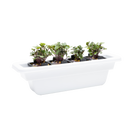
For a compact kitchen garden dedicated to exactly these herbs, the Personal Garden fits on a countertop and can support multiple herb varieties simultaneously with its individual pod system — enough to keep your compound butter recipe stocked all year.
The Full Recipe: Hydroponic Herb Compound Butter Roasted Oysters
This recipe serves 4 as an appetizer (3 oysters per person) and scales easily. The compound butter can be made up to 5 days ahead and stored in the refrigerator, wrapped tightly in parchment.
For the Compound Butter
- 8 tablespoons (1 stick) unsalted butter, room temperature
- 2 tablespoons fresh flat-leaf parsley, finely minced
- 1 tablespoon fresh chives, finely sliced
- 1 teaspoon fresh thyme leaves
- 1 teaspoon fresh French tarragon, minced
- 1 small garlic clove, grated on a microplane
- 1 teaspoon lemon zest
- ½ teaspoon fine sea salt
- ¼ teaspoon freshly cracked black pepper
- 1 teaspoon dry white wine or dry vermouth (optional but excellent)
For the Oysters
- 12 fresh oysters, shucked and on the half shell
- Rock salt or coarse kosher salt for the baking pan (to stabilize the shells)
- Crusty baguette slices for serving
Instructions
- Make the compound butter: In a medium bowl, combine the softened butter with all herbs, garlic, lemon zest, salt, pepper, and wine if using. Mix thoroughly with a fork until everything is evenly distributed. Taste and adjust seasoning. Roll into a log shape using parchment paper and refrigerate for at least 30 minutes to firm up.
- Preheat your oven to 450°F (232°C), or set your broiler to high if you prefer a more caramelized top.
- Pour a thick layer of rock salt into a rimmed baking sheet. Nestle the shucked oysters in the salt so they sit flat and stable without spilling their liquor.
- Slice the chilled compound butter into rounds about ¼ inch thick. Place one round on top of each oyster.
- Roast for 6–8 minutes at 450°F, or broil for 3–4 minutes, until the butter is fully melted and bubbling and the oyster edges have just begun to curl. Do not overcook — an oyster goes from perfectly plump to rubbery quickly.
- Serve immediately on the pan (the salt keeps them hot) with crusty bread to soak up every drop of herb butter.
How Do You Grow Oyster Recipe Herbs Indoors Year-Round?
This is where your indoor garden changes the way you cook, not just occasionally, but structurally. When fresh herbs are always available, you start building recipes around what you are growing rather than compromising based on what the grocery store had available on a given Tuesday.
Hydroponics — the practice of growing plants in a nutrient-rich water solution without soil — is particularly well suited to herbs because the plants do not need to develop extensive root systems searching for nutrition. That energy redirects into leaf and stem production, which is exactly what you want when cooking. NASA's Veggie project, which has used hydroponic technology to grow food on the International Space Station since 2014, demonstrated that controlled-environment agriculture can produce consistent, high-quality plant matter regardless of external conditions — a principle that applies just as well to a kitchen herb garden as to a space station.
For a larger household that wants to grow enough herbs to cook with regularly and still have plenty for entertaining, The Rise Loft offers a furniture-grade design that holds multiple growing levels, so you can keep parsley, chives, tarragon, thyme, and backup crops like basil or dill all growing at once without cluttering your kitchen aesthetic.
Key growing parameters for the herbs in this recipe:
- pH: Maintain between 5.5 and 6.5 for optimal nutrient uptake in most culinary herbs. pH is the measure of how acidic or alkaline your water solution is; outside this range, plants cannot absorb nutrients efficiently even if they are present.
- EC (Electrical Conductivity): EC measures the concentration of dissolved nutrients in your water. Most leafy herbs thrive at an EC between 1.6 and 2.2 mS/cm.
- Light: 14–16 hours of light per day is ideal for fast, dense herb growth indoors.
- Temperature: 65–75°F is the sweet spot for most Mediterranean herbs like thyme and tarragon.
Starting from Rise Gardens seed pods simplifies the process significantly — the pods come pre-seeded and are designed specifically for the nutrient delivery system in Rise Gardens products, removing the guesswork from germination.
Are Roasted Oysters Healthy? What the Nutrition Data Says
Pairing fresh herbs from your indoor garden oyster recipe with actual oysters is a genuinely nutritious decision, not just a delicious one. According to USDA FoodData Central, a 3-ounce serving of cooked Eastern oysters contains approximately 69 calories, 8 grams of protein, and an extraordinary 4.4 milligrams of zinc — roughly 40% of the recommended daily value for adults. Oysters are also one of the few non-fortified food sources of vitamin B12, delivering about 408% of the daily recommended intake per 3-ounce serving.
The fresh herbs in the compound butter add their own micronutrient contribution. Flat-leaf parsley, for example, provides more vitamin K per gram than nearly any other common culinary herb, along with meaningful amounts of vitamin C and folate. When you grow those herbs hydroponically and harvest them the day you cook, you are getting maximum nutritional value — studies show that leafy greens can lose up to 50% of some vitamins within 3–7 days of harvest under typical retail storage conditions.
The butter, of course, is the indulgence — but in a roasted oyster preparation, you are using roughly one teaspoon of compound butter per oyster, which keeps portion sizes reasonable while delivering maximum flavor impact.
Frequently Asked Questions
Can I make the compound butter ahead of time?
Yes — compound butter is actually better when made at least a day ahead. Resting in the refrigerator overnight allows the herb flavors to fully infuse into the fat, deepening the overall flavor of the fresh herb roasted oysters. Wrapped tightly in parchment and stored in an airtight container, it keeps for up to 5 days in the refrigerator or 3 months in the freezer.
What hydroponic herbs are easiest to grow for beginners?
Chives, parsley, and basil consistently rank as the most beginner-friendly herbs in a hydroponic system because they germinate quickly, tolerate minor fluctuations in pH and EC, and provide frequent harvests without needing to be replaced. Tarragon is slightly more finicky and benefits from a stable environment, but it thrives once established in a well-maintained indoor system.
How do I know when oysters are done roasting?
The most reliable visual cue is the edge curl: when the thin, frilled edges of the oyster meat just begin to curl away from the shell, the oyster is done. At 450°F, this takes 6–8 minutes. The liquor in the shell should be visibly bubbling, and the compound butter should be fully melted with a slightly golden sheen. Pull them out at this stage — another 2 minutes will make them rubbery.
Does hydroponically grown produce taste different from soil-grown?
Many home cooks and professional chefs report that hydroponically grown herbs taste more intense and consistently flavorful than store-bought alternatives, particularly when harvested fresh. This is attributed to controlled nutrient delivery, optimized light exposure, and the absence of the transport and storage time that diminishes volatile aromatic compounds in commercially distributed herbs. In a hydroponic herb seafood recipe like this one, where fresh herbs are doing heavy flavor lifting, that difference becomes very apparent on the plate.