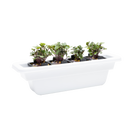
If you've been looking for a recipe that puts your indoor garden to serious work, hydroponic herb compound butter roasted turnips is exactly what your kitchen has been missing. This dish combines caramelized, oven-roasted turnips with a silky compound butter — a butter that's been blended with fresh herbs, garlic, and seasoning — made entirely from herbs you can grow year-round in a hydroponic system. Compound butter acts as both a basting agent and a finishing sauce, melting into the hot turnips and coating every surface with layered, aromatic flavor. Growing the herbs yourself takes this roasted turnips recipe from good to genuinely extraordinary.
Why Hydroponic Herbs Make the Best Compound Butter
Compound butter is only as good as the herbs inside it, and hydroponic herbs consistently outperform their grocery store counterparts on two key metrics: freshness and potency. When you harvest directly from your indoor garden minutes before cooking, the volatile aromatic oils in herbs like thyme, chives, rosemary, and parsley are at their peak concentration. Those oils are what deliver flavor, and they start degrading the moment a plant is cut.
Hydroponics — a method of growing plants in a nutrient-rich water solution rather than soil — gives you precise control over plant health. According to research supported by the University of Arizona's Controlled Environment Agriculture Center, hydroponically grown herbs can produce yields 2 to 5 times greater per square foot than soil-grown equivalents, with consistently higher biomass in shorter growth cycles. That means more herb volume per harvest, which is exactly what you want when you're making a generous batch of compound butter turnips.
For this recipe, the go-to herb combination is fresh thyme, flat-leaf parsley, and chives. All three grow readily in an indoor hydroponic system and reach harvestable size in as few as 21 to 30 days from transplant. A small countertop setup like the Personal Garden can keep you continuously stocked with all three varieties — a smart move if you cook with fresh herbs more than once a week.
What Turnips Are Best for Roasting — and How to Prepare Them
Not all turnips roast the same way. For the best caramelization and texture in this indoor garden turnip recipe, look for small to medium hakurei turnips or standard purple-top turnips no larger than a tennis ball. Smaller turnips have a higher sugar content relative to their starch, which means they develop deeper color and a slightly sweet, nutty flavor when roasted at high heat.
Preparation is simple. Peel the turnips and cut them into uniform wedges — roughly 1-inch pieces — so they cook evenly. Pat them completely dry before adding fat. Moisture is the enemy of caramelization: wet turnips steam in the oven instead of roasting, and you lose that golden-brown crust that makes this dish so satisfying. The USDA FoodData Central database notes that a 100-gram serving of raw turnips contains approximately 6.4 grams of carbohydrates and only 28 calories, making them one of the most nutrient-dense root vegetables by caloric density available.
Toss the dried wedges in a neutral oil like avocado or grapeseed oil, season generously with kosher salt and cracked black pepper, and spread them in a single layer on a heavy sheet pan. Crowding the pan forces steam to build up and prevents browning, so use two pans if necessary. Roast at 425°F (220°C) for 25 to 30 minutes, flipping once at the halfway point.
How to Make Hydroponic Herb Compound Butter Step by Step
Compound butter is one of the easiest ways to upgrade any vegetable dish, and it stores well in the freezer for up to three months. Here's a precise, repeatable method for a batch that yields enough for this recipe with leftovers to spare.
Ingredients:
- 8 tablespoons (1 stick) unsalted butter, softened to room temperature
- 2 tablespoons fresh flat-leaf parsley, finely chopped (harvested from your hydroponic garden)
- 1 tablespoon fresh thyme leaves
- 1 tablespoon fresh chives, thinly sliced
- 1 small clove of garlic, microplaned or very finely minced
- ½ teaspoon flaky sea salt
- ¼ teaspoon lemon zest
- Pinch of white pepper
Method:
- Place the softened butter in a medium bowl. Mash it with a fork until smooth and spreadable.
- Add all herbs, garlic, lemon zest, salt, and pepper. Fold everything together until evenly distributed.
- Taste and adjust salt if needed.
- Lay a sheet of plastic wrap flat on your counter. Spoon the butter mixture into a rough log shape along the bottom third of the wrap.
- Roll the wrap over the butter and use your hands to shape it into a tight cylinder about 1.5 inches in diameter. Twist the ends to seal.
- Refrigerate for at least 1 hour before using, or freeze for longer storage.
When the turnips come out of the oven, immediately slice two or three rounds of compound butter directly onto the hot pan and toss to coat. The residual heat melts the butter into a glossy, herb-flecked sauce that clings to every wedge. Finish with additional flaky salt before serving.
Can You Grow Turnips Hydroponically Indoors?
Yes — and it's more straightforward than most people expect. Turnips are a cool-season root vegetable that adapts well to hydroponic growing conditions, though they do require a deeper growing channel than leafy greens to accommodate root development. Systems designed with vertical depth and strong nutrient delivery, like The Rise Garden 3, give root crops like turnips the environment they need to size up properly.
Hydroponics uses an electrical conductivity (EC) measurement to monitor the concentration of dissolved nutrients in the water. For turnips, an EC range of 1.8 to 2.4 mS/cm is generally recommended, paired with a pH level — a measure of acidity or alkalinity on a 0–14 scale — kept between 6.0 and 6.5. Within that range, plants absorb phosphorus and potassium efficiently, both of which drive strong root development. Rise Gardens offers nutrients formulated to hit these parameters consistently without requiring manual chemistry calculations.
NASA's Veggie project, which has been testing hydroponic crop production aboard the International Space Station since 2014, identified root vegetables including radishes — a close botanical relative of turnips — as viable candidates for closed-loop food production in controlled environments. If turnips can grow in microgravity, they can certainly thrive under your kitchen grow lights.
From seeding to harvest, turnips grown hydroponically typically mature in 35 to 50 days depending on variety, compared to 60 to 70 days for soil-grown plants in outdoor conditions. That's a meaningful reduction in time-to-table.
How Do You Store and Use Leftover Compound Butter?
One of the best things about making compound butter for this roasted turnips recipe is that you'll almost certainly have some left over — and that's a feature, not a problem. Properly stored compound butter maintains full flavor quality for up to 2 weeks in the refrigerator and up to 3 months in the freezer. Wrap the log tightly in plastic wrap, then overwrap in foil before freezing to prevent freezer burn and flavor absorption from other foods.
Beyond this compound butter turnips application, the same herb butter works beautifully melted over grilled fish, stirred into mashed potatoes, spread on crusty bread, or dotted onto roasted carrots and parsnips. Since your hydroponic herbs grow continuously — a process called succession harvesting, where you trim outer leaves and the plant keeps producing — you can replenish your butter supply whenever the log runs out without a trip to the store.
If you want maximum herb variety for compound butters and other fresh herb applications throughout the year, a larger system like The Rise Loft — designed with furniture-grade aesthetics alongside serious growing capacity — lets you run multiple herb varieties simultaneously, so your butter blends can evolve with the seasons.
The Complete Hydroponic Herb Compound Butter Roasted Turnips Recipe
Here's everything pulled together into one clean, reliable recipe. Serves 4 as a side dish.
Ingredients:
- 1.5 lbs small-to-medium turnips, peeled and cut into 1-inch wedges
- 2 tablespoons avocado oil or grapeseed oil
- Kosher salt and cracked black pepper, to taste
- 3–4 rounds of prepared hydroponic herb compound butter (from recipe above)
- Optional garnish: additional fresh chives and a squeeze of lemon
Instructions:
- Preheat your oven to 425°F (220°C). Line a heavy sheet pan with parchment paper.
- Pat turnip wedges completely dry with paper towels. Toss with oil, salt, and pepper until evenly coated.
- Spread in a single layer on the sheet pan — do not crowd. Use two pans if needed.
- Roast for 25 to 30 minutes, flipping once at the 15-minute mark, until edges are deeply golden and centers are tender when pierced with a knife.
- Remove from oven. Working quickly, slice compound butter rounds directly onto the hot pan and toss turnips to coat as butter melts.
- Transfer to a serving dish. Garnish with fresh chives and a light squeeze of lemon if desired. Serve immediately.
Pro tip: For even deeper flavor, add two sprigs of fresh thyme directly to the sheet pan for the last 10 minutes of roasting. The heat intensifies the essential oils in the thyme without burning the herb, and the roasted sprigs make a beautiful visual garnish.
Frequently Asked Questions
Can I use dried herbs instead of fresh hydroponic herbs in compound butter?
You can, but the flavor profile will be noticeably different. Dried herbs have a more concentrated, sometimes slightly bitter taste because the drying process changes the volatile aromatic compounds. Fresh hydroponic herbs contain those oils at full potency, which gives compound butter a brighter, cleaner flavor. If you must substitute, use one-third the quantity of dried herbs called for in the recipe.
How long do hydroponic herbs take to grow before I can harvest them for cooking?
Most culinary herbs grown hydroponically — including thyme, parsley, and chives — reach a harvestable size in 21 to 35 days from transplant using pre-seeded seed pods. Successive light harvests (trimming no more than one-third of the plant at a time) encourage continued growth and keep plants productive for months. Chives in particular can be harvested repeatedly over a 6- to 9-month period before needing replacement.
What's the best way to make sure roasted turnips get crispy and caramelized instead of soft and steamed?
Three factors control this outcome: dryness, spacing, and temperature. Pat turnips completely dry before oiling them, make sure they are spread in a single layer with space between each piece, and roast at a minimum of 425°F. Adding the compound butter only after the turnips come out of the oven — not before roasting — also prevents the milk solids in butter from burning and ensures the herb flavor stays bright and fresh.
Are turnips nutritious enough to justify growing them hydroponically at home?
Turnips are highly nutritious relative to their caloric cost. According to USDA FoodData Central, a 100-gram raw turnip provides approximately 21% of the daily recommended value of vitamin C alongside meaningful amounts of potassium, folate, and dietary fiber — all for just 28 calories. Growing them hydroponically means you can harvest them at peak ripeness and cook them the same day, preserving the maximum nutrient content before any post-harvest degradation occurs.