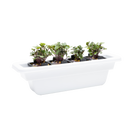
If you've never made hydroponic herb compound butter roasted fennel, you're about to discover one of the most rewarding ways to use your indoor garden harvest. This dish combines caramelized, anise-scented fennel bulbs with a rich compound butter — a flavored butter made by folding fresh herbs, aromatics, and seasoning into softened butter — all grown or inspired by what you can cultivate year-round in a hydroponic setup. The result is a side dish that tastes far more sophisticated than the effort it requires, and the starring ingredients come straight from your countertop or living room garden.
Why Grow Fennel and Herbs Hydroponically?
Fennel (Foeniculum vulgare) is one of those vegetables that grocery stores rarely carry at peak freshness. By the time a fennel bulb reaches the produce aisle, it has often lost the bright, grassy top fronds that make fennel truly special in the kitchen. Growing your own fennel hydroponically solves that problem completely.
Hydroponics is a method of growing plants without soil, delivering water, oxygen, and a precise blend of nutrients directly to the root zone. Because roots access everything they need immediately, hydroponic plants typically grow 30–50% faster than their soil-grown counterparts, according to research cited by the USDA Agricultural Research Service. That speed advantage means you get to harvest tender fennel fronds and fresh herbs on your own schedule — not the grocery store's.
A full-size system like The Rise Garden 3 gives you the growing capacity to cultivate fennel alongside multiple herb varieties simultaneously, so you're never missing a key ingredient when a recipe calls for it. If you have limited counter space, the Personal Garden is a compact countertop option that handles herbs beautifully and fits neatly into any kitchen.
For this recipe, the herbs that matter most are tarragon, flat-leaf parsley, chives, and thyme — all of which thrive in a hydroponic environment and are available as seed pods ready to drop right into your garden.
What Is Compound Butter and How Do Hydroponic Herbs Elevate It?
Compound butter is simply softened unsalted butter that has been blended with flavorings — herbs, citrus zest, garlic, spices — then re-chilled into a solid log or block. It's a classical French technique (called beurre composé) used in everything from finishing steaks to melting over roasted vegetables. The method is forgiving, endlessly customizable, and takes about ten minutes to prepare.
Here's where hydroponic herbs make a genuine difference: freshness. Studies from the University of California Cooperative Extension have shown that leafy herbs can lose up to 40% of their volatile aromatic compounds within 48 hours of harvest when stored at room temperature. When your herbs grow three feet from your cutting board, that loss simply doesn't happen. You snip, you fold, you taste — and the flavor intensity shows.
The herb compound butter in this recipe uses:
- 2 tablespoons fresh tarragon, finely chopped — its slight anise note mirrors the fennel beautifully
- 2 tablespoons fresh flat-leaf parsley, finely chopped — for brightness and color
- 1 tablespoon fresh chives, minced — for a mild onion backbone
- 1 teaspoon fresh thyme leaves — earthy, grounding, and deeply savory
- 1 small garlic clove, microplane-grated
- Zest of half a lemon
- ½ teaspoon flaky sea salt
- ½ cup (1 stick) unsalted butter, softened to room temperature
Combine everything in a bowl, mix thoroughly, then roll into a log using plastic wrap or parchment paper. Refrigerate for at least 30 minutes before using. The butter keeps in the refrigerator for up to one week and in the freezer for three months.
Hydroponic Fennel Recipe: How to Roast Fennel to Perfection
This hydroponic fennel recipe is built around one non-negotiable technique: high-heat roasting. Fennel contains natural sugars that caramelize beautifully at temperatures of 400°F (204°C) or above, transforming what starts as a slightly sharp, raw vegetable into something buttery, sweet, and deeply savory. Rushing this process at lower temperatures results in fennel that steams rather than roasts — it turns soft without developing that golden crust that makes the dish so satisfying.
Ingredients (Serves 4)
- 2 large fennel bulbs, stalks trimmed, fronds reserved
- 3 tablespoons olive oil
- ½ teaspoon kosher salt
- ¼ teaspoon black pepper
- 4 tablespoons herb compound butter (recipe above), sliced into rounds
- Fennel fronds, for garnish
- Optional: 1 tablespoon fresh-grated Parmesan or a squeeze of lemon juice to finish
Instructions
- Preheat your oven to 425°F (218°C). Line a large rimmed baking sheet with parchment paper.
- Prepare the fennel. Slice each bulb in half through the root end, keeping the core intact so the layers hold together. Cut each half into ½-inch thick wedges. You should get 6–8 wedges per bulb.
- Season and coat. Toss the fennel wedges with olive oil, salt, and pepper directly on the baking sheet. Arrange in a single layer with cut sides facing down. Crowding the pan causes steaming — use two pans if needed.
- Roast for 20 minutes without disturbing, until the bottom sides are deeply golden.
- Flip and roast 10 more minutes, until the second side is caramelized and the fennel is tender when pierced with a knife.
- Add the compound butter. Remove the pan from the oven and immediately place a round of herb compound butter on top of each cluster of fennel wedges. The residual heat will melt the butter slowly, coating the fennel in a glossy, herb-flecked sauce.
- Garnish and serve. Scatter reserved fennel fronds over the top and serve immediately. A final squeeze of lemon juice or light dusting of Parmesan takes it over the edge.
Indoor Garden Fennel Recipe Tips: Getting the Best Results from Your Hydroponic Setup
Growing fennel hydroponically for this indoor garden fennel recipe requires a little planning, but the payoff is enormous. Here's what you need to know to get the best bulbs and fronds possible.
Choose the right variety. Florence fennel (Foeniculum vulgare var. azoricum) is the bulbing type you want for this roasted fennel recipe. Bronze fennel is beautiful but grown primarily for its feathery fronds and seeds — it won't produce a harvestable bulb in most indoor setups.
pH and EC matter. Hydroponics relies on two key measurements: pH (the measure of acidity or alkalinity in your nutrient solution, on a scale of 0–14) and EC (electrical conductivity, which indicates the concentration of dissolved nutrients). For fennel, target a pH of 6.0–6.8 and an EC of 1.0–1.6 mS/cm. Staying within these ranges ensures your plants can absorb nutrients efficiently. The The Rise Loft system is designed with furniture-grade craftsmanship and includes guided growing support that takes the guesswork out of these parameters.
Light requirements. Fennel needs 12–14 hours of light per day to develop properly. NASA's Veggie project, which tested plant growth aboard the International Space Station, demonstrated that LED-based grow lighting at the right spectrum can produce yields comparable to — and sometimes exceeding — traditional sunlight-grown plants. Rise Gardens systems use full-spectrum LED lighting optimized for exactly this kind of production.
Harvesting fronds. You can begin harvesting fennel fronds as soon as plants are 6–8 inches tall. Snip from the outer branches first, leaving the center growth intact. For bulbs, wait until the base swells to roughly 3 inches in diameter before cutting at the base.
Herb growing alongside fennel. Note that fennel is allelopathic — it produces chemical compounds that inhibit the growth of some nearby plants in soil. In hydroponics, because each plant pod has its own isolated root zone, this is far less of a concern, and herbs like parsley, chives, and thyme grow alongside fennel without issue.
How Does Roasted Fennel with Herb Butter Fit into a Balanced Diet?
This roasted fennel with herb butter dish is more nutritious than its indulgent flavor suggests. Fennel is a low-calorie, high-fiber vegetable: one raw fennel bulb (about 234 grams) contains approximately 73 calories, 7 grams of dietary fiber, and is a meaningful source of Vitamin C and potassium, according to USDA FoodData Central data. The herb-forward compound butter adds richness and fat-soluble vitamins from the fresh herbs, while the olive oil provides heart-healthy monounsaturated fats.
Fresh herbs also contribute more than flavor. According to the USDA, one tablespoon of fresh parsley delivers approximately 62 mcg of Vitamin K — about 52% of the daily recommended intake — along with meaningful amounts of Vitamin C and folate. When you grow herbs hydroponically and use them immediately after harvest, you're capturing those nutrients at their peak rather than after days of transit and storage.
This dish works beautifully as a side to roasted chicken, grilled fish, or a simple grain bowl. It's naturally gluten-free and easily made dairy-free by substituting a high-quality vegan butter in the compound butter recipe.
Variations on This Hydroponic Herb Compound Butter Roasted Fennel Recipe
Once you've made the base version of this recipe, you'll find the template is remarkably adaptable. The compound butter, in particular, is a canvas for whatever herbs are thriving in your garden that week.
- Citrus-Dill Compound Butter: Swap tarragon and chives for fresh dill and orange zest. Especially good with fennel and salmon served together.
- Spicy Herb Butter: Add ¼ teaspoon crushed red pepper flakes and a teaspoon of fresh oregano to the base recipe for a more assertive, Mediterranean-style profile.
- Miso-Herb Compound Butter: Blend 1 teaspoon white miso into the butter along with chives and thyme. The umami depth from the miso amplifies the caramelized sweetness of the roasted fennel in a remarkable way.
- Fennel-on-Fennel: Toast 1 teaspoon of fennel seeds and fold them into the compound butter alongside fresh tarragon. The layered fennel flavor — roasted bulb, fresh frond garnish, seed-infused butter — is genuinely extraordinary.
All of these variations start with the same fundamental technique: high-heat roasting and finishing with compound butter off the heat. Master that, and the variations are limited only by what's growing in your garden at any given time.
Frequently Asked Questions
Can I grow fennel in a hydroponic system indoors?
Yes — Florence fennel grows well in hydroponic systems with adequate vertical space and 12–14 hours of LED light per day. Target a nutrient solution pH of 6.0–6.8 and an EC of 1.0–1.6 mS/cm for best results. Fennel takes approximately 65–90 days from seed to harvestable bulb, though fronds can be trimmed much earlier.
What herbs work best in compound butter for roasted fennel?
Tarragon is the classic pairing because its mild anise flavor echoes fennel's natural profile without competing with it. Parsley, chives, and thyme round out the butter with brightness, mild onion notes, and earthiness respectively. Fresh dill is another excellent choice, particularly if you're serving the fennel alongside fish.
How do I store leftover herb compound butter?
Roll the compound butter tightly in plastic wrap or parchment paper to form a log, then refrigerate for up to one week or freeze for up to three months. Slice off rounds directly from frozen — they thaw within minutes on hot food. Freezing is a great way to preserve a large herb harvest from your indoor garden before the plants need to be cycled out.
Why is my roasted fennel soggy instead of caramelized?
Soggy fennel is almost always caused by one of two things: a pan that's too crowded, or an oven temperature that's too low. Fennel releases moisture as it cooks — if wedges are overlapping, that moisture steams the fennel rather than evaporating. Use 425°F (218°C) or higher, spread wedges in a single layer with space between each piece, and avoid opening the oven door during the first 20 minutes of roasting.